
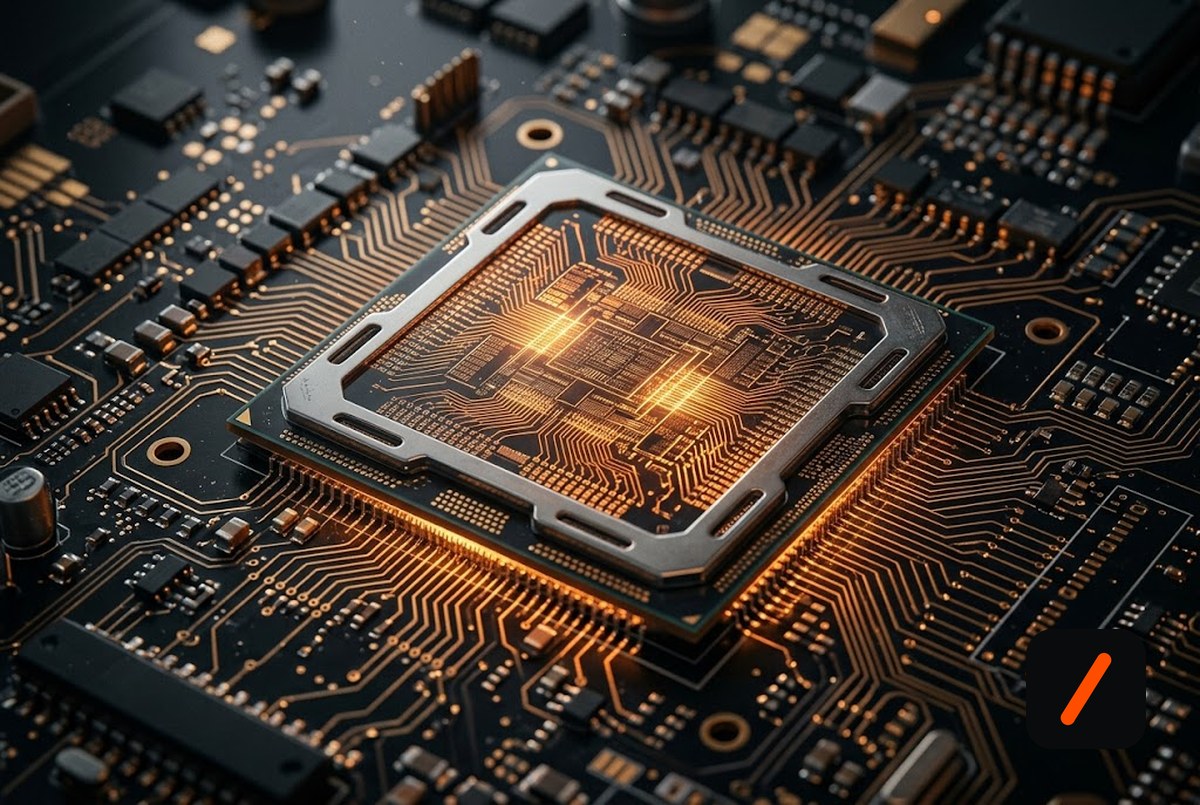
Nvidia's RTX Spark is the clearest sign yet that the PC is being redesigned around on-device AI. Unveiled at Computex 2026, it is a superchip that welds a Blackwell RTX GPU to a Grace CPU and 128GB of unified memory, aiming to run agentic AI locally instead of round-tripping to the cloud. The pitch, made jointly with Microsoft, is a Windows machine that acts less like a tool and more like a teammate. Whether you buy that framing or not, the hardware is a genuine shift.
- RTX Spark pairs a Blackwell RTX GPU (6,144 CUDA cores, 5th-gen Tensor Cores with FP4) to a 20-core Grace CPU over Nvidia's NVLink-C2C chip-to-chip link.
- It offers up to 1 petaflop of AI compute, 128GB of unified LPDDR5X memory and up to 300 GB/s of memory bandwidth, all in a laptop or compact desktop.
- MediaTek co-designed the custom CPU for power efficiency. Machines ship this fall from ASUS, Dell, HP, Lenovo, Microsoft Surface and MSI, with Acer and GIGABYTE to follow.
- The point of unified memory is capacity: 128GB lets on-device agents hold large models and long context that a normal 16GB to 32GB gaming laptop cannot.
What is the RTX Spark superchip?
It is a system-on-a-package built for personal AI. The GPU side is Blackwell RTX with 6,144 CUDA cores and fifth-generation Tensor Cores that support FP4 precision, the low-bit format that makes local inference fast and memory-light. The CPU side is a 20-core Grace processor, co-designed with MediaTek for efficiency, and the two are stitched together by NVLink-C2C, a high-bandwidth on-package link rather than a slow PCIe bus. The result is up to 1 petaflop of AI compute in a device you can put on a desk or, in some designs, in a laptop.
RelatedNvidia's RTX Spark Superchip Puts an AI PC in a Box
Why unify the CPU, GPU and 128GB of memory?
Because capacity, not just speed, is what blocks local AI. A normal gaming laptop pairs a fast GPU with 8GB to 16GB of dedicated video memory, which is nowhere near enough to hold a large model plus a long context window. RTX Spark's 128GB unified pool is shared by the CPU and GPU, so a sizable model and its working memory live on-device with room to spare, at up to 300 GB/s of bandwidth. That is the difference between running a toy model locally and running something genuinely useful without a cloud round-trip, which matters for latency, cost and privacy.
| Spec | Nvidia RTX Spark | Typical gaming laptop | Apple M-series (unified) | AMD Strix Halo |
|---|---|---|---|---|
| Memory model | Unified, CPU+GPU | Split (RAM + VRAM) | Unified | Unified |
| On-device capacity | 128GB | 16 to 32GB RAM, 8 to 16GB VRAM | up to 128GB+ | up to 128GB |
| AI compute | Up to 1 PFLOP | Lower, gaming-tuned | Strong NPU + GPU | Strong NPU + GPU |
| Ecosystem | CUDA + Windows | CUDA | Apple / macOS | ROCm / Windows |
| Pitch | Agentic Windows PC | Games first | Creator + on-device AI | On-device AI PC |
What does an "agentic Windows PC" actually mean?
Nvidia and Microsoft are selling a machine where AI agents run continuously and locally, reading your screen, acting across apps and holding context, without shipping everything to a datacenter. That is why the memory number is the headline and not the CUDA count. The framing that the PC moves "from tool to teammate" is marketing, but the underlying claim is real: enough unified memory plus a fast NPU-class GPU changes what an operating system can do on its own. The competitive context is Apple's unified-memory Macs and AMD's Strix Halo, both chasing the same on-device AI PC idea from different ecosystems.
When can you buy one, and who is building them?
RTX Spark laptops and compact desktops arrive this fall from ASUS, Dell, HP, Lenovo, Microsoft Surface and MSI, with Acer and GIGABYTE models to follow. That breadth of launch partners is itself a signal: Nvidia is not shipping a niche dev box, it is trying to seed a category across the mainstream Windows lineup in one season.
RelatedNvidia's RTX PRO 5500 Pairs 5090 Cores With 84GB of VRAM
- Computex 2026RTX Spark unveiled. Blackwell RTX + Grace, 128GB unified, up to 1 PFLOP.
- Fall 2026First machines ship. ASUS, Dell, HP, Lenovo, Microsoft Surface, MSI.
- Later 2026Second wave. Acer and GIGABYTE models follow.
- Real-world local inference. The 1 PFLOP and 128GB numbers are the promise. Sustained on-device model performance and battery life are the proof.
- Software, not silicon. An agentic PC needs Windows and app support to matter. Watch Microsoft's on-device agent features land.
- Price versus a Mac. Apple owns unified-memory mindshare. RTX Spark's edge is CUDA and Windows, but street price will decide adoption.
Our take
RTX Spark is a bet that the next PC upgrade cycle is about memory capacity for AI, not frames per second, and it is a well-aimed bet. The unified 128GB pool is the spec that actually unlocks useful on-device agents, and pairing it with CUDA gives Nvidia a software moat Apple and AMD cannot easily match. The skepticism is warranted on two fronts: "agentic Windows PC" is a marketing frame that only pays off if Microsoft ships the software, and the whole category is launching into a memory market where prices are volatile. But as hardware, this is the most coherent on-device AI platform any vendor has put in a mainstream laptop, and the fall launch will be the real test.
- OfficialNvidia + Microsoft: RTX Spark the joint announcement
- OfficialNvidia at Computex 2026 RTX Spark specs and lineup
- ReferenceTechPowerUp hardware tracker launch windows for 2026 silicon
Original analysis by GenZTech. Specs as announced by Nvidia, 2026.