
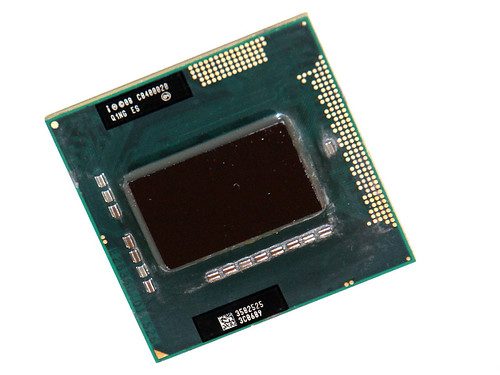
OpenAI unveiled its first custom silicon on June 24, 2026, and the message to Nvidia is unmistakable: the biggest buyer of AI chips now wants to build its own. Codenamed Jalapeno and made with Broadcom, it is a purpose-built inference ASIC, not a training chip and not a general-purpose accelerator, designed from scratch around how large language models actually run. Broadcom says early tests show it serving models at roughly half the cost of standard GPUs. The specs are not all public and the benchmarks are unverified, but the strategic move is clear: OpenAI is trying to own the layer it currently rents.
- Jalapeno is OpenAI's first custom chip, an inference-only ASIC built with Broadcom and branded an "Intelligence Processor," the first of a multi-generation platform.
- It is reportedly a TSMC 3nm design with a large systolic-array-style compute die and eight HBM stacks on package to cut data-movement latency.
- Broadcom claims roughly 50% lower cost and better performance per watt than standard AI GPUs, though full specs and independent benchmarks are not yet out.
- It taped out in about nine months, accelerated by OpenAI's own models, with deployment starting late 2026 through partners including Microsoft, scaling toward gigawatt fleets.
What did OpenAI and Broadcom announce?
On June 24, 2026, the two companies revealed Jalapeno, OpenAI's first piece of custom silicon and, by its framing, the first "Intelligence Processor" in a compute platform they plan to build across several chip generations. It is an application-specific integrated circuit, an ASIC, meaning it is hard-wired for one job rather than programmable like a GPU. That job is inference: serving already-trained models to users, the compute-heavy work behind every ChatGPT reply. OpenAI was long rumored to be the unnamed fourth customer, once code-named Titan, in Broadcom's custom-XPU business, and Jalapeno confirms it.
RelatedXiaomi's Xring O3 Chip Hits 5.2M AnTuTu, Cuts Qualcomm Reliance
Why build a custom inference chip at all?
Because inference is where the money burns, and a GPU is a general tool paying for flexibility OpenAI does not need. By designing an ASIC around the specific math and data-flow of LLM inference, OpenAI can strip out what it will not use and spend the die on what it will. The stated goals are practical bottlenecks: reduce costly data movement, balance compute against memory and networking, and push realized utilization closer to the chip's theoretical peak. The headline design choice is stacking eight HBM modules directly on the package rather than routing through system memory, which cuts latency and keeps the compute elements fed. The reported payoff, per Broadcom's CEO, is roughly 50% lower cost and better performance per watt than a standard AI GPU.
| Chip | OpenAI Jalapeno | Nvidia GPU | Google TPU | AWS Trainium/Inferentia |
|---|---|---|---|---|
| Type | Inference ASIC | General GPU | Inference/training ASIC | Custom ASIC |
| Owner | OpenAI + Broadcom | Nvidia | Amazon | |
| Flexibility | Fixed-function | Highest | Fixed-function | Fixed-function |
| Cost posture | ~50% cheaper (claimed) | Premium | Low (internal) | Low (internal) |
| Availability | Late 2026, internal | Now | Google Cloud | AWS |
The pattern is familiar: Google (TPU) and Amazon (Trainium and Inferentia) already build their own inference silicon to escape GPU margins. Jalapeno is OpenAI joining that club, with the twist that it is not a cloud provider renting the chips out, it is the model maker building for its own fleet.
How did they build it so fast?
Jalapeno went from concept to tape-out, the point where a design is finalized for manufacturing, in about nine months, an unusually short cycle for a chip this ambitious. OpenAI credits deep software-hardware co-development with Broadcom and, notably, using its own models to accelerate parts of the design and optimization. Engineering samples are already operational, running real machine-learning workloads, including a GPT-5.3-Codex-Spark model, at the intended production frequency and power. That is a meaningful signal: it is past PowerPoint and into silicon that works. The compute die is reportedly large, closer in size to a training chip, likely a deliberate choice to keep latency low.
RelatedAMD's Zen 6 EPYC 'Venice' Lands July 22 With 256 Cores
What does this mean for Nvidia and the market?
It is another crack in the assumption that serious AI must run on Nvidia. OpenAI is one of Nvidia's largest customers, so it building an in-house inference chip, even one it will use internally rather than sell, chips away at demand and pricing power at the margin. The caveats are real: this is inference only, so Nvidia still owns training; the chip is not a product anyone else can buy; and the cost and efficiency claims are unverified until the promised technical report and independent benchmarks arrive. But the direction is unmistakable. Every hyperscaler and now the leading model lab is building custom silicon to escape GPU economics, and Broadcom, quietly, is becoming the arms dealer to all of them.
- EarlierRumored as Broadcom's fourth XPU customer. The unnamed client once code-named Titan.
- ~9 monthsDesign to tape-out. Accelerated by OpenAI's own models and tight co-development.
- Jun 24 2026Jalapeno unveiled. Engineering samples already running ML workloads at production power.
- Coming monthsFull technical report and benchmarks. Where the cost and efficiency claims get tested.
- Late 2026Initial deployment. Through partners including Microsoft, scaling to gigawatt fleets.
- The technical report. The 50%-cheaper claim is a vendor number until independent benchmarks land. Watch for real perf-per-watt data.
- Real deployment. Engineering samples work; a gigawatt fleet is another thing. Watch how much of OpenAI's inference actually moves off GPUs.
- Nvidia's response. Losing inference share at its biggest customers is the scenario Nvidia fears. Watch pricing and roadmap reactions.
- Broadcom's rise. If Google, Amazon, and OpenAI all build on Broadcom XPUs, Broadcom becomes the quiet winner of the custom-silicon era.
Our take
Jalapeno matters more as a strategy than as a chip. OpenAI spends staggering sums serving models, and inference cost is the single biggest lever on whether the business ever works, so designing an ASIC to attack that cost directly is exactly the right instinct, and doing it in nine months with its own models helping is a genuine flex. The skepticism should be aimed at the numbers: a 50% cost claim with no public specs and no independent benchmarks is marketing until proven, and inference-only means Nvidia's core training franchise is untouched for now. But the trend is the story. When the largest model lab in the world decides it would rather build silicon than keep buying it, the GPU monopoly is no longer the only path, and Broadcom is positioned to profit no matter which lab wins. Watch the benchmarks, but do not miss the shift.
- OfficialOpenAI, the Jalapeno inference chip , the announcement and design goals
- ReferenceTom's Hardware analysis , 3nm, HBM stacks and die-size detail
- ReferenceTechCrunch coverage , partners, timeline and deployment
Original analysis by GenZTech. Figures current as of July 2026; performance and cost claims are vendor-stated and unverified. Source: openai.com