
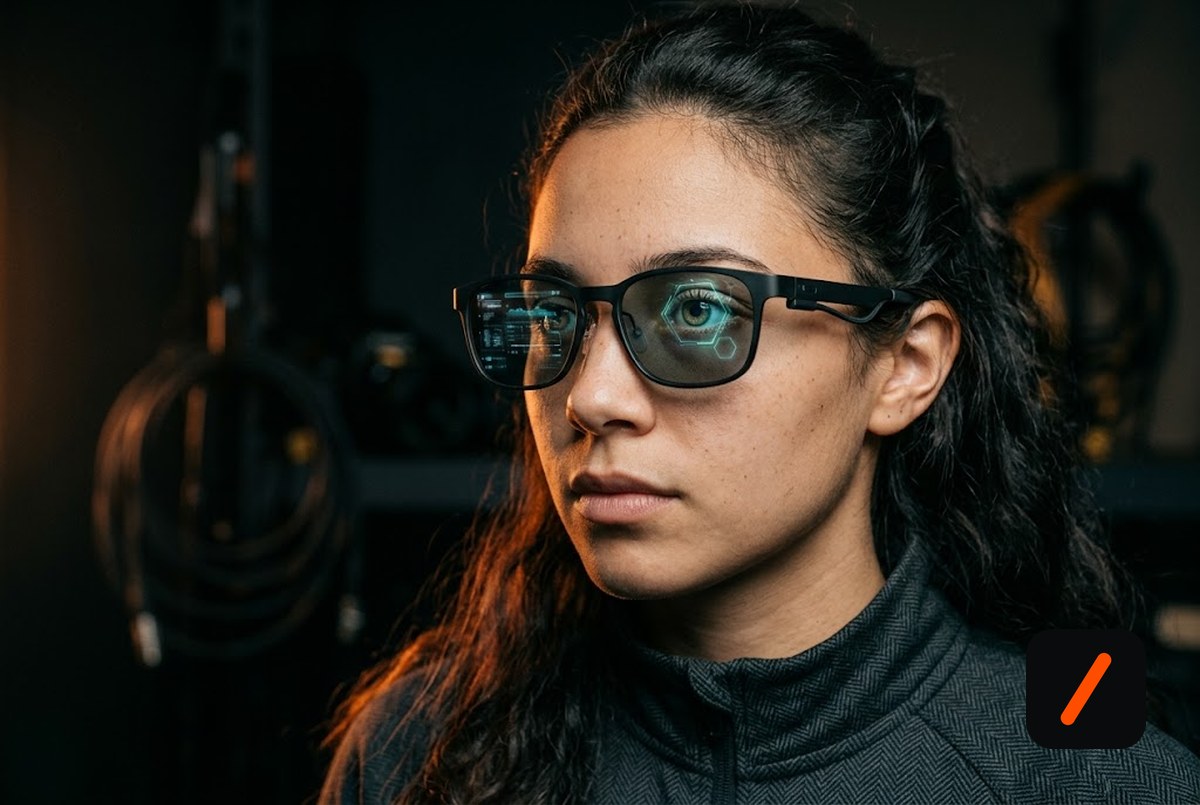
The Xreal R1 is the clearest example yet of a splitting road in wearables: while everyone else chases AI smart glasses, Xreal is shipping display glasses that just want to be a giant screen strapped to your face. Now up for preorder with availability starting July 2026, the R1 projects a 171-inch virtual display at up to 240Hz for PC, PlayStation and Xbox gamers. It is not trying to be your assistant. It is trying to replace your monitor, and that focus is exactly what makes it interesting.
- The R1 renders a 171-inch virtual screen at a refresh rate of up to 240Hz, projected in front of your eyes from a normal-looking pair of glasses.
- It is built for PC, PlayStation and Xbox gaming, plugging into devices rather than running its own apps or AI.
- Preorders are open on the Xreal Shop with July 2026 availability, positioning it as a portable big-screen alternative to a gaming monitor.
- It arrives as smart-glasses shipments surged 139% in the second half of 2025, but the R1 competes on display specs, not on AI features.
What is the Xreal R1?
It is a pair of display glasses aimed squarely at gamers. Plug it into a PC, PlayStation or Xbox and it renders a 171-inch virtual screen at up to 240Hz, floating in front of you, from a device that looks close to ordinary eyewear. There is no onboard operating system to learn and no assistant listening. The glasses are essentially a portable, private, very large monitor, which is a deliberately narrow and useful pitch compared with the sprawling ambitions of AI smart glasses.
RelatedXreal R1 Brings a 171-Inch 240Hz Display to Your Face
How do display glasses differ from smart glasses?
The two categories share a form factor and almost nothing else. Smart glasses, like Google's Project Aura on Android XR or Samsung's upcoming Galaxy Glasses, are computers you wear: they run apps, overlay information on the world and increasingly bake in AI assistants. Display glasses like the R1 are output devices that show you a screen from something else. That distinction drives everything, from price to battery to privacy. The R1 does not need to phone home, watch your surroundings or run cloud AI, because its entire job is to be a good display.
| Xreal R1 (display glasses) | AI smart glasses | Gaming monitor | |
|---|---|---|---|
| Main job | Be a big private screen | Run apps and AI | Be a screen |
| Refresh rate | Up to 240Hz | Not display-focused | Up to 240Hz+ |
| Portability | Fits in a case | Wearable | Desk-bound |
| Privacy | Screen only, nobody else sees it | Cameras, sensors, cloud | Visible to the room |
| Needs a host device | Yes (PC / console) | Often standalone | Yes |
Why does 240Hz matter for gaming?
Because refresh rate is where most previous display glasses fell short. A high frame rate means smoother motion and lower perceived latency, which is the difference between a novelty and something you would actually game on for hours. Many earlier AR and display glasses topped out well below this, making fast-paced titles feel smeared. By pushing up to 240Hz, the R1 signals it wants to compete with real gaming monitors on the spec gamers care about most, not just offer a big-but-blurry picture.
How does it stack up against a monitor and other AR glasses?
Against a monitor, the trade is obvious: the R1 gives you a huge, portable, private screen you can use on a couch, a plane or a dorm bed, at the cost of needing a host device and wearing something on your face for long sessions. Against other AR and smart glasses, the R1 wins on the display metrics precisely because it refuses to be a general-purpose computer. It is a focused product in a market that keeps trying to make glasses do everything, and focus is a feature.
RelatedSamsung's Galaxy Glasses Bet AI Beats a Screen
- Real-world latency. 240Hz on paper is one thing. Whether it feels monitor-grade in fast games is the test that matters.
- Comfort over hours. Weight, fit and eye strain decide whether display glasses replace a monitor or stay a travel gadget.
- Category split. As AI smart glasses grab headlines, watch whether "just a great screen" carves out a durable niche.
Our take
The Xreal R1 is a smart product because it knows what it is not. In a wearables market obsessed with strapping AI to your temples, Xreal shipped glasses whose only ambition is to be an excellent, portable, private display, and it backed that with the one spec, up to 240Hz, that previous display glasses botched. That clarity is the whole appeal. The open questions are physical, not conceptual: does the high refresh rate feel as good as the number, and can you wear it comfortably for a full gaming session. If the answers hold up when units ship in July, the R1 is the most compelling "monitor you wear" yet, and a useful reminder that not every pair of glasses needs to be a computer.
- OfficialXreal R1 product page and preorder
- Reference2026 wearables releases R1 specs and availability
- MarketCounterpoint Research smart-glasses shipment growth
Original analysis by GenZTech. Specs as reported by WearableXP, 2026.