
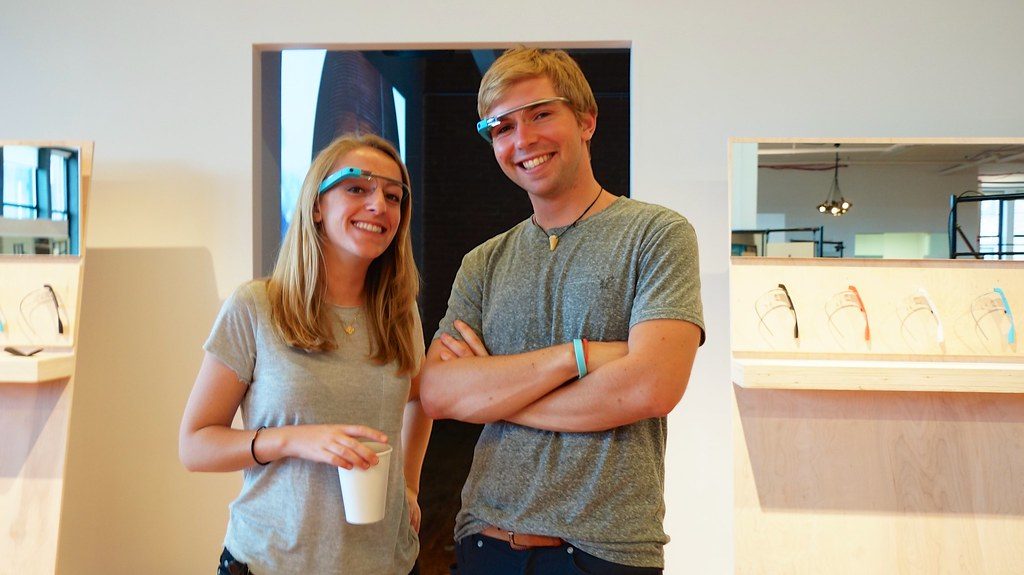
Samsung is expected to unveil its first pair of AI smart glasses at its July 22 Unpacked event, and the design choice is the whole story: no display. Where rivals chase tiny in-lens screens, the rumored Galaxy Glasses reportedly run Android XR with Google's Gemini assistant built in, carry a 12MP camera, speakers and microphones, and offload all computing to a paired phone. It is a bet that the killer feature of face-worn tech in 2026 is an AI that can see and hear your world and answer questions about it, not a heads-up display. Samsung has not confirmed the product, so treat specifics as well-sourced rumor.
- The Galaxy Glasses are expected at Unpacked on July 22, alongside Samsung's new foldables, though Samsung has not officially confirmed the product, date, or price.
- They reportedly run Android XR with Gemini as the built-in assistant, positioning them as an AI-first device rather than a display device.
- Hardware rumors: a 12MP camera, speakers and microphones, no display, and all processing offloaded to a paired phone for weight and battery.
- Context: smart-glasses shipments grew 139% year over year in the second half of 2025, per Counterpoint, as Meta, Google and Samsung pile in.
What are the Galaxy Glasses supposed to be?
Per multiple reports, Samsung's first entry into AI eyewear, built on Android XR, the platform Samsung and Google developed together, with Gemini as the resident assistant. The rumored spec sheet is deliberately minimal: a 12MP camera to see what you see, speakers and microphones for audio and voice, and crucially no display in the lenses. Instead of rendering a screen, the glasses act as sensors and a speaker for an AI, and they push the actual processing to a paired phone to keep them light and extend battery life. Samsung has teased Unpacked for July 22 but has not confirmed the glasses, the date for them, pricing, or, notably, its data-handling policies, which matter for a camera you wear on your face.
RelatedGalaxy Z Flip 8 Grows Its Cover Screen and Adds Qi2 Charging
Why drop the display entirely?
Because a display is the expensive, heavy, battery-hungry part, and Samsung is betting most people do not need one to get value. An always-available assistant that can look at a menu and translate it, identify a landmark, or answer a question about what is in front of you delivers a lot without ever drawing a pixel in your vision. Removing the display makes the glasses lighter and more wearable, closer to normal eyewear, and offloading compute to the phone removes the biggest weight-and-heat problem in the category. The tradeoff is that anything inherently visual, navigation arrows, notifications, media, has to live on your phone or in audio, which is exactly where a display-first device like Xreal's R1 wins.
| Spec | Galaxy Glasses (rumored) | Ray-Ban Meta | Xreal R1 |
|---|---|---|---|
| Display | None | None | 171-inch virtual screen |
| AI assistant | Gemini (Android XR) | Meta AI | Not the focus |
| Camera | 12MP | Yes | Passthrough / gaming |
| Compute | Offloaded to phone | Onboard + phone | Tethered to device |
| Primary use | Ambient AI assistant | Capture + AI | Big-screen media / gaming |
Can Samsung actually win this category?
It has real advantages and one big dependency. The advantages: Samsung ships hundreds of millions of phones, so a glasses accessory that offloads to a Galaxy phone has a built-in installed base, and Android XR with Gemini gives it a credible AI stack without building one from scratch. The category is also surging, shipments up 139% year over year in the second half of 2025, so the timing is right. The dependency is Google: the assistant, the platform, and much of the intelligence are Gemini and Android XR, which makes Samsung's glasses only as compelling as Google's AI and only as private as their joint data policies. Against Ray-Ban Meta's head start on capture-plus-AI glasses, Samsung is late, but its phone leverage and Gemini integration make it a serious entrant, not a token one.
- Does it ship, or just tease? An Unpacked reveal is not a release date. Watch for actual availability and price, still unconfirmed.
- Privacy policy. A worn 12MP camera lives or dies on trust. Samsung's undisclosed data handling is the biggest open question.
- Phone lock-in. If compute offloads to a Galaxy phone, watch whether it works with any Android device or only Samsung's.
- Gemini latency. An assistant-first device needs fast, reliable answers. Round-trip lag to the phone and cloud is the make-or-break UX.
Our take
Dropping the display is the smartest thing Samsung could do to enter this market late, because it sidesteps the hardest, most expensive engineering problem and reframes the product around the one thing that is genuinely good in 2026: a capable AI that can see and hear. Ray-Ban Meta already proved people will wear camera-and-AI glasses that have no screen, and Samsung's phone base plus Gemini give it a faster on-ramp than almost anyone. The catch is that this bet makes Samsung a hardware shell around Google's intelligence, which is great until their interests diverge, and it puts a live camera on your face backed by a data policy Samsung has not yet described. If the July 22 reveal comes with a real price, real availability, and a credible privacy story, the Galaxy Glasses could be the mainstream AI-glasses moment. If it is another concept tease, it is just Samsung planting a flag while the actual race runs on.
- OfficialSamsung Newsroom , Unpacked announcements and official specs
- ReferenceGoogle, Android XR , the platform and Gemini integration
- ReferenceCounterpoint Research , smart-glasses shipment growth data
Original analysis by GenZTech. Figures current as of July 2026; product details are rumored and unconfirmed by Samsung. Source: news.samsung.com