
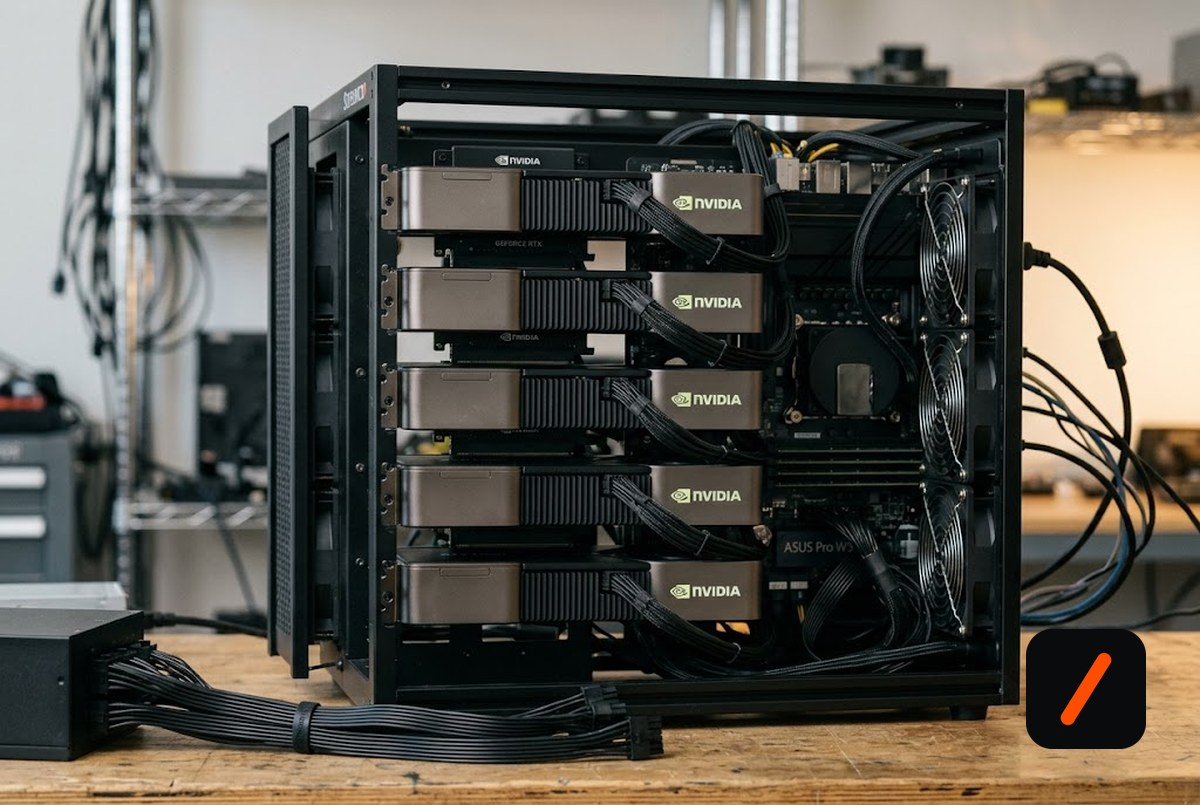
Render Network, one of the largest decentralized physical infrastructure projects, pools idle GPUs from operators around the world into a single marketplace for compute, originally for 3D rendering and increasingly for AI inference. Its timing has never looked better. The AI boom has created a structural shortage of GPU capacity, and Render's whole premise, unlocking graphics power that would otherwise sit unused, is suddenly matched to real, paying demand rather than speculation.
- Render Network aggregates idle GPUs worldwide into a decentralized compute marketplace.
- Built for 3D rendering, it now increasingly serves AI inference, its clearest demand driver.
- The AI compute crunch is structural, not temporary, because models are outgrowing centralized capacity.
- GPU owners earn the RENDER token for contributing compute, aligning supply with demand.
What makes the compute crunch structural, not a blip?
Scale and physics. AI models are growing faster than centralized infrastructure can expand to serve them, and building new data centers takes years, gigawatts of power, and enormous capital. The demand is not a temporary spike that clears once a backlog is filled. It is a widening gap between how much compute the world wants and how much any set of hyperscalers can physically stand up. That is the opening for decentralized compute. If a meaningful share of the world's idle GPUs, in workstations, mining rigs repurposed after crypto shifts, and small operators, can be aggregated and pointed at real workloads, it becomes a supplement to centralized clouds that no single company has to build. The crunch is precisely the condition DePIN compute was designed for.
RelatedDecentralized GPU compute: renting the world’s idle chips
Why is AI inference the killer use case?
Because inference is distributable in a way training is not. Training a giant model needs thousands of GPUs wired together with extreme bandwidth in one place, which suits a centralized data center. Inference, running an already-trained model to answer a query, can often be chopped into independent jobs that run on scattered hardware without tight coordination. That maps naturally onto a decentralized network of many separate GPUs. Render started with 3D rendering, itself an embarrassingly parallel workload where each frame is independent, and AI inference has similar properties. The same architecture that renders a movie frame by frame across many machines can serve inference requests across many machines, which is why AI is the demand story that graduated Render from niche to serious.
| Angle | Render Network | Centralized GPU cloud |
|---|---|---|
| Supply | Aggregated idle GPUs | Owned data centers |
| Scaling | Add contributors | Build more capacity |
| Best for | Parallel jobs, inference, rendering | Tightly coupled training |
| Incentive | RENDER token rewards | Fiat contracts |
| Reliability | Varies by contributor | Enterprise SLA |
What is the honest catch?
Decentralized compute is harder to make enterprise-grade than a pitch deck admits. A network of independent GPU operators has uneven reliability, variable performance, and no single throat to choke when a job fails, which is a real obstacle for customers used to a cloud provider's guarantees. There is also the token problem that shadows all of DePIN: contributors are paid in RENDER, and a volatile token can turn a good compute rate into a bad one overnight, which complicates the economics for both sides. And centralized incumbents are not standing still. The clouds are racing to add capacity, and a competitor with deep pockets can undercut a decentralized network on reliability if not always on price. Render's task is to convert the structural tailwind into durable, paying customers before the window narrows.
Who actually uses this?
The near-term customers are the ones for whom Render's tradeoffs are acceptable: studios and creators rendering 3D scenes, and increasingly AI teams that need inference capacity and cannot get enough of it, or enough of it affordably, from centralized providers during the crunch. The value proposition is sharpest exactly when centralized GPUs are scarce or expensive, which is the current environment. Whether that broadens into mainstream enterprise use depends on Render smoothing out reliability and making the token economics predictable. But as a pressure-relief valve for a market that cannot get enough compute, it has a genuine role right now, which is more than most DePIN projects can claim.
RelatedNosana Rides AI GPU Demand With Solana Compute Network
- Inference revenue mix. Watch how much of Render's paid work is AI inference versus traditional rendering.
- Reliability tooling. Enterprise adoption hinges on turning a variable network into something with predictable guarantees.
- Token stability. The health of RENDER economics directly affects whether contributors keep supplying GPUs.
- Cloud competition. If centralized GPU supply catches up, Render's pricing edge during the crunch narrows.
Our take
Render is the DePIN project with the clearest reason to exist right now, because the AI compute shortage is real, structural, and exactly the problem a network of pooled GPUs is shaped to help solve. The distinction that matters is between DePIN projects chasing demand and DePIN projects that demand is chasing, and Render has crossed into the second group. That does not make the hard parts disappear: decentralized compute must still prove it can be reliable enough for serious customers, and the token economics remain a genuine vulnerability. But the setup is enviable. When the whole world is short on GPUs and building more takes years, a network that turns idle graphics cards into usable capacity has a real, present-tense purpose. Execution on reliability is now the whole game, and the tailwind will not wait forever.
- OfficialRender Network network, jobs and token
- ReferenceRENDER on CoinGecko token and market data
- ReferenceMessari DePIN sector research
Original analysis by GenZTech. Source: Render Network. Figures current as of July 2026.