
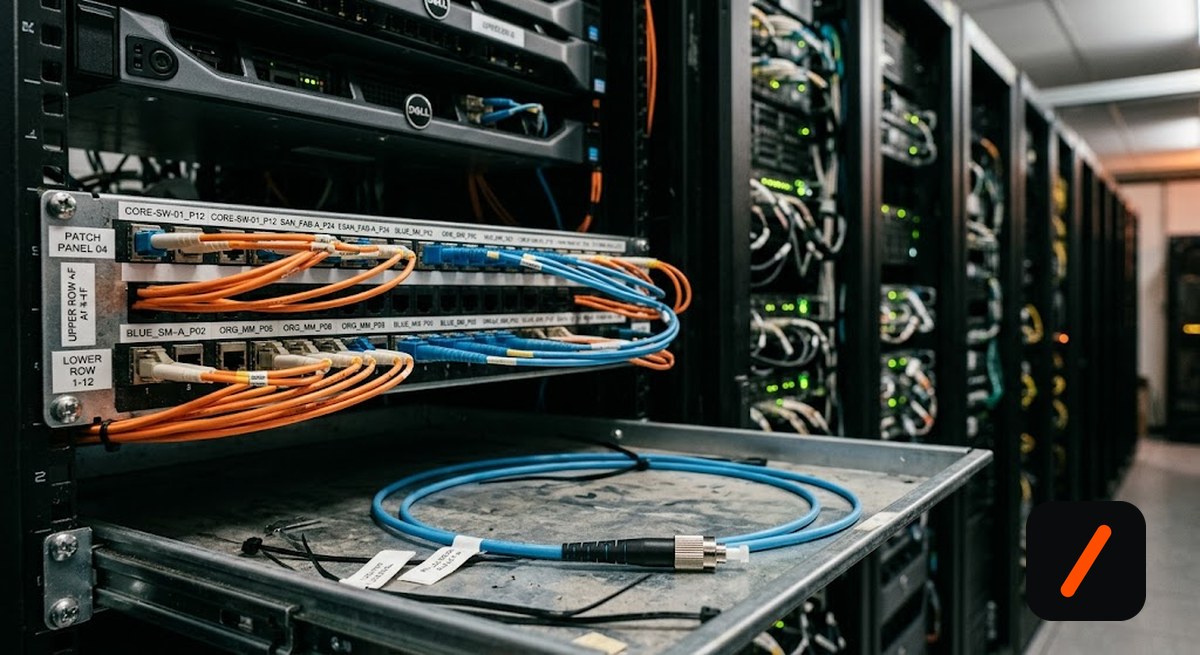
A single severed fiber line in eastern North America was enough to break large parts of the web, knocking out access to X, Reddit, Discord, Zoom, Canva, and Microsoft Teams for millions of users at once. The outage was localized, one cut, one region, yet it looked global, and that gap between what actually failed and what users experienced is the defining fragility of how the modern internet is built.
- A local failure looked worldwide. The June 22 fiber cut raised latency and caused timeouts for anyone routing through North America or reaching services in Europe, cascading across dozens of major sites.
- The internet is more centralized than it looks. A handful of providers, Cloudflare, Akamai, Fastly, sit in front of a huge share of traffic, so their bad day is everyone's bad day.
- AWS stayed up, and that was the tell. Amazon confirmed normal operations during the event, showing this was a network-path failure, not a datacenter meltdown.
- Physical infrastructure keeps being the weak link. Fiber cuts and submarine-cable faults were recurring causes across 2026's outage tally, and they take out international capacity wholesale.
What actually happened?
On June 22, 2026, Cloudflare acknowledged network degradation tied to a fiber cut in eastern North America. The immediate symptom was increased latency and timeouts for customers connecting through North America or reaching services in Europe, and Downdetector lit up as users hit failures across X, Reddit, Zoom, Discord, Canva, and Microsoft Teams. Crucially, this was not a datacenter going dark or a software bug corrupting data; it was a physical path being severed, forcing traffic to reroute and congest. AWS explicitly stated it was operating normally, which underlined the diagnosis: the problem was in the network between users and services, not in the services themselves.
RelatedWhat Happens When the Whole Web Trusts One Company
Why does one cut hit so many unrelated sites?
Because the modern web is far more consolidated than its decentralized reputation suggests. To get speed, security, and DDoS protection, most large sites sit behind a content-delivery network, and a small number of CDNs, Cloudflare, Akamai, Fastly, collectively front an enormous share of internet traffic. That is efficient and, most days, more reliable than every site running its own infrastructure. But it creates shared choke points: when the provider in front of thousands of sites has a bad network day, all of those sites inherit it simultaneously. The user cannot tell that X and Reddit and Teams failed for the same underlying reason; they just experience "the internet is broken," which is exactly how a one-region fiber cut becomes a global-feeling event.
Is this getting worse?
The frequency is roughly flat but the causes are shifting toward physical infrastructure. An outage tracker logged 26 major incidents in Q1 2026 and 25 in Q2, steady numbers, but submarine cable cuts kept recurring as a disruption type, and they are especially brutal because they eliminate international bandwidth outright: domestic traffic may survive while anything leaving the country simply cannot. The year's other headline incidents fit the pattern of fragility in shared systems, a broken DNSSEC signature for the entire .de top-level domain in May that briefly made millions of German domains unreachable, and a February Cloudflare BGP issue that withdrew routes for some customers. Different mechanisms, same lesson: the failures that hurt most are the ones inside infrastructure everyone quietly depends on.
What can anyone actually do about it?
For site operators, the honest answer is redundancy, and it is expensive. Running multiple CDNs with automatic failover removes the single-provider choke point, but it doubles complexity and cost, which is why most sites do not do it until an outage scares them into it. Multi-region and multi-provider DNS, health-checked routing, and the discipline to actually test failover are the difference between riding out a provider's bad day and going down with it. For everyone else, the takeaway is more sober: a meaningful slice of the services you rely on share a handful of upstream providers, and no amount of your own preparation changes that the next fiber cut or cable fault can take them down together.
RelatedSalesforce Global Outage Disrupts Amazon, Walmart, Toyota
- Multi-CDN adoption. Watch whether high-profile outages finally push more large sites onto redundant providers, or whether cost keeps single-CDN the norm.
- Submarine cable incidents. Cable cuts remove international capacity wholesale; each new one is a reminder that the physical layer is the real bottleneck.
- Concentration risk. The more traffic consolidates behind a few providers, the larger the blast radius of each one's bad day.
Our take
Every one of these outages produces the same headline, "the internet is down," and the same quiet correction, no, one provider's network is down and it happens to sit in front of half the sites you use. That correction is the whole story. We traded a genuinely decentralized web for a faster, safer, more consolidated one, and the bill for that trade comes due in exactly these moments, when a single fiber cut in one region cascades into a global-feeling blackout. It is not that Cloudflare or Akamai are unreliable; on balance they make the web sturdier. It is that consolidation concentrates risk, and the more of the internet that routes through a few choke points, the more spectacular each failure looks. Redundancy is the fix, redundancy is expensive, and that tension is not going away.
- Status Cloudflare incident history official record of the network degradation events
- Analysis DCD, on internet redundancy why CDN concentration is a single point of failure
- Reference Cloudflare internet disruption summaries cable cuts, DNS, and outage trend data
Original analysis by GenZTech. Incident data via Cloudflare Status.