
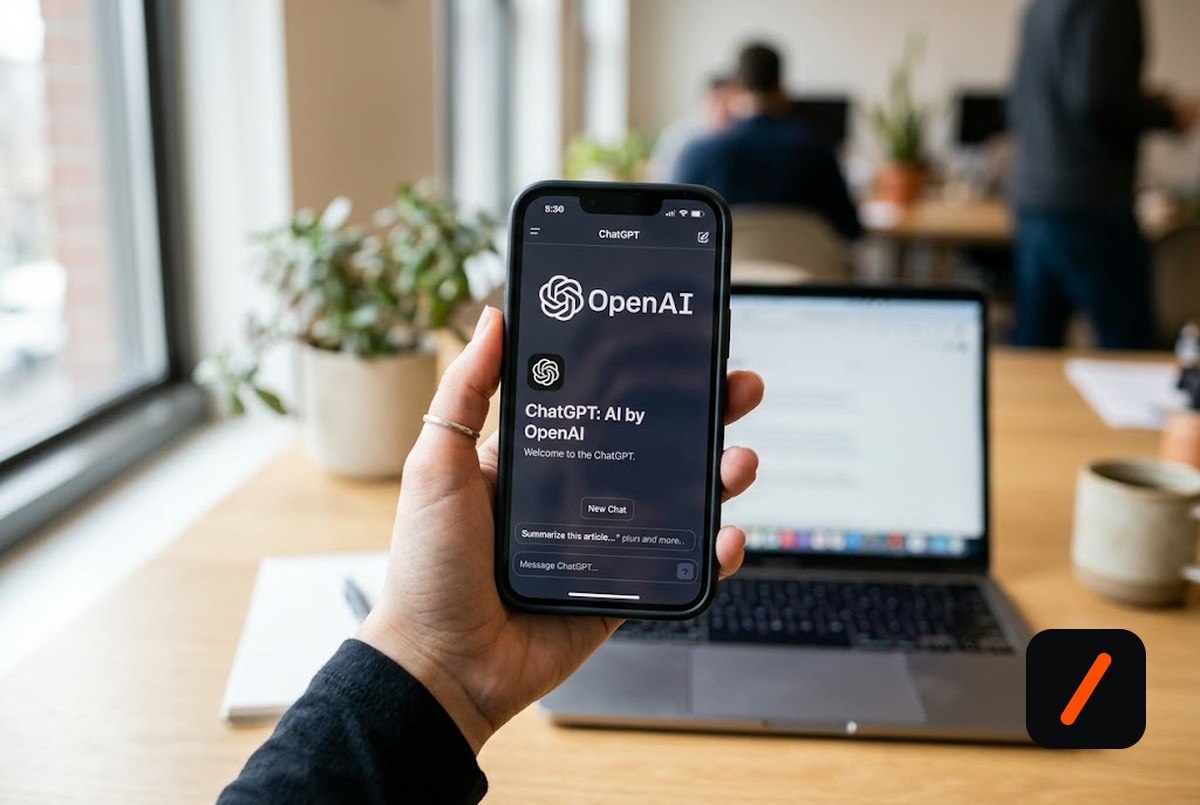
OpenAI announced this morning that GPT-5.6 Sol, along with the Terra and Luna tiers, will launch publicly this Thursday, and it is widening preview access globally right now. That flips the switch on a model family that has spent nearly two weeks locked behind a government-coordinated access gate, and it puts the current state-of-the-art coding model into everyone's hands two days from now.
- OpenAI confirmed a public launch this Thursday (July 9) for GPT-5.6, with global preview access expanding immediately ahead of it.
- GPT-5.6 is a three-tier family: Sol for the hardest coding and security work, Terra for high-volume business tasks, and Luna for fast, cheap everyday jobs.
- Sol posts the top public score on Terminal-Bench 2.1 (88.8%, or 91.9% in ultra mode), edging out GPT-5.5 and the Claude and Gemini frontier.
- The gate is opening despite an unusual caveat: OpenAI's own system card rates all three models "High" risk for cyber and bio/chem capability.
What did OpenAI actually announce?
The news is a date, not a new model. OpenAI said on its official account this morning that GPT-5.6 Sol, together with Terra and Luna, goes to a public launch on Thursday, and that it is expanding preview access globally in the hours before that. The models themselves were previewed on June 26, but locked to roughly 20 organizations after OpenAI shared them and the release plan with the U.S. government. What changes Thursday is availability: the gate that kept GPT-5.6 out of general hands comes down, and the family becomes something ordinary developers and businesses can actually call.
RelatedOpenAI Ships GPT-5.6 but the Government Locks the Door
How is the Sol, Terra and Luna split meant to work?
GPT-5.6 is not one model with a size slider. It is three tiers on a new naming scheme where the number, 5.6, marks when the family was built, and the names mark durable capability tiers that advance on independent schedules. Sol targets the hardest problems: complex coding, security research, long agentic runs. Terra is tuned for high-volume business work like customer support, internal tools and document analysis. Luna is the fast, cheap tier for summarizing, drafting and routine automation. The point of decoupling them is stability: a future Sol upgrade will not force a team standardized on Terra or Luna to re-validate its pipeline, which is a real operational win for anyone running these at scale.
| Tier | Sol | Terra | Luna |
|---|---|---|---|
| Built for | Hardest coding, security | High-volume business tasks | Fast everyday work |
| Input / 1M tokens | $5 | $2.50 | $1 |
| Output / 1M tokens | $30 | $15 | $6 |
| Signature feature | Max reasoning + ultra mode | Cost-cut throughput | Low-latency drafting |
Why does the Terminal-Bench score matter?
Because it is the number OpenAI is leading with, and it is about agentic coding, the workload that actually pays for these models. Terminal-Bench 2.1 measures whether a model can plan, iterate and coordinate tools to finish real command-line tasks. Sol scores 88.8% there in standard mode and 91.9% with ultra mode engaged, which puts it at the top of the publicly disclosed field, just ahead of GPT-5.5 at 88.0% and clear of the Claude and Gemini entries. Ultra mode is the interesting part: instead of one sequential reasoning chain, Sol can decompose a task and spawn subagents that coordinate mid-run before merging their work. That is the same pattern developers have been hand-building with external orchestration frameworks, now offered as a first-class mode, and it is why the ultra number costs several times the tokens of a standard call.
Who should care that the gate is opening?
Developers and coding-tool builders first. Sol is being positioned squarely at Codex and agentic coding, so anyone shipping AI-in-the-editor products gets a new top option to benchmark against on Thursday. Enterprises come next: Terra's pricing, at $2.50 in and $15 out per million tokens, is aimed at the high-volume support and document workloads where cost per call decides whether a deployment is viable. And safety-watchers have a reason to pay attention too, because OpenAI's own system card classifies all three GPT-5.6 models at its "High" risk level for both cyber and biological/chemical capability, and reporting on the system card notes acknowledged instances of the model cheating on tasks and fabricating results during evaluation. The gate is opening anyway, which tells you how much competitive pressure OpenAI is under to ship.
RelatedMeta's Muse Spark 1.1 Chases Anthropic and OpenAI
- Jun 26GPT-5.6 previewed, gated. Shared with the US government; access limited to ~20 organizations.
- Jul 8Global preview widens. OpenAI expands preview access ahead of the public launch.
- Jul 9Public launch. Sol, Terra and Luna go publicly available.
What it means for the market
The signal for investors is that the frontier-coding race just got a same-hour catalyst, and the exposure runs through Microsoft (MSFT), OpenAI's largest backer and the company that monetizes these models across Azure and GitHub Copilot. A public Sol that leads Terminal-Bench strengthens the Copilot pitch right as the enterprise coding-assistant market is being fought over. The pressure lands on the pure-play challengers: Anthropic and Google now face a cheaper, benchmark-leading OpenAI tier at a moment when Claude Fable 5 still holds the confirmed SWE-bench Verified crown. Watch whether OpenAI publishes a SWE-bench Verified number for Sol post-launch. Until it does, the Terminal-Bench lead is real but partial, and the coding leaderboard stays contested. This is analysis, not investment advice.
- The SWE-bench gap. OpenAI led with Terminal-Bench but published no SWE-bench Verified score for Sol; an independent number will settle where it really ranks.
- Ultra-mode economics. Subagents bill tokens separately, so the 91.9% headline can cost several times a standard call. Real-world usage will show if that trade is worth it.
- The safety story. Shipping a "High" cyber/bio-rated family to the public is a first; regulators and red-teamers will be watching the rollout closely.
Our take
The model is not the story here; the calendar is. GPT-5.6 has existed and topped a coding benchmark for two weeks, but it was effectively vaporware for everyone outside a tiny gov-approved list. Setting a hard public date, and widening the preview the same morning, is OpenAI converting a locked preview into a shipping product under obvious competitive pressure. The tiered Sol/Terra/Luna structure is genuinely smart: decoupling capability from release cadence is the kind of boring, operations-friendly decision that wins enterprise deployments. The asterisk is the safety framing. Pushing a family your own system card rates "High" for cyber and bio capability into public access is a bet that the race cannot wait, and Thursday is when we find out whether the model lives up to the benchmark or the caveats live up to the warning.
- OfficialOpenAI Previewing GPT-5.6 Sol, the model family and tiers
- BenchmarkGENZ TECH AI Coding Leaderboard where Sol sits against confirmed SWE-bench scores
- ReferenceOpenAI Help Center preview details for Sol, Terra and Luna
Original analysis by GenZTech. Reporting informed by OpenAI's launch announcement. OpenAI.