
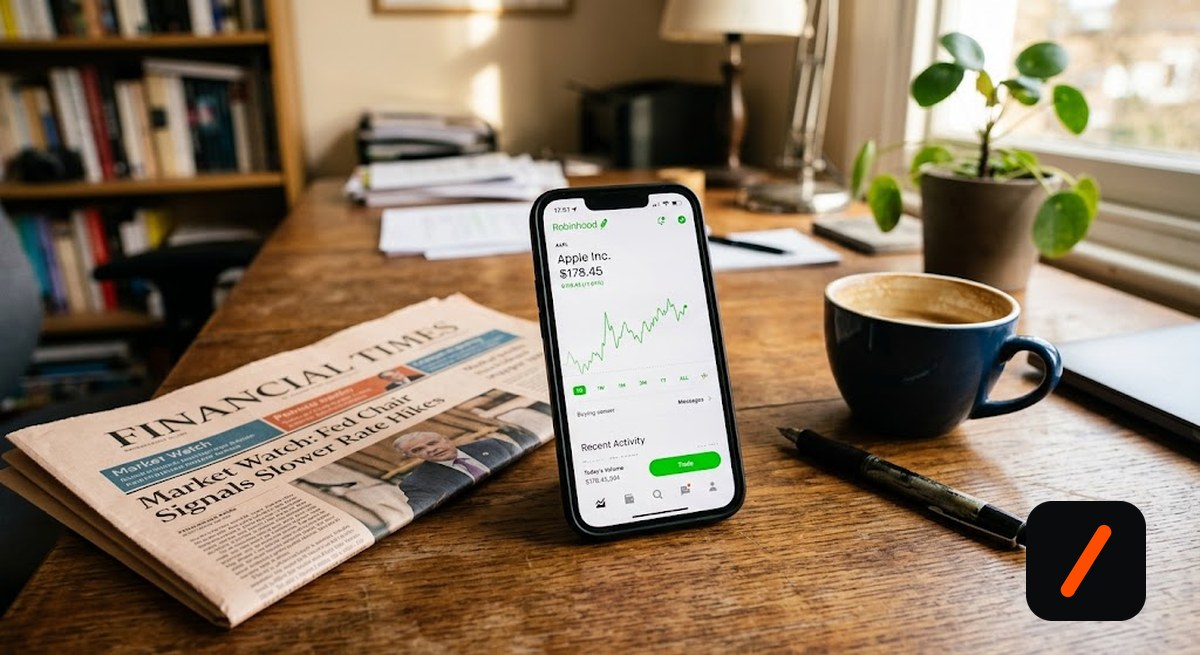
Tokenized stocks, real equities issued as blockchain tokens, have moved from experiment to a market with serious volume. Trading on Solana topped $10 billion for the first time this year, propelled by crypto investors chasing tokenized SpaceX (SPCX) shares across platforms like Ondo Finance, xStocks, and Sunrise. The bigger structural signal is institutional: the DTCC, the plumbing behind US securities settlement, begins facilitating tokenized production trades in July 2026. When the entity that clears traditional stocks starts handling tokenized ones, the line between Wall Street and Web3 gets much harder to see.
- Solana tokenized-stock volume passed $10B for the first time, driven by demand for tokenized SpaceX shares.
- xStocks has cleared roughly $25B in cumulative volume; Ondo Global Markets was first to $1B TVL with 260-plus stocks.
- Robinhood expanded its catalog past 2,000 tokens with a small minimum, widening retail access.
- The DTCC begins facilitating tokenized production trades in July 2026, and Nasdaq won SEC approval to add tokenized trading.
What is driving the volume?
Two things. First, access to assets retail traders could not easily touch, tokenized SpaceX shares let crypto investors get exposure to a hot private company, and that demand pushed Solana's tokenized-stock volume past $10 billion. Second, a genuinely crowded, competitive field. xStocks, backed through Kraken and other exchanges, has cleared roughly $25 billion in cumulative volume and boasts around 162,000 holders. Ondo Global Markets became the first to $1 billion in TVL, supporting more than 260 stocks. Robinhood expanded its tokenized catalog past 2,000 names with a tiny minimum, and Binance's bStocks went from zero to meaningful share in under a month. Competition on this scale is what turns a niche into a market.
RelatedAcross Got Hit on Solana and Users Lost Nothing
Why does the DTCC going live matter?
Because it is the institutional inflection point. The Depository Trust and Clearing Corporation is the backbone of US securities settlement, and its move to facilitate tokenized production trades in July 2026 signals that tokenization is being absorbed into the existing financial system rather than routed around it. Add Nasdaq's SEC approval to offer tokenized trading and NYSE parent ICE building its own venue, and the picture is clear: this is no longer crypto natives reinventing stocks, it is the incumbents adopting the rails. That is what separates this cycle from the failed tokenized-equity attempts of prior years.
What should buyers understand?
The critical caveat is ownership. A tokenized "AAPL" is not necessarily an Apple share; on most platforms it is price exposure backed by a custodian holding the underlying, without the voting rights or shareholder standing of the real security. That introduces counterparty and custody risk that direct ownership does not. The upside is real, 24/7 trading, fractional access, fast settlement, and global reach, but the structure varies by issuer, and "leadership" flips depending on whether you measure total volume, on-chain DEX trades, or unique holders. The signal for investors is that the category is maturing fast; the homework is understanding exactly what each token represents.
| Venue | xStocks | Ondo Global Markets | Robinhood |
|---|---|---|---|
| Edge | Total volume, ~$25B | First to $1B TVL | 2,000+ token catalog |
| Base | Solana, exchange-matched | Ethereum, on-chain | App-based, EU launch |
| Holders | ~162,000 | ~70,000 | Retail-focused |
| Rights | Price exposure | Price exposure | Price exposure |
What could still go wrong?
Plenty, and most of it lives in the gap between the marketing and the mechanics. The headline risk is that these tokens are usually custodial claims, not shares, so buyers depend on the issuer actually holding the underlying and honoring redemptions, which introduces counterparty risk that direct ownership avoids. A custody failure, a liquidity crunch, or a de-pegging event where a token drifts from the price of the asset it tracks would test that trust hard, and the sector has not been through a real stress event at this scale. Regulatory fragmentation is the other overhang: rules differ by jurisdiction, several platforms launched in Europe or offshore first, and a crackdown or a reclassification could strand liquidity or force products offline. There is also concentration in who issues and settles, so a problem at a major venue could ripple. The institutional adoption that makes this cycle credible, the DTCC and Nasdaq moving in, also raises the stakes if something breaks, because more mainstream money will be exposed. Tokenized stocks are further along than ever, but they are still an early market wearing the credibility of an old one, and that borrowed trust is exactly what an unresolved custody or regulatory shock could puncture.
RelatedEthereum L2s Hit a 2-Year Low. ZK Rollups Are Empty.
Our take
Tokenized stocks have crossed the threshold that killed earlier attempts: institutional adoption. When the DTCC, Nasdaq, and NYSE's parent are building for it, tokenization stops being a crypto sideshow and becomes a settlement upgrade for traditional finance. The volume driven by tokenized SpaceX shows the demand is real, especially for exposure that was previously locked away. The catch is that "you own a share" is doing a lot of work in the marketing, when most of these tokens are custodial price wrappers. The winners will be the platforms that make the structure transparent and the rights clear, because as the incumbents move in, trust and disclosure become the differentiators, not novelty.
- ReportTokenized xStocks surpass $25 billion in volume The Block
- ReportTokenized stock trading hits a record Benzinga
- ReferenceTokenized stocks: the venue landscape CoinMarketCap
Original analysis by GenZTech. Reporting via The Block. Not investment advice.