
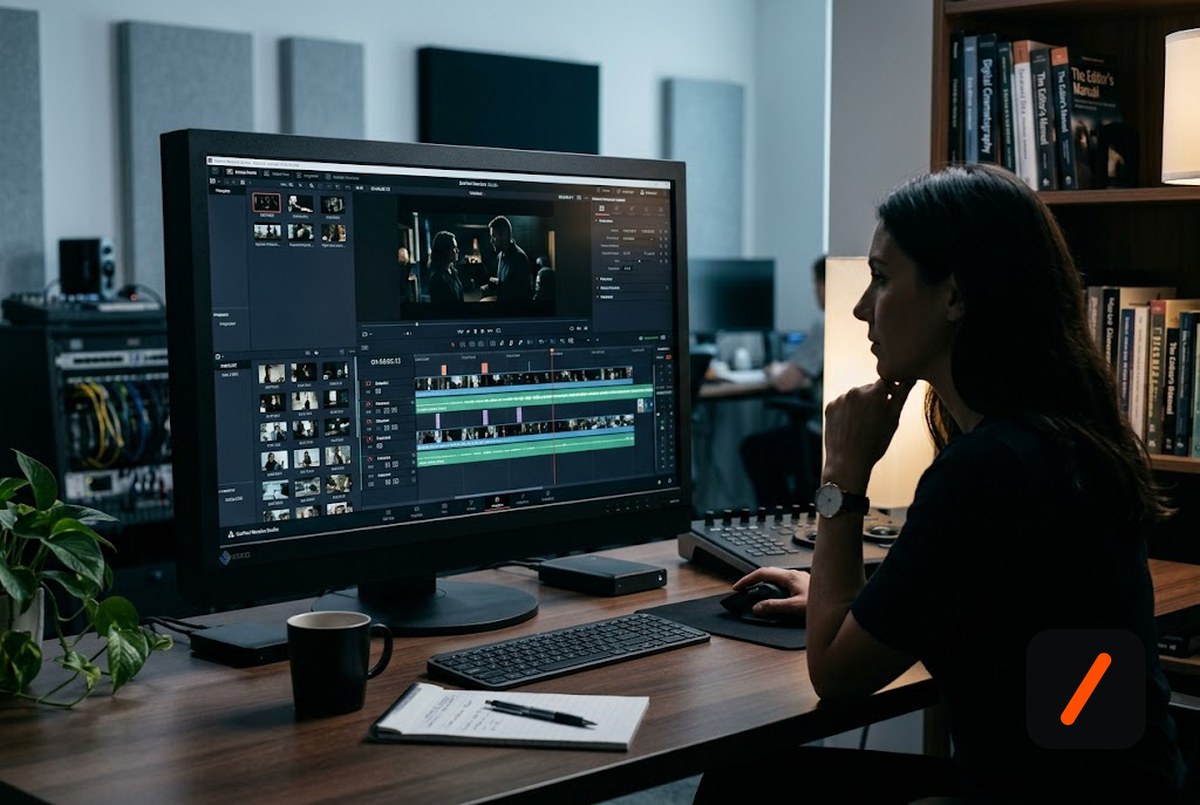
Twelve Labs, a San Francisco startup building AI that understands video the way language models understand text, has raised a $100 million Series B co-led by New Enterprise Associates and Naver Ventures. Its models are trained natively on video archives, so they can search inside footage, summarize it, and answer questions about what happens on screen, a capability most general-purpose AI still handles clumsily by turning video into disconnected still frames.
- Twelve Labs raised a $100M Series B co-led by NEA and Naver Ventures.
- Its models are trained natively on video, not on stills or transcripts bolted together after the fact.
- This unlocks semantic search, summarization, and moderation inside footage at scale.
- Video is the largest untapped modality in AI, and most LLMs still cannot reason across it natively.
Why is video such a hard problem for AI?
Because video is not just a stack of images. It is images plus motion plus audio plus the crucial dimension of time, where meaning lives in how things change from one moment to the next. The common shortcut, sampling a few frames per second and feeding them to an image model, throws away exactly what makes video video. It can tell you a person is in the frame, but not that they walked in, sat down, and signed a contract, because that story is in the sequence. Twelve Labs trains on video as a native modality so the model learns temporal structure directly, which is why it can answer questions that a frame-sampling pipeline cannot even represent.
RelatedTwelveLabs raises $100M to make video searchable by AI
What does this actually enable?
The immediate applications are search and understanding at a scale humans cannot match. Media companies sitting on decades of archives can suddenly find any moment by describing it in plain language. Enterprises can index recorded meetings, training footage, and support calls and query them like a database. Content platforms can moderate and categorize uploads automatically. Sports, security, and advertising all generate oceans of video that are currently near-impossible to search, and a model that understands footage semantically turns that dead archive into a queryable asset. The pitch to investors is that video is the biggest pile of unstructured data in the world and almost none of it is searchable, which is a large market hiding behind a hard technical problem.
| Approach | Frame-sampling LLM | Video-native model |
|---|---|---|
| Understands motion | No, sees stills | Yes, models time |
| Search a moment | Keyword or timestamp | By meaning, in plain language |
| Long footage | Expensive, lossy | Built for scale |
| Audio + visual | Usually separate | Fused together |
Why did NEA and Naver back it now?
Timing and specialization. The AI funding market in 2026 is brutally concentrated, with the biggest checks flowing to a handful of frontier labs, so a $100 million round for a focused startup signals real conviction rather than hype money. Two things make Twelve Labs attractive. First, it owns a modality the giants have not prioritized: the frontier labs chase general intelligence, leaving video understanding as a deep, defensible niche. Second, Naver's involvement is strategic, not just financial, tying the company to a major Asian internet platform with enormous video assets and distribution. In a market where general AI is a war of attrition between the richest companies on earth, a startup that dominates one hard modality is a more investable bet than another would-be generalist.
What are the risks?
The obvious one is the frontier labs turning their attention to video. Today's large models handle it poorly, but that is a choice of priorities, not a permanent limitation, and a well-funded lab deciding video matters could compress Twelve Labs' lead quickly. The counterargument is that specialized data, tooling, and customer relationships built over years are a moat that a generalist cannot instantly replicate, and that being the default video layer for enterprises is a durable position. The other risk is commoditization: if video understanding becomes a checkbox feature bundled into general models, the standalone market shrinks. The $100 million is essentially fuel to build enough of a lead, and enough customer lock-in, before either of those scenarios arrives.
RelatedGeneral Intuition Raises $320M to Train AI on Games
- Enterprise logos. The signal that matters is named customers indexing real archives, not demos.
- Naver integration. Watch whether the strategic tie turns into distribution across Naver's video surfaces.
- Frontier encroachment. If a major lab ships strong native video, Twelve Labs' moat gets tested fast.
- Pricing power. Video inference is costly. Watch whether the unit economics of understanding footage at scale hold up.
Our take
Twelve Labs is a bet that the next frontier of useful AI is not a smarter chatbot but a machine that can finally watch. Text was the first modality to fall, images followed, and video, the largest and messiest pile of human data, is the obvious next target and the hardest. Backing a specialist here is shrewd precisely because the giants are distracted chasing general intelligence, which leaves a genuinely valuable capability underserved. The risk is real: modalities that look like moats can become features overnight when a frontier lab decides to care. But if any category rewards a focused team with years of head start on hard, proprietary data, it is this one. The company that makes the world's video searchable is building something the current AI leaders have conspicuously left on the table.
- OfficialTwelve Labs product and model details
- FundingCrunchbase News round and investor coverage
- ReferenceNew Enterprise Associates co-lead investor
Original analysis by GenZTech. Source: Twelve Labs. Figures current as of July 2026.