
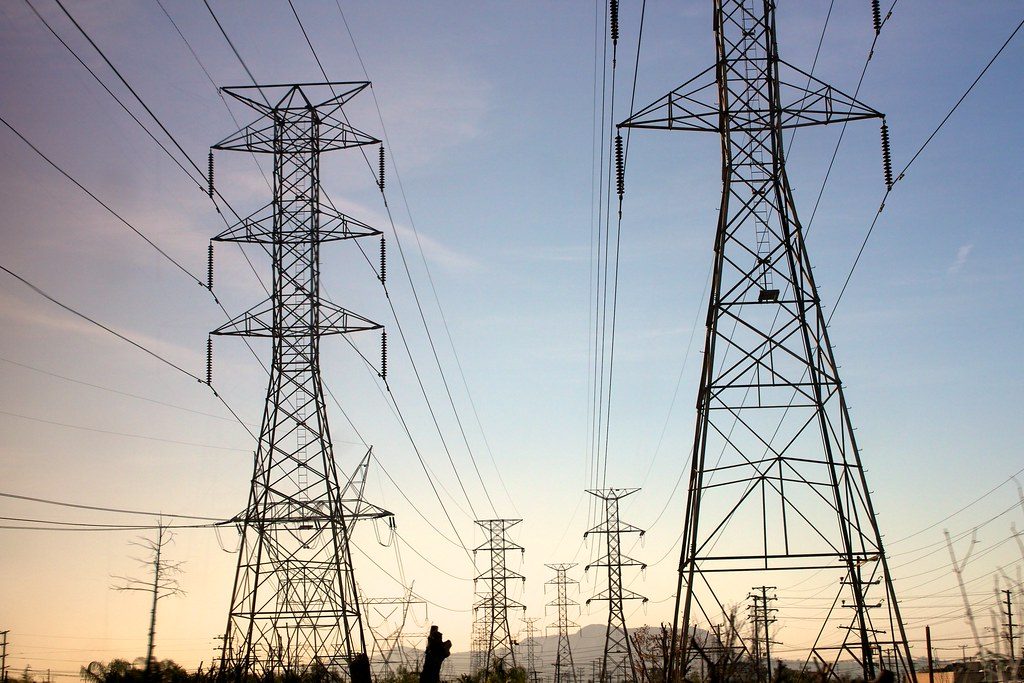
The biggest venture round of the week did not go to a model lab or a chip startup. It went to power. Houston-based Joulent raised $1.75 billion in a strategic investment backed by utility giant National Grid through its National Grid Ventures arm, to build energy infrastructure aimed squarely at the demands of AI and other compute-intensive industries. The round is a plain statement of where the AI bottleneck is moving: away from GPUs and toward the electricity to run them.
- Joulent raised $1.75 billion, the largest round of the week, in a strategic deal backed by National Grid Ventures.
- The company builds energy infrastructure for AI data centers and other compute-intensive industries.
- It topped a week that also saw Together AI ($800M) and defense firm Quantum Systems ($1.2B) raise megarounds.
- Global VC hit a record $510B in H1 2026, concentrated in AI, defense, and the physical infrastructure underneath them.
Why is a utility backing a startup?
The most telling detail is who wrote the check. National Grid is one of the largest electricity and gas utilities in the world, and it invested through National Grid Ventures rather than as a pure financial backer. That is a strategic signal, not a hedge. Utilities see the demand curve firsthand, and AI data centers are reshaping it, clustering enormous, steady loads in specific places faster than traditional grid planning can serve them. By funding Joulent, National Grid is betting that purpose-built energy infrastructure for compute is a category worth owning early, and it is bringing operational credibility that a typical VC syndicate cannot.
RelatedHelsing Raises $1.8B at $18B Valuation for Defense AI
What is actually the bottleneck now?
For two years the AI conversation centered on GPU scarcity. That constraint is easing as fabs ramp and competitors like AMD ship at scale, and the binding limit is shifting to something far harder to manufacture: electricity, and the substations, interconnects, and generation to deliver it. A frontier training cluster can draw as much power as a small city, and grid interconnection queues stretch for years in many regions. You can order more chips faster than you can energize a new gigawatt of load. That inversion is the entire thesis behind Joulent's round, and it explains why the largest check of the week went to power rather than to another model.
| Constraint | Power (2026 focus) | Chips (2023-2025 focus) |
|---|---|---|
| Lead time | Years, grid-dependent | Months, fab-dependent |
| Who supplies it | Utilities, new infra firms | TSMC, Nvidia, AMD |
| Scalability | Hard, physical + regulatory | Improving fast |
| Where capital flows | Joulent, energy infra | Still large, but easing |
Who wins and who is squeezed?
The winners are the hyperscalers and AI labs that can lock in reliable power near their compute, and the infrastructure firms that build it. The squeezed are everyone downstream of a strained grid: regions where data-center demand competes with residential and industrial load, and smaller AI companies without the balance sheet to secure dedicated capacity. There is a broader market signal in the mix too. Crunchbase pegged global VC at a record $510 billion for the first half of 2026, overwhelmingly concentrated in AI, defense, and infrastructure. The early-July theme, as one roundup put it, was investors targeting the plumbing of AI, the compute, data pipelines, and power that make large-scale models possible.
There is also a signal in who moved first. Utilities are famously conservative allocators, so a strategic check this size from National Grid Ventures suggests the demand it sees is not speculative but already booked. Data-center operators are signing long-term power agreements years ahead of construction, and the firms that can guarantee delivery are effectively selling scarcity. Joulent is raising against that scarcity, and the size of the round is a measure of how real, and how immediate, the shortfall has become across the regions where compute wants to cluster.
RelatedQuantum Systems Raises $1.2B for Defense Drones
Our take
Joulent's raise is one of the clearest tells of where AI is in its build-out. When a global utility leads a $1.75 billion strategic round into energy infrastructure for compute, the market is saying out loud that power has become the scarce input. That is healthy in one sense, because AI cannot scale on chips alone and someone has to build the physical layer. It is also a warning, because energy is slow, capital-intensive, and politically contested in a way silicon is not. The companies that secure power will set the pace of AI for the rest of the decade, and rounds like this are how that race is being funded. Expect more utility-backed infrastructure bets, not fewer.
- More utility-led rounds. National Grid's move is a template; watch other utilities fund compute-power startups directly.
- Interconnection reform. Whether grid-queue and permitting bottlenecks ease, since they cap how fast any of this scales.
- Power-adjacent deals. Nuclear, geothermal, and on-site generation tie-ups with data-center operators.
- Concentration risk. Whether record H1 VC keeps piling into a narrow AI-infra lane, and what happens if demand softens.
- FundingCrunchbase biggest funding rounds weekly megaround tracking
- ReportTech Startups July 1 funding roundup the week's deals in context
- ReferenceNational Grid Ventures the strategic investor's mandate
Original analysis by GenZTech. Figures current as of July 2026.