
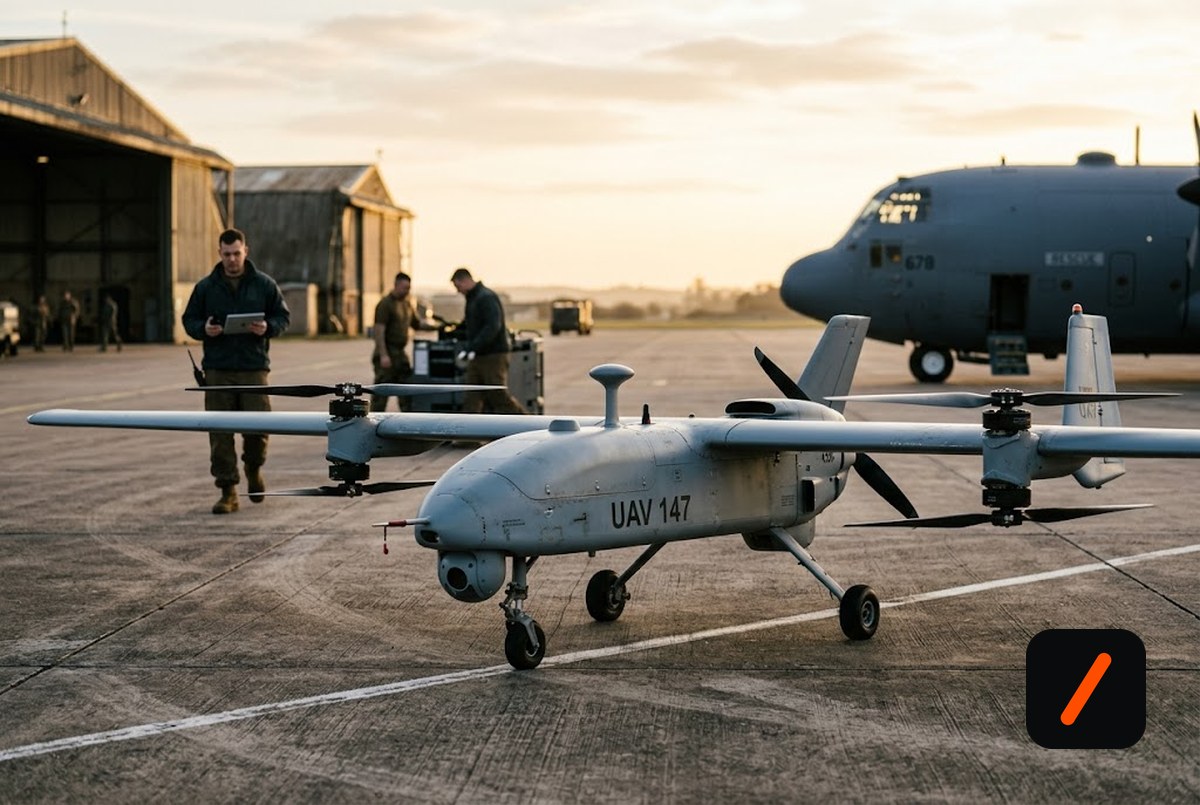
Quantum Systems, the Munich drone maker, has closed a $1.2 billion Series D, one of the largest defense-technology rounds ever raised in Europe and a round that turns a promising startup into a well-funded defense prime. It is the clearest signal yet that venture capital, which spent a decade avoiding weapons, now sees European defense as one of the most fundable sectors on the board.
- Quantum Systems raised a $1.2B Series D for autonomous reconnaissance drones, dated July 2, 2026.
- The investor mix spans private equity, sovereign wealth funds and defense corporations, not just traditional venture firms.
- The round reflects a broader shift: European defense is back on the VC radar after years on the sidelines.
- It lands in a market where global venture hit $425B in 2025, with the biggest checks going to AI, defense and hard technology.
What happened?
On July 2, 2026, Quantum Systems announced a $1.2 billion Series D, an extraordinary sum for a European hardware company and a defining moment for the continent's defense-technology scene. The company builds uncrewed aerial systems, fixed-wing drones with vertical takeoff designed for reconnaissance and situational awareness, and it has become one of Europe's most visible suppliers of that capability. A round of this size does not just extend a runway; it funds the manufacturing scale, autonomy software and headcount needed to compete with established primes rather than sell into them.
RelatedHelsing Raises $1.8B at $18B Valuation for Defense AI
Why is defense tech suddenly fundable?
For years, most venture firms treated defense as off-limits, blocked by limited-partner mandates and reputational caution. That has changed sharply. Russia's war in Ukraine demonstrated that cheap, software-defined drones can reshape a battlefield, European governments have committed to sustained increases in defense spending, and investors have concluded that the sector is both strategically unavoidable and highly fundable. The result is a wave of capital chasing autonomy, sensing and uncrewed systems. Quantum Systems is the largest expression of that thesis so far, but it is not alone: Canada's Dominion Dynamics raised a $100 million Series A for uncrewed systems in the same window, a figure that would have been unthinkable for a military drone builder a few years ago.
| Round | Quantum Systems | Together AI | TwelveLabs |
|---|---|---|---|
| Sector | Defense / drones | AI cloud | Video AI |
| Round | Series D | Series C | Series B |
| Amount | $1.2B | $800M | $100M |
| Region | Europe (Munich) | US | US |
| Backers | PE, sovereign, defense | Strategic (Aramco VC) | NEA, NAVER, Amazon |
What does the money buy?
A billion-dollar-plus round in hardware goes toward things software startups rarely need: factories, supply chains, certification, and the working capital to build physical inventory ahead of orders. It also funds the part that increasingly decides who wins, the autonomy and data software that lets a fleet of drones operate with minimal human input and turn raw sensor feeds into usable intelligence. The investor mix of private equity, sovereign wealth and defense corporations is telling. These are patient, strategic backers who expect long procurement cycles and want a stake in a supplier that governments will depend on, not a quick venture exit. That patience is itself a signal: hardware defense companies cannot grow at the pace of a software startup, because every unit has to be built, tested and certified, and orders arrive through slow government channels rather than self-serve signups. A round this large is a bet that Quantum Systems can turn capital into physical manufacturing capacity fast enough to meet a demand curve that, for once, points sharply upward.
Who is affected?
The immediate beneficiaries are European governments seeking domestic suppliers rather than dependence on US primes, and a startup ecosystem that now has a credible flagship to rally around. The shift also pressures incumbent defense contractors, whose slow, expensive programs look increasingly out of step with cheap, iteratively-improved autonomous systems. And it raises real questions the sector has to answer honestly, about export controls, oversight and the ethics of funding autonomous weapons, which no amount of capital makes go away. A $1.2 billion round buys scale, but it also buys scrutiny.
RelatedProxima Fusion raises 411M euro for stellarator power
- Contract conversion. The test is turning a huge round into signed government procurement, not just capacity.
- The autonomy layer. Hardware commoditizes; the software that coordinates fleets is the durable moat.
- Copycat rounds. Expect more nine and ten-figure European defense raises if this one performs.
- Oversight. Regulation and export rules will shape which markets these systems can actually serve.
Our take
The size of this round is the story, but the shift it represents is bigger. Venture capital spent a decade treating defense as untouchable, and a $1.2 billion check into a European drone maker is the loudest signal yet that the taboo is gone. That is rational given the strategic reality, and a strong domestic supplier base has genuine value for the governments backing it. It also deserves clear eyes: funding autonomous military systems at venture scale accelerates a category with serious ethical and oversight stakes. Quantum Systems is now one of Europe's most important hard-tech companies, and how responsibly this capital is deployed will matter as much as how fast.
- OfficialQuantum Systems company and product information
- FundingVC funding roundup, July 2 the round in context
- ReferenceCrunchbase News weekly funding data
Original analysis by GenZTech. Round details as reported in early July 2026.