
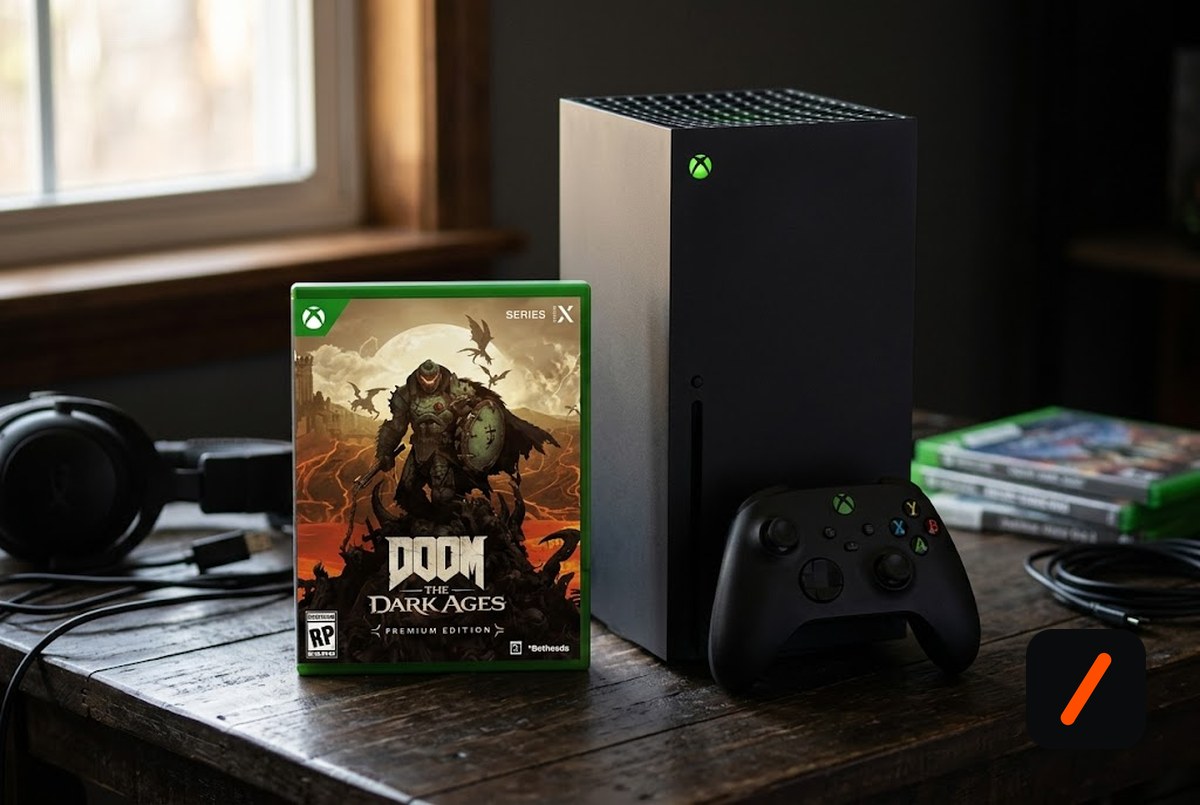
Microsoft's Xbox layoffs have gutted id Software, and the details that surfaced over the past day, with fresh confirmations landing tonight, show the studio's legendary idTech engine team was among the hardest hit. Roughly half of the roughly 200-person studio, about 95 people, were let go on July 6, and by multiple accounts the cuts fell heaviest on the programmers, tools engineers and QA who built and maintained idTech, the proprietary engine behind DOOM, Quake and Wolfenstein. The layoffs landed the same day id shipped DOOM: The Dark Ages Revelations, its first major DLC.
- About 50% of id Software, roughly 95 of ~200 staff, were laid off on July 6 as part of Xbox's wider cut of about 3,200 jobs across FY2027.
- The idTech engine team was disproportionately hit: tools, most programming, the Quake Champions team and QA were reportedly gone, leaving mainly leadership and art/design.
- Industry veterans George Broussard and Scott Miller say id is now essentially a support studio, with Broussard writing "RIP idTech" and "id is essentially dead, at least for the time being."
- The cuts hit the day id released DOOM: The Dark Ages Revelations, and a 20-plus-year senior programmer, Michael Maynard, confirmed his own layoff on LinkedIn.
What actually happened at id Software?
On July 6, Microsoft executed a broad reset of its Xbox division, cutting about 3,200 roles across FY2027 with roughly 1,600 gone on day one. id Software, the Texas studio Microsoft owns through its 2021 ZeniMax acquisition, lost about half its staff, roughly 95 of around 200 people. The composition of the cut is the striking part. Per quotes gathered by Apogee and 3D Realms co-founder George Broussard and echoed by co-founder Scott Miller, most of the engine programmers, the tools team, the QA and testing group, and the Quake Champions team were let go, leaving the studio weighted toward leadership, art and design. Senior gameplay systems programmer Michael Maynard, who says he spent more than 20 years at id from RAGE through DOOM: The Dark Ages, confirmed on LinkedIn that he was among those let go.
RelatedTony Hawk’s Pro Skater 1+2 Skates Onto Game Pass
Why is the idTech engine the real story?
Because a game engine is only as alive as the team that maintains it. idTech is one of the last cutting-edge engines in the industry not built or licensed from Epic's Unreal, prized for the buttery frame rates that make DOOM run at 60-plus frames per second on modest hardware. That performance is not free: it comes from a small, deep-expertise group of rendering and tools engineers who tune the engine game after game. Cut most of that group and the engine does not vanish overnight, but the institutional knowledge to advance it does. That is why veterans reacted to a headcount number with an obituary for a piece of technology. Broussard put it bluntly: "RIP idTech, which was amazing."
| Dimension | id Software before | id Software after (reported) |
|---|---|---|
| Headcount | ~200 | ~105 (about half cut) |
| Engine team | Owns and advances idTech | Most programmers gone |
| Tools and QA | In-house | Reportedly cut |
| Studio role | Lead developer | Feared support studio |
| Franchises | DOOM, Quake, Wolfenstein | Possibly aided by MachineGames |
Read across the columns and the worry is clear. Nobody has said DOOM is cancelled, but a studio that no longer owns the engineering to run its own engine is a different kind of studio. Bethesda has said it will rally around Fallout, The Elder Scrolls, Wolfenstein, DOOM and Quake, yet it is unclear who is left to build the DOOM and Quake entries.
How did this unfold?
- 2021Microsoft closes its ZeniMax acquisition. id Software becomes a first-party Xbox studio.
- May 2025DOOM: The Dark Ages ships. Built on idTech, praised for performance.
- Jul 6, 2026Xbox cuts ~3,200 jobs. id loses ~50% of staff; engine team hit hardest.
- Jul 6, 2026DOOM: The Dark Ages Revelations DLC launches. The first major add-on ships the same day as the cuts.
- Jul 6-7, 2026Veterans warn "id is essentially dead." Broussard and Miller detail the scale on social media.
- NextWho maintains idTech? MachineGames, a consolidated engine, or nobody.
Who is affected beyond id?
The same wave hit hard across Microsoft's studios. Reports say Obsidian lost 60 to 70 developers, and ZeniMax Online Studios, maker of The Elder Scrolls Online, was struck again after last year's cancellation of Project Blackbird. For id specifically, the human cost is a bench of specialists whose skill set, low-level engine and rendering work, is rare and slow to rebuild. Broussard's sharpest criticism was aimed at the framing: Microsoft not closing the studios is "decent PR," he argued, while the teams are now "out of the MS lifeboat, on their own," having sold to Microsoft in the first place to feel safe.
RelatedBrazil court forces Microsoft to restore hacked Xbox library
What happens to DOOM and Quake now?
Nothing has been cancelled, and DOOM: The Dark Ages Revelations is live. But the plausible futures narrow. One path: MachineGames, the Wolfenstein studio, inherits DOOM and Quake and either carries idTech forward or ports the franchises onto a shared engine. Another, the one veterans fear, is that Xbox consolidates its many in-house engines, and idTech is quietly retired in favor of a common toolchain used across its shooters. Microsoft has not detailed id's mandate, and until it does, the engine's future is the open question the layoffs created.
- idTech's maintainer. The single clearest signal is whether Microsoft names a team to keep advancing the engine, or lets it stall.
- id's next project. A greenlit new DOOM or Quake with id as lead would contradict the "support studio" read. Watch for it.
- MachineGames' role. If DOOM and Quake move under MachineGames, that confirms the reshuffle veterans are describing.
- Official word. Microsoft has stayed vague on id specifically. A concrete statement about the studio's future is overdue.
Our take
The headline number, half a studio, is grim on its own, but the part that should worry anyone who cares about games technology is where the axe fell. Cutting the engine and tools team is not the same as trimming a bloated org, it is removing the specific, hard-to-replace expertise that made id id. DOOM will probably keep shipping, and Microsoft will keep the marquee name alive because the brand is valuable. What may not survive is idTech as a living, advancing engine, and with it one of the last credible alternatives to a games industry standardizing entirely on Unreal. That homogenization is the quiet loss underneath the layoff story. id Software pioneered the first-person shooter and the idea that an engine could be a work of art in itself. Reducing it to an asset to be reorganized is a genuinely sad way to treat that legacy, even if the studio's sign still hangs on the door.
- ReportingVGC: Xbox layoffs gut id's coding team scope across id and Obsidian
- ReportingPush Square: id hit extremely hard which teams were cut
- ReportingGamesRadar+: "id is essentially dead" Broussard's full comments
- OfficialXbox Wire Microsoft's gaming division announcements
- Referenceid Tech engine history and lineage
Original analysis by GenZTech. Figures current as of July 7, 2026. Source: VGC.