
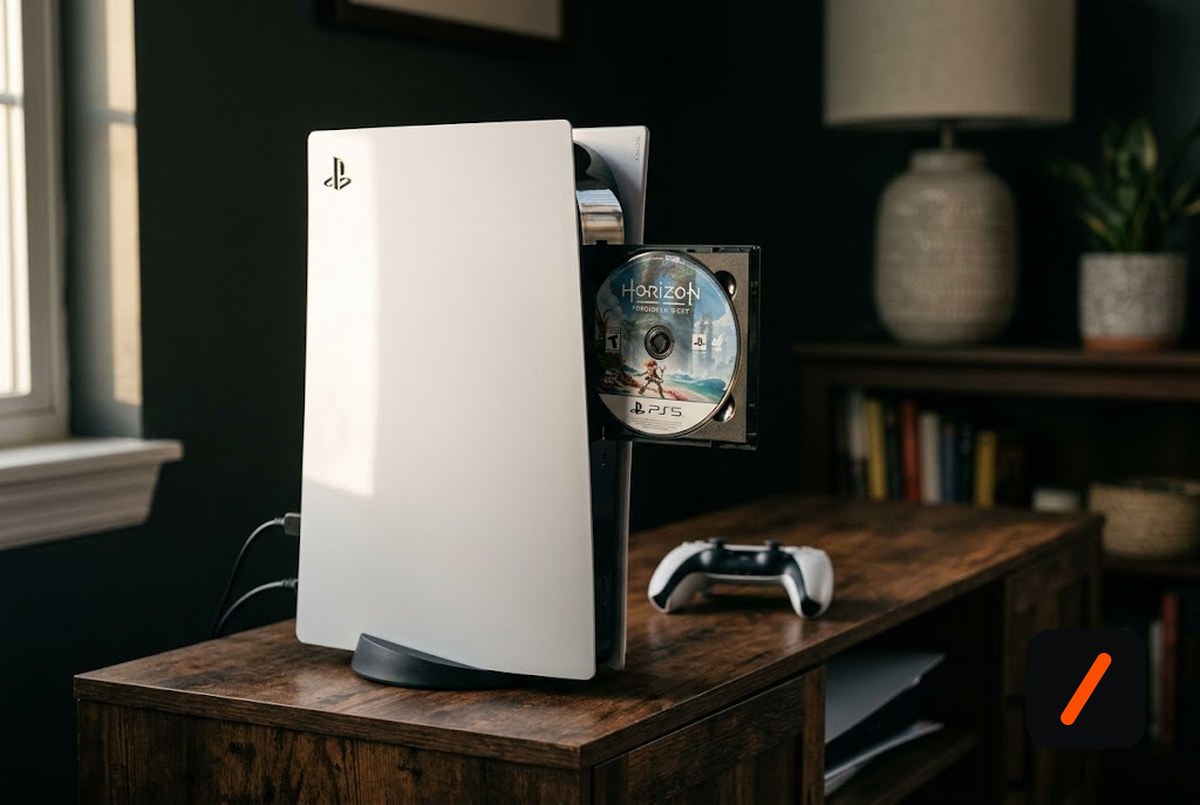
Sony is steering PlayStation toward an all-digital future, and the pushback is loud. The company's move away from physical discs has drawn sharp public criticism, including from legendary designer Hideo Kojima, who says he is really sad about the shift and frightened for the future of ownership. Beneath the celebrity headline is a real question every player now faces: when games have no disc, what do you actually own?
- Sony is phasing out physical PlayStation discs, pushing players toward digital-only purchases.
- Hideo Kojima publicly called it sad and said he is frightened for the future of ownership.
- A digital purchase is really a license, tied to your account and revocable, not a thing you own outright.
- The fight is about resale, lending, and preservation, all of which discs allow and licenses do not.
Why do discs still matter in 2026?
Because a disc is property in a way a download is not. When you buy a physical game, you own that copy: you can sell it, lend it to a friend, take it to another console, and play it in twenty years whether or not the publisher still exists. A digital purchase is a license. You are buying permission to access the game through an account, and that permission is governed by terms you do not control. If a store delists a title, shuts down, or closes your account, the games can simply vanish, and there is no shelf to fall back on. Discs are the last consumer-held guarantee that a game you paid for stays yours regardless of corporate decisions.
RelatedPSN Outage Locks Players Out of Games They Already Bought
What is Kojima actually worried about?
Preservation and permanence, not nostalgia. Kojima builds games as cultural works meant to last, and an all-digital ecosystem makes their survival dependent on storefronts that inevitably shut down. Gaming history is littered with titles that became unplayable once their digital store closed or their servers went dark, with no physical copies to preserve them. When the disc disappears, so does the archival backstop. His fear is that a generation of games could become inaccessible not because the technology died but because a company decided to stop hosting them, and that art tied entirely to a corporate server has a shelf life set by quarterly earnings rather than by culture.
| Right | Physical disc | Digital license |
|---|---|---|
| Resell | Yes, freely | No |
| Lend or gift | Yes | Rarely, restricted |
| Play if store closes | Yes | Often no |
| Survive account loss | Yes | No |
| Convenience | Lower | Higher |
Why is Sony doing this anyway?
The economics are overwhelming, and it is worth being clear-eyed about them. Digital sales cut out manufacturing, shipping, retail shelf space, and the used-game market that returns nothing to publishers. Every download is higher margin, fully controllable, and immune to resale that competes with new copies. Digital also enables the recurring revenue Sony wants: subscriptions, always-updated storefronts, and direct relationships with players. From a balance-sheet view, discs are friction the industry has wanted to shed for years. The convenience is real for players too, instant purchases, no swapping discs, but the business motive is the engine, and it points in exactly one direction regardless of what a vocal minority prefers.
Can anything reverse the trend?
Realistically, no, but the backlash can shape the terms. Physical media is fading across all entertainment, and games are following film and music. What consumer pressure can win is not the survival of discs but better protections in their absence: clearer rights when a store shuts down, legally recognized digital resale, family sharing, and preservation carve-outs that let institutions archive games. The Kojima intervention matters because it moves the conversation from consumer grumbling to industry conscience, and a famous creator saying the quiet part out loud makes it harder for platforms to pretend a license and ownership are the same thing. The disc is probably lost. The principle it protected is still worth fighting for.
RelatedXbox Rescues Kojima's Physint After Sony Quietly Canceled It
- Next console design. Whether Sony's future hardware even includes a disc drive is the clearest signal of intent.
- Preservation policy. Watch for any legal or industry moves to protect delisted games from disappearing.
- Digital resale. If regulators or courts recognize a right to resell downloads, the whole calculus changes.
- Creator pressure. Kojima is rarely alone for long. Watch which other big names join the ownership fight.
Our take
Sony killing discs is rational business and a genuine loss at the same time, and both can be true. The convenience of digital is real and most players will happily trade a shelf of cases for instant downloads. But convenience is not the same as ownership, and the industry has quietly relabeled a rental as a purchase and hoped nobody would notice. Kojima noticed, and his warning about preservation is the part that should stick: games are culture, and culture that lives only on a corporate server survives only as long as the server is profitable. The disc is a doomed format. What matters now is whether the games industry replaces the protections discs provided or simply pockets the margin and lets a generation of art quietly become unplayable.
- OfficialPlayStation platform and storefront
- ReferenceVideo Game History Foundation preservation advocacy
- ReferenceVGC industry coverage of the shift
Original analysis by GenZTech. Source: PlayStation. Figures current as of July 2026.