
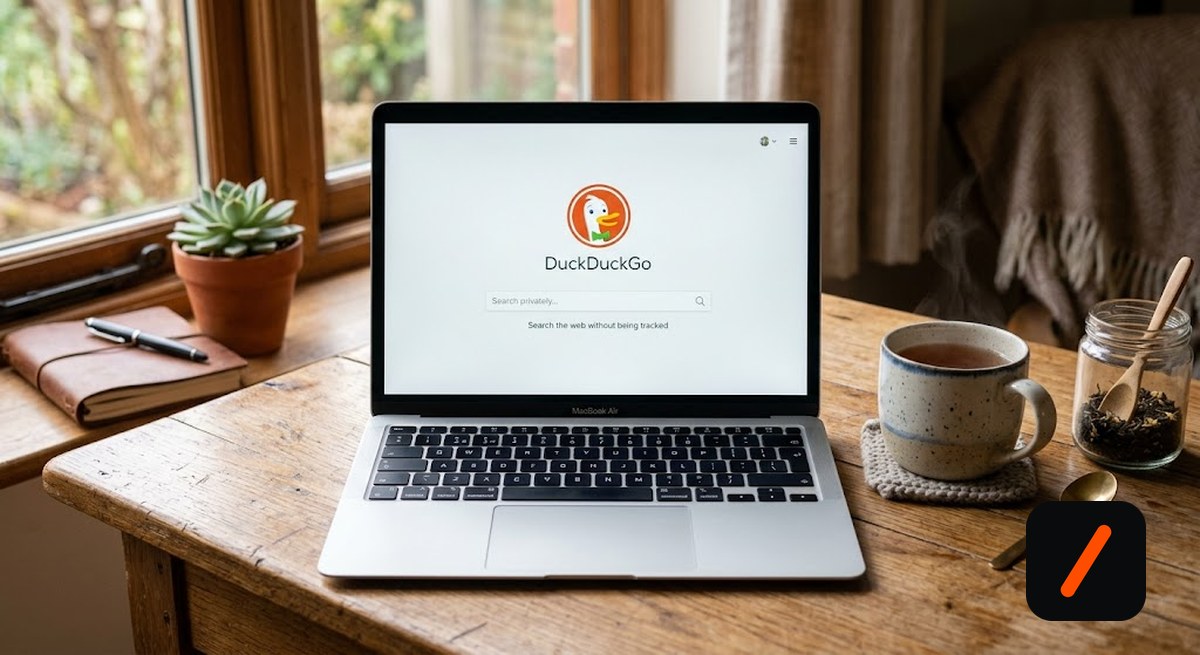
A counter-movement is forming in the browser wars: as Chrome, Edge, and Opera race to embed AI agents, DuckDuckGo says its US installs jumped 30% and traffic to its no-AI search page tripled, while Vivaldi is loudly doubling down on a "browse without AI" stance. The split is now explicit. One camp is betting the browser becomes an agent that acts for you; the other is betting a meaningful slice of users just want the web to stay a tool they control.
- DuckDuckGo is growing on the backlash. A 30% jump in US installs and a tripling of traffic to its dedicated no-AI search page followed Google's AI overhaul of Search.
- Vivaldi picked a side. The browser is explicitly anti-AI, prioritizing privacy and customization over agentic features, and joined DuckDuckGo's AI-free push.
- The market is splitting in two. Opera and Brave lean into AI agents; Vivaldi and DuckDuckGo market themselves as the AI-free alternative.
- Features back the stance. DuckDuckGo added built-in YouTube ad blocking, and Vivaldi shipped 8.1 release candidates on desktop and Android.
What is actually happening?
Google's aggressive weaving of generative AI into Search, including AI-generated answers at the top of results, triggered a visible backlash. DuckDuckGo, which built a dedicated no-AI search experience, reported a 30% jump in US installs and a tripling of traffic to that page. Vivaldi, long a customization-first browser, made its position explicit by joining the "browse without AI" push and reaffirming that it will not ship autonomous agentic features. This is not a fringe protest; it is measurable user movement toward products that promise to leave the AI out.
RelatedAI Browsers Are Coming for Chrome's 90% Grip
Why are some users rejecting AI browsers?
The reasons cluster around trust and control. Agentic browsers that read your pages, remember your activity, and act on your behalf require handing a lot of context to a system whose behavior you cannot fully audit. For privacy-minded users, that is a step too far. There is also fatigue: AI answers that summarize or interpose themselves between the user and the source can feel like friction, not help, especially when they are wrong. DuckDuckGo and Vivaldi are betting that a durable minority wants the web to stay a direct, predictable tool rather than an assistant that decides things for them.
How does this fit the broader browser wars?
The market has split into two clear camps. On the agentic side, Chrome is pushing Gemini into the browser, Edge ties into Copilot, Opera's Neon can research and act while you are offline, and Brave ships an AI assistant. On the AI-free side, DuckDuckGo and Vivaldi are the standard-bearers, and even Brave hedges by offering its premium Origin build that strips AI bloat entirely for paying users. The fact that a company can sell an AI-free experience as a feature tells you the demand is real. The browser is no longer just a window onto the web; vendors are fighting over whether it should also be an actor, and users are voting.
Who benefits from the backlash?
Privacy-first browsers and search engines are the immediate winners, capturing users alienated by AI-heavy defaults. Vivaldi's steady release cadence, it shipped 8.1 release candidates on desktop and Android, and DuckDuckGo's feature additions like built-in YouTube ad blocking give those users concrete reasons to switch beyond ideology. Longer term, the backlash pressures the giants to make AI features clearly optional rather than default and inescapable, because a visible exit ramp to competitors changes the calculus of forcing AI on everyone.
RelatedFirefox ships an AI kill switch to turn off every AI feature
Can the AI-free camp keep growing?
That is the real question. A 30% install jump and tripled no-AI search traffic show the backlash is more than a vocal minority, but converting a spike of frustrated switchers into durable market share is harder. DuckDuckGo and Vivaldi have to keep the experience genuinely better, faster, cleaner, more private, not just ideologically pure, or the switchers drift back to defaults out of habit. Distribution is also stacked against them: Chrome and Edge come preinstalled and deeply integrated into their platforms, while niche browsers fight for every download. The likeliest outcome is not that AI-free browsers overtake the giants, but that they grow large enough to force the giants to make AI clearly optional. In that sense, the camp does not need to win outright to change the market.
Our take
The interesting story is not that AI browsers exist; it is that AI-free browsing has become a marketable, growing category. DuckDuckGo's numbers show the backlash is real and quantifiable, and Vivaldi's stance gives it a clear identity in a crowded field. The likely outcome is not that one camp wins but that "AI on by default" becomes a liability the giants have to manage. Expect more prominent off switches and clearer consent, driven not by goodwill but by the fact that users now have somewhere to go.
- OfficialDuckDuckGo — Blog
- OfficialVivaldi — Blog
- ReferenceMozilla — Firefox roadmap and browser trends
Original analysis by GenZTech. Details current as of July 2026. Growth figures as reported by DuckDuckGo.