
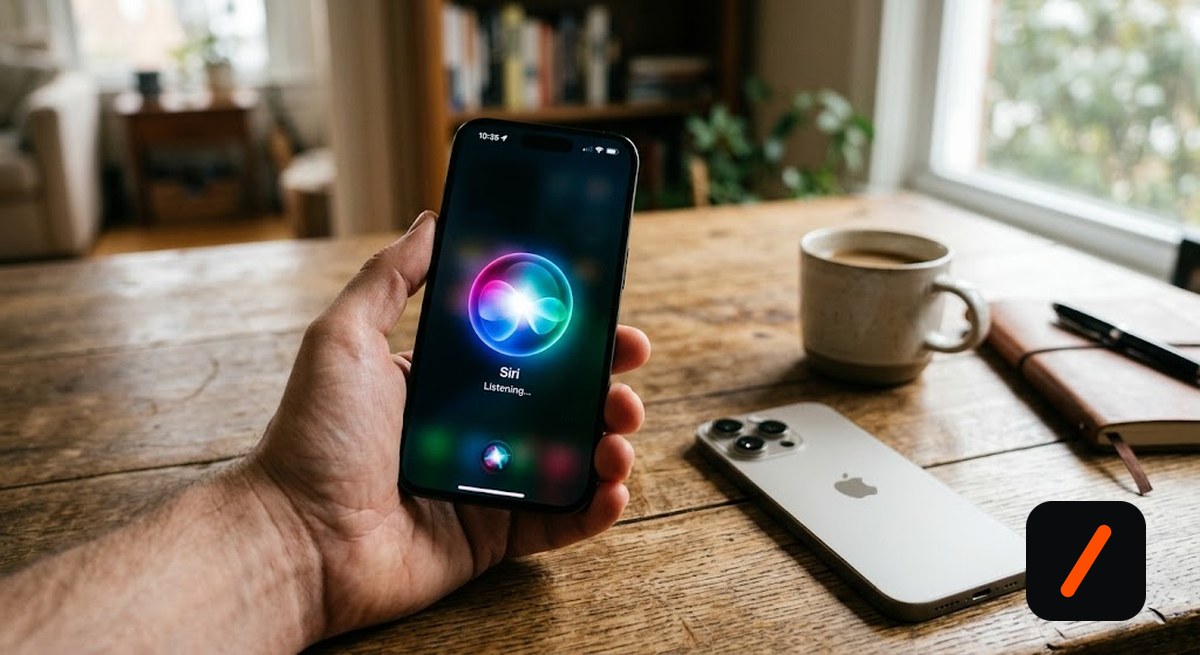
Apple released the first public betas of iOS 27 and iPadOS 27 on July 13, 2026, opening the software to anyone with a compatible device. The headline feature is a rebuilt Siri: a far more capable assistant that can search the web, use your personal information, see what is on your screen, and take actions in and across apps, with a dedicated Siri app for back-and-forth conversation. After a long wait, Apple's assistant is finally becoming the agentic layer the company promised.
- Available now: the public beta matches the third developer beta, so non-developers can test it on supported iPhones and iPads.
- The star: a new Siri that combines web search, on-screen awareness, personal context and cross-app actions in one assistant.
- New surface: a dedicated Siri app enables sustained, conversational sessions instead of one-shot commands.
- The stakes: this is Apple's answer to Gemini in Android and Copilot on Windows, an on-device-first agent baked into the OS.
What is actually new in iOS 27?
The centerpiece is Siri. Apple has rebuilt the assistant so it can pull in four capabilities that previously lived in separate silos or did not exist at all: awareness of what is on your screen, access to your personal information across apps, live web search, and the ability to take actions inside and across applications. A new standalone Siri app lets you hold an actual conversation, following up and refining rather than issuing isolated commands. Around that flagship, iOS 27 and iPadOS 27 carry the usual raft of system refinements, but the public beta launch on July 13 is significant mainly because it puts the new Siri in front of a much wider audience than developers, right as Apple needs real-world validation.
RelatedDeno 2.9 Ships Desktop Apps and Post-Quantum Crypto
Why did the new Siri take so long?
Apple pre-announced a more capable, context-aware Siri well before it was ready to ship, and the gap between the demo and the delivery became one of the company's most scrutinized software stories. Building an assistant that can safely read your screen, use personal data, and take actions on your behalf is far harder than a chatbot, because the failure modes are worse: a wrong action in your email or calendar is not a bad answer, it is a mistake with consequences. Apple's insistence on doing much of this with on-device processing and tight privacy controls added engineering difficulty. The public beta arriving now, matching the third developer beta, is the signal that the rebuilt Siri is finally stable enough to expose broadly, even if it is not yet final.
How does this compare with Gemini and Copilot?
Every major platform is racing to make its assistant the agentic layer of the operating system. Google has pushed Gemini deep into Android, and Microsoft has woven Copilot through Windows. Apple's differentiator is its privacy posture and on-device-first approach: rather than routing everything to a cloud model, iOS 27's Siri leans on local processing and personal context that stays on the device where possible. That is both a marketing advantage and a genuine constraint, because on-device models are smaller than the largest cloud systems. The bet is that for the tasks people actually want an assistant to do, read this, find that, do this across my apps, a private, well-integrated agent beats a more powerful but more invasive one.
| Assistant | iOS 27 Siri | Android Gemini | Windows Copilot |
|---|---|---|---|
| OS integration | Deep, system-level | Deep, system-level | Deep, system-level |
| On-screen awareness | Yes | Yes | Yes |
| Cross-app actions | Yes, via app intents | Yes | Yes |
| Privacy posture | On-device first | Cloud-leaning | Cloud-leaning |
| Dedicated app | New Siri app | Gemini app | Copilot app |
Should you install the public beta?
Public betas exist so Apple can find bugs at scale, which means they carry real risk: instability, broken apps, battery drain, and features that change before release. If your iPhone or iPad is your primary device, the sensible move is to wait for the stable release or install the beta on a secondary device. If you are comfortable with rough edges and want to try the new Siri early, back up your device first, because rolling back from a beta is not painless. The value of the public beta is that it gives Apple, and curious users, a much larger pool of real-world testing than developers alone, which is exactly what an assistant that takes actions on your behalf needs before it ships to hundreds of millions of devices.
RelatedGitHub Down Worldwide While Git Operations Stay Online
- Does the new Siri actually work? Real-world reliability on cross-app actions is the whole ballgame; demos are easy, dependable agents are hard.
- Privacy details. Watch exactly which tasks run on-device versus in the cloud, and how personal context is handled.
- Developer adoption. Cross-app actions depend on apps exposing intents; broad support is what makes Siri genuinely useful.
- Ship date and scope. Which markets and languages get the full assistant at launch, and which wait.
Our take
iOS 27's public beta matters less as a software update and more as a referendum on whether Apple can deliver the assistant it promised. The architecture is right: chaining screen awareness, personal context, web search and cross-app actions is exactly what turns a voice-command parser into a useful agent, and doing it privacy-first is a real differentiator in a field leaning hard on the cloud. But the history here is a company that showed the vision long before it could ship it, so the only test that counts is reliability in ordinary hands. If the new Siri quietly completes multi-step tasks without embarrassing mistakes, Apple closes a gap that has dogged it for over a year. If it stumbles, the public beta will make that very visible, very fast. Install it on a spare device, not your daily driver.
- OfficialApple Developer Releases iOS 27 and iPadOS 27 beta release notes
- ReferenceApple Beta Software Program public beta enrollment and guidance
- ContextApple Intelligence Apple's on-device AI framework behind the new Siri
Original analysis by GenZTech. Based on Apple's beta releases as of July 13, 2026.