
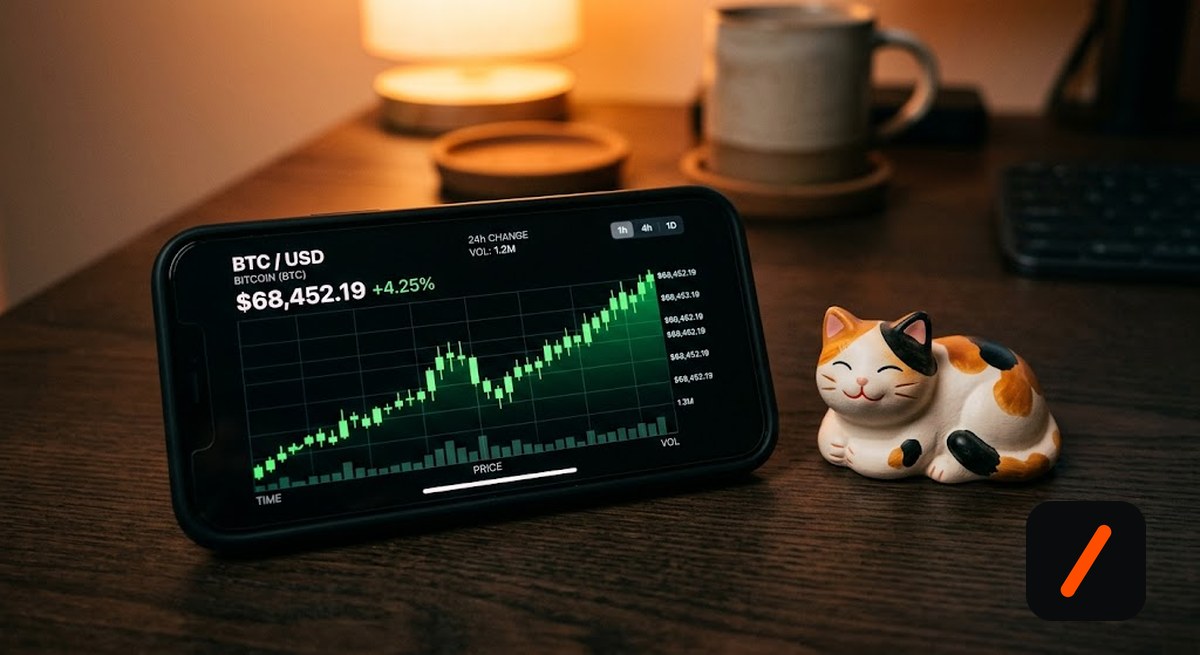
Robinhood Chain, the company's new Arbitrum-based Layer 2, launched to serve tokenized real-world assets, but its early activity was dominated by a memecoin called CASHCAT. The chain processed hundreds of millions in daily volume within its first week, well ahead of projections, yet the driver was speculative meme trading rather than the tokenized stocks and RWAs it was built for. It is a familiar script: a new chain's first real traction comes from degens, not the intended use case.
- The setup: Robinhood Chain launched aiming at tokenized real-world assets and stocks.
- The reality: a memecoin, CASHCAT, dominated early volume, driving the chain past its projections.
- The pattern: memecoins repeatedly bootstrap new chains because speculation is the fastest liquidity and attention magnet.
- The tension: the activity is real, but it is not the activity the chain was designed to showcase.
What is CASHCAT and why did it take over?
CASHCAT is a memecoin that became the breakout token on Robinhood Chain in its opening week, generating the bulk of the network's early trading volume. Its rise is not surprising, and that is the point. Memecoins are the fastest way to generate on-chain activity because they require nothing but a narrative, a ticker, and speculative energy, and they attract liquidity and attention faster than any productive application can. When a new chain opens with low fees and fresh block space, traders and token creators pour in looking for the next quick runner, and one of them, in this case CASHCAT, catches fire. The result is a chain that looks busy immediately, powered by exactly the activity it did not advertise.
RelatedPump.fun Faces Its First Big Test: A $123M Token Unlock
Why do memecoins keep bootstrapping new chains?
Because speculation is the most liquid form of demand in crypto, and new chains desperately need liquidity and users to prove they are alive. Serious applications, tokenized assets, real payments, institutional products, take time to build, integrate, and gain trust. Memecoins take an afternoon. So almost every new chain, regardless of its stated purpose, sees its first wave of activity dominated by meme trading, because that is the demand that shows up first and loudest. This has become a recognized launch dynamic: memecoins are the mercenary liquidity that lights up a network's early metrics, whether or not the team building the chain wanted them to be the headline.
Is memecoin volume good or bad for Robinhood Chain?
It is genuinely both. On the positive side, real volume is real volume: it proves the chain works under load, generates fees, seeds liquidity, and puts the network on traders' radar, all of which are hard to manufacture. On the negative side, it is the wrong story. Robinhood Chain's strategic pitch is tokenized real-world assets and stocks, a serious, institution-friendly use case, and having a cat memecoin dominate the launch muddies that narrative and invites the criticism that the chain is just another venue for gambling. The mature view is that early memecoin activity is a normal, even useful, bootstrapping phase, and the real test is whether the intended use case grows into the space the speculation opened up.
| Dimension | CASHCAT / memecoins | Tokenized RWAs |
|---|---|---|
| Time to launch | Hours | Months, with compliance |
| Early liquidity | Explosive | Slow to build |
| Durability | Often short-lived | Potentially long-term |
| Narrative fit | Off-message | The intended pitch |
| Role | Bootstraps activity | Justifies the chain |
What happens to CASHCAT from here?
The overwhelming base rate for memecoins is unforgiving: most fade fast, with liquidity and attention rotating to the next runner within weeks, and a large majority end up worthless. CASHCAT may sustain a community and defy the odds, or it may follow the usual arc and collapse once the novelty of the new chain wears off. Either way, its lasting significance is less about the token and more about what it revealed: that Robinhood Chain has working infrastructure and can attract real on-chain activity. The token is a spark; whether the fire becomes something durable depends on what the chain's builders and serious users do with the attention it created.
RelatedRobinhood CEO Vlad Tenev's X hacked to push fake coin
- RWA traction. The real test is whether tokenized assets grow into the liquidity memecoins opened up.
- CASHCAT's arc. Expect the usual memecoin fade unless a durable community forms; most do not.
- Fee and volume retention. Whether activity holds after the launch novelty and meme rotation pass.
- Narrative management. How Robinhood positions a chain that launched on meme trading, not its stated pitch.
Our take
CASHCAT dominating Robinhood Chain's launch is neither a scandal nor a success story on its own, it is simply how crypto chains come to life. Speculation is the fastest liquidity in the market, so memecoins light up new networks before serious applications can, every single time. The volume is real and useful, proving the infrastructure works and putting the chain on the map, but it is off-message for a network selling tokenized real-world assets to institutions. The only question that matters is what comes next: whether Robinhood Chain converts meme-driven attention into durable, on-purpose activity, or whether the cat leaves and takes the volume with it. Treat CASHCAT as a launch flare, bright, brief, and not to be confused with the destination.
Original analysis by GenZTech. Based on on-chain activity and reporting as of July 2026. Memecoins are extremely high risk; this is not investment advice.