
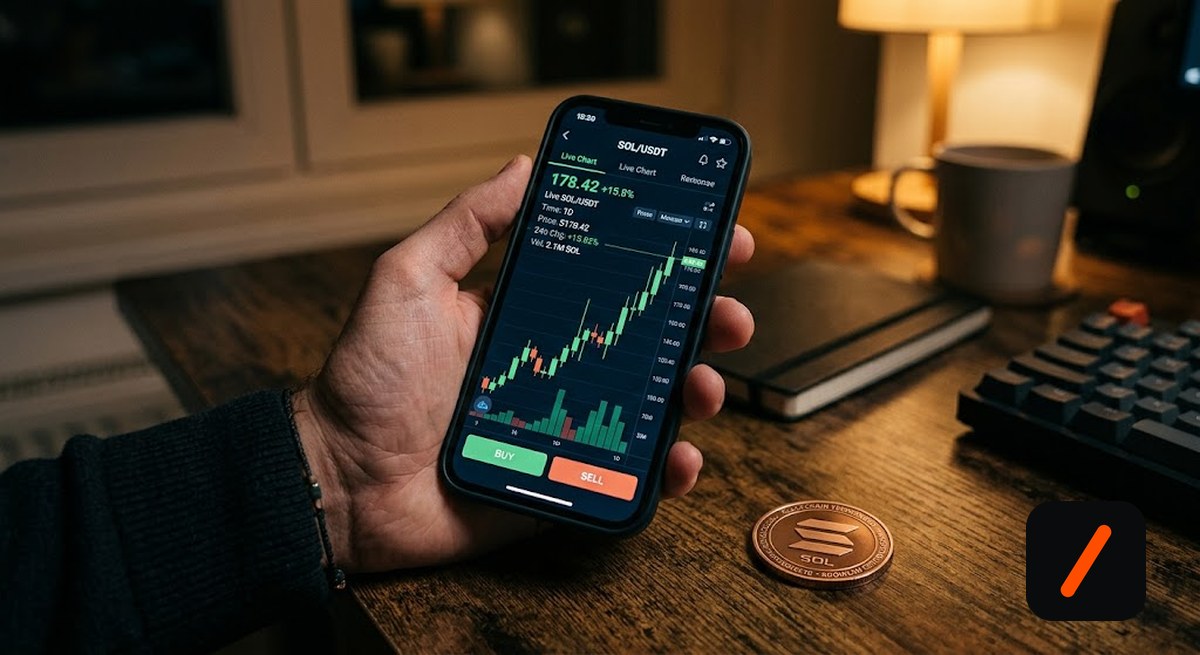
PUNCH, a Solana memecoin, has gone vertical: up roughly 22,290 percent in a single week and more than 80,000 percent since launch, briefly pushing its market cap above $30 million and topping the trending charts on crypto aggregators. Numbers like that are catnip, and they are also a warning label. A 22,000 percent week is not a sign a token is winning; it is a sign it is in the most dangerous phase of a memecoin's life, the parabola, where early buyers are sitting on life-changing gains and everyone arriving now is potential exit liquidity. This is the anatomy of a moonshot, and why the math rarely favors the newcomer.
- PUNCH surged about 22,290 percent in a week and over 80,000 percent since launch, briefly crossing a $30 million market cap.
- It posted a 260 percent single-day gain and ranked as a top trending asset on a major crypto data platform.
- The broader Solana meme sector sits near $3 billion in market cap and fell about 6.5 percent in 24 hours, so the rally is idiosyncratic, not sector-wide.
- Research is brutal on this space: studies find the vast majority of launchpad tokens exhibit rug-pull behavior and most die within weeks.
Why do tokens like PUNCH explode?
A memecoin has almost no float and almost no fundamentals, so a small amount of buying pressure moves the price enormously. When a token starts trending, momentum traders and bots pile in, each new buyer pushing the price higher, which attracts more attention, which brings more buyers. It is a reflexive loop powered entirely by attention. There is no cash flow, no product, and no valuation to anchor it, which is exactly why the moves are so violent in both directions. PUNCH is not rising because something changed in the world; it is rising because more money is chasing a tiny supply faster than it is leaving.
RelatedPopcat Rides Solana's Memecoin Revival Back to Life
Who actually makes money?
The consistent winners in these runs are the people with structural edges: those who bought extremely early, insiders, and bots with speed and information advantages. Research on Solana launchpads is unforgiving here. Studies have found coordinated accounts holding large shares of a token's supply, an overwhelming majority of launches classified as high risk, and rug-pull behavior in the vast majority of tokens. Even without an outright rug, creators and early holders can dump into the momentum, meaning the parabola you are buying is often someone else's exit. The expected value of buying a random newly-viral token is negative, and PUNCH's 80,000 percent gain does not change that arithmetic for a new buyer, it worsens it.
Is this a sign the sector is back?
Not really. The Solana meme market as a whole is near $3 billion and actually fell in the last day, so PUNCH is an isolated spike, not evidence of a broad revival. Single tokens ripping while the sector drifts is normal in memecoin land; attention rotates violently from one ticker to the next. Treat a lone parabolic chart as a story about one token's moment, not a thesis about the category. When people point to a 22,000 percent gainer as proof the trenches are back, they are usually the ones who need new buyers to arrive.
Why is the psychology so effective?
The reason people chase a token already up 22,000 percent is not stupidity, it is a predictable set of cognitive traps that memecoins are engineered to exploit. A giant green number triggers fear of missing out, the sense that everyone else is getting rich and you are being left behind. Social proof amplifies it: trending lists, screenshots of wins, and influencers who conveniently bought earlier all make the rally feel like a movement rather than a trade. Then anchoring kicks in, where an 80,000 percent gain makes another few hundred percent feel plausible and even modest. None of these instincts are about the token's fundamentals, because there are none. They are about human wiring, and the memecoin machine is optimized to pull exactly those levers. Understanding that the pump is a psychological product, not a financial one, is the single most useful defense a newcomer can have.
RelatedSolana DEX volume topped Coinbase and Kraken
There is also a structural layer most buyers never see. Automated bots monitor new tokens, buy within milliseconds of momentum, and sell into retail demand faster than any human can react. Coordinated groups can create the appearance of organic interest, drawing in real buyers who become the exit. When you buy a trending memecoin, you are often trading against software and coordinated actors who have information and speed you do not. That is not a fair fight, and pretending otherwise is how the losses happen.
- Supply concentration. If a few wallets hold most of PUNCH, they control the exit.
- Liquidity depth. Thin liquidity means a small sell can crater the price fast.
- Time. Most memecoins fade within weeks; longevity, not a spike, is the rare outcome.
Our take
PUNCH is a spectacular chart and a terrible lottery ticket for anyone showing up now. We cover it because the number is real and the phenomenon is instructive, not because it is an opportunity. The honest framing is that memecoins are a game of attention and timing where the edges belong to insiders and bots, and the retail buyer chasing a green candle is usually the product, not the customer. If you play, treat it as money you are fully prepared to lose, size it accordingly, and never confuse a parabola with a plan. The most valuable thing a 22,000 percent week teaches is not how to get rich; it is how fast the same chart runs the other way.
- DataSolana meme coins by market cap CoinGecko
- ReferenceSolana memecoins guide, 2026 DEXTools
- AnalysisSolana meme volume and risk data BeInCrypto
Original analysis by GenZTech. Not financial advice. Reporting via CoinGecko.