
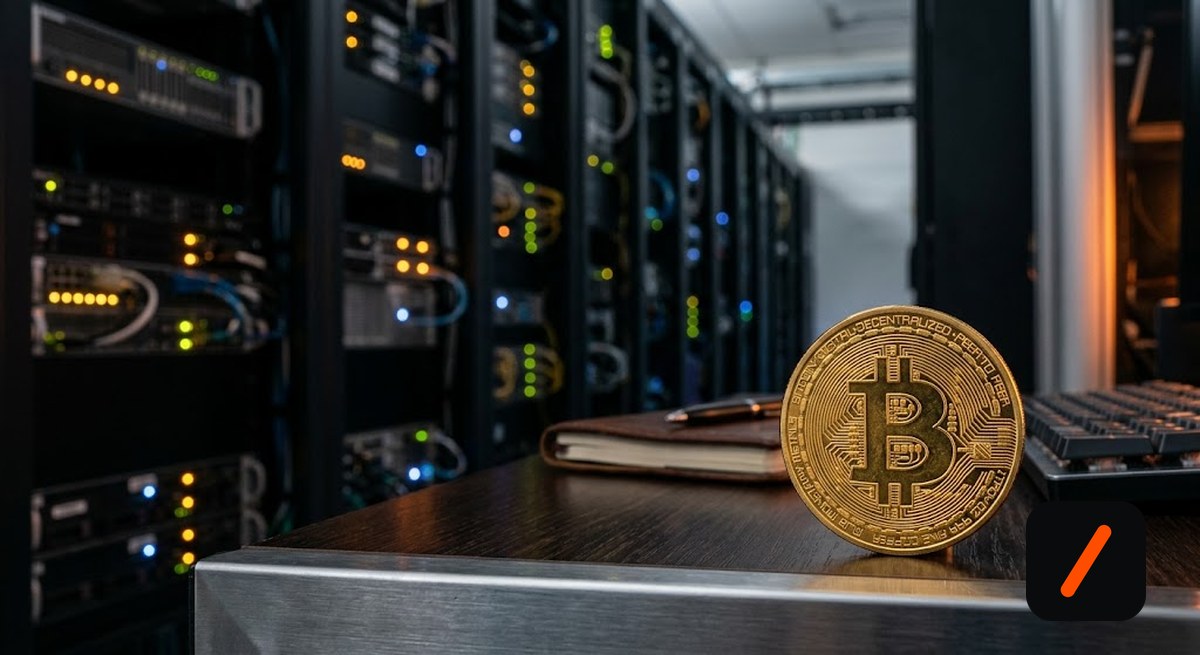
Empery Digital, a company built around holding Bitcoin on its balance sheet, has sold roughly half of that BTC stack to fund a pivot into AI data centers. It is a small headline with a large signal. The bitcoin-treasury trade, load a public company with BTC and let the stock trade as leveraged crypto exposure, was one of the defining plays of the last cycle. A treasury firm voluntarily unwinding half its holdings to chase AI infrastructure says the market's most compelling growth narrative has changed, and capital is following.
- Empery Digital sold about half its Bitcoin holdings to fund a move into AI data centers.
- It reframes the company from a pure crypto-treasury vehicle into an AI-infrastructure play.
- The move fits a broader 2026 rotation: capital leaving crypto for AI, which also stalled the crypto IPO market.
- It lands as Bitcoin trades in the low $60Ks after its worst month in four years in June.
What did Empery Digital do?
The company sold about half its Bitcoin holdings and redirected the proceeds toward AI data centers, converting a passive crypto-treasury position into active infrastructure buildout. Structurally, that changes what the stock represents: instead of trading as a leveraged proxy for BTC's price, it becomes a bet on AI compute demand and the company's ability to execute a data-center business. It is a deliberate re-rating of its own identity, from crypto holder to infrastructure operator.
RelatedTeraWulf's $19B Anthropic Deal Finishes Its AI Pivot
Why sell Bitcoin to buy compute?
Because the growth stories have swapped places. The crypto-treasury trade depends on BTC appreciating faster than the cost of the leverage used to accumulate it, and after Bitcoin's worst month in four years in June, that thesis looks tired to some holders. AI infrastructure, by contrast, has visible, contracted demand: every model deployment needs compute, and data centers generate revenue rather than just sitting as an appreciating asset. For a management team weighing where the next few years of upside lives, selling a stagnant reserve to fund a revenue-producing buildout is a rational, if aggressive, reallocation.
What does it mean for the market?
The signal for investors is that the rotation from crypto to AI is no longer just fund flows, it is corporate strategy. This is the same current that stalled the crypto IPO market as capital moved to AI, and that has pressured treasury-company valuations broadly. When a firm whose entire premise was holding Bitcoin decides AI data centers are the better use of capital, it validates the rotation and puts pressure on peer treasury vehicles to justify why they are not doing the same. It also removes a marginal BTC buyer and turns it into a seller, a small but real headwind at the margin.
What is the risk in the pivot?
Selling appreciating reserves near a local low is a timing bet that ages badly if Bitcoin rebounds hard, and pivoting into AI data centers means competing in a capital-intensive market against far larger, better-funded operators. Data centers demand power, land, hardware, and customers, none of which a former treasury company inherently has. The pivot swaps one concentrated bet, BTC price, for another, execution in a crowded infrastructure market. Whether it is smart depends entirely on whether the compute demand shows up as contracted revenue rather than hope.
RelatedBitcoin's 3-Month High Is a Treasury Bond Story, Not a Crypto One
- Copycat unwinds. Whether other bitcoin-treasury firms follow Empery and trim holdings to chase AI is the real trend to track.
- Compute contracts. The pivot only works if the data-center plan turns into signed capacity and revenue, not just announcements.
- BTC price path. A sharp Bitcoin rebound would make this sale look premature and chill further rotation.
Our take
One mid-sized treasury company selling BTC does not move Bitcoin's price, but it is a clean tell about where conviction is heading. The crypto-treasury trade was always a narrative wrapped in leverage, and narratives are exactly what rotate when a louder one appears. AI infrastructure is that louder story right now, with the advantage of actual revenue behind it. The open question is timing: reallocating from an asset near a multi-year-low into a capital-hungry, crowded market is bold, and boldness only looks like foresight in hindsight. This is the rotation trade betting on itself.
How does a treasury company actually trade?
To grasp why the pivot matters, it helps to understand the machine Empery is dismantling. Bitcoin-treasury firms typically trade at a premium to the value of the coins they hold, a market-cap-to-net-asset-value spread that lets them raise capital and buy more BTC, compounding the position as long as sentiment and price cooperate. That flywheel runs in reverse when the premium compresses and the coin stalls, which is roughly the environment after Bitcoin's worst month in four years. Selling half the stack to fund revenue-generating data centers is an attempt to swap a sentiment-driven premium for an earnings-driven one. Whether the market rewards that re-rating depends entirely on execution, because a treasury premium is a story, and an infrastructure multiple has to be earned with contracts.
- ReportCoinDesk market coverage crypto news and data
- AnalysisThe Block: crypto and rotation coverage The Block
Original analysis by GenZTech. Reporting via CoinDesk.