
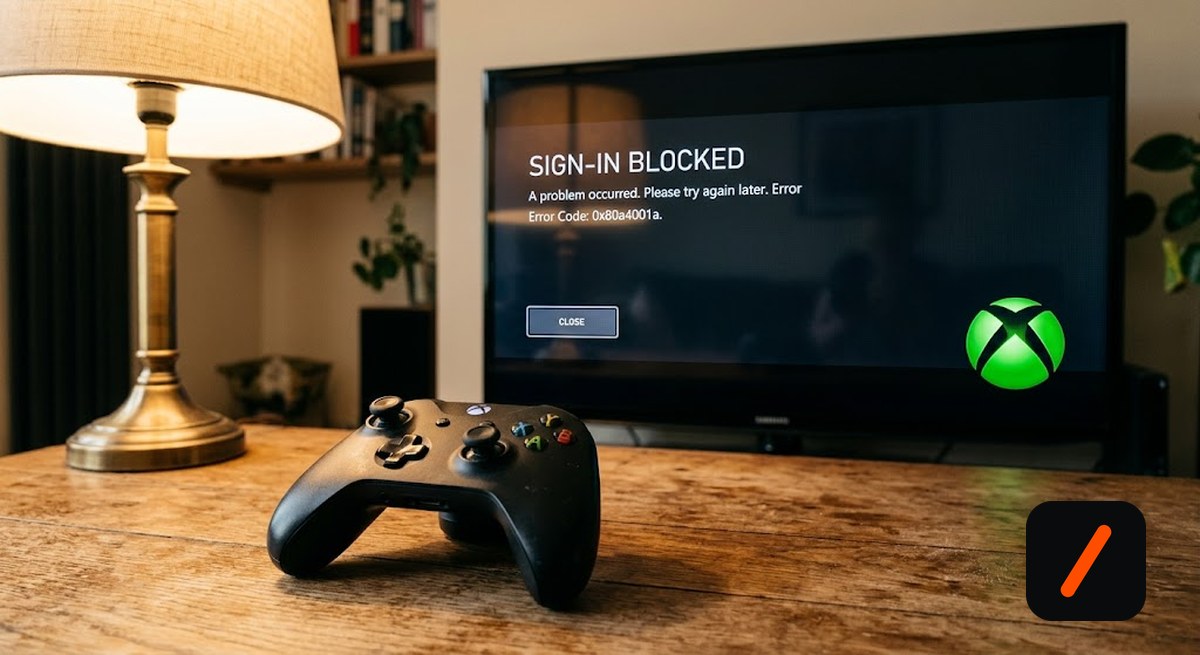
A Brazilian small-claims court has ordered Microsoft to fully restore a gamer's permanently suspended Xbox account and his entire digital library, and to pay roughly $400 in damages, after support staff told the hacked user to simply re-buy his games. The decision, which spread across gaming forums and outlets this evening, drops straight into the industry's most uncomfortable open question: when you "buy" a digital game, do you actually own it, or are you just renting it until a platform decides otherwise?
- A court in Brazil gave Microsoft 15 days to restore the account and all purchased games, or face escalating daily fines.
- Microsoft had flagged the account for unauthorized access, suspended it permanently, then directed the owner to repurchase his library rather than recover it.
- The damages are small (about R$2,000, near $400), but the order to hand the games back cuts against the platform-standard "you license, you do not own" position.
- This is a first-instance ruling in one jurisdiction, not binding precedent, and courts elsewhere have landed on the opposite side.
What actually happened?
The account holder, who posts under the handle Ordo_Liberal, says his Microsoft account had two-factor authentication enabled when it was flagged for what Microsoft described as unauthorized access. The company investigated, decided the account's security information had been changed, and suspended it permanently. None of the standard recovery paths returned access. When he pushed for a fix, support staff told him the resolution was to buy his games again rather than reinstate the ones already attached to the account.
RelatedXbox Outage Blocks Disc Games, Not Just Digital Ones
So he sued. Brazil's small-claims track let him file without a lawyer and without paying court costs, which is exactly the kind of low-friction consumer venue large platforms are not built to fight in efficiently. Reports note Microsoft did eventually respond in force, reportedly sending a dozen lawyers and a roughly 300-page defense. The court still ordered the account and full digital library restored within 15 days, with additional penalties if Microsoft fails to comply, plus around R$2,000 (near $400) in damages that grows 10 percent if the payout is late.
Why does a $400 case matter so much?
Because the money was never the point. Four hundred dollars is a rounding error to Microsoft. The consequential part is the remedy: a court did not just award compensation, it ordered the company to return the specific games the user had bought, overriding the suspension. That is the outcome platforms have spent years arguing is not on the table, because their terms frame every purchase as a license to access software, not a transfer of ownership.
The timing sharpens it. Sony has confirmed it is steering the next generation away from game discs, and persistent rumors put Xbox's next hardware in the same disc-free direction. As physical media disappears, the account becomes the only thing standing between a player and a decade of purchases. A ruling that treats that account's contents as the buyer's property, even in one small court, is a crack in the assumption the whole digital-only future rests on.
Do you really own your digital games?
Legally, in most places, the honest answer is still no. The end-user agreements you accept at checkout describe a revocable license. If the account is banned, sold off in a shutdown, or lost to a hack the platform blames on you, the license can evaporate and the games with it. This is not a Microsoft-specific quirk; it is the shared model across Steam, PlayStation, Nintendo, and the rest.
What this case shows is that consumer-protection law can collide with those agreements and win, at least locally. Brazil's Consumer Defense Code is unusually assertive, and a judge reading it decided a permanent suspension that wipes a paid library is an unfair outcome regardless of what the fine print says. That is a very different lens from the contract-first reading US courts usually apply.
RelatedXbox Layoffs Gut id Software, idTech Engine in Doubt
| Jurisdiction | Brazil (this case) | United States | China |
|---|---|---|---|
| Core lens | Consumer protection | Contract / license | Property rights |
| Digital games | Ordered restored | Generally revocable license | Accounts treated as inheritable property |
| Buyer leverage | High (free small claims) | Low (arbitration clauses) | Case-dependent |
| Precedent weight | First instance, not binding | Established, license-favoring | Recognized in rulings |
Who is affected, and what changes now?
Directly, one gamer got his library back. Broadly, the players most exposed are anyone whose entire collection lives behind a single account with no disc fallback, which is a growing majority. The case does not force Microsoft to change policy elsewhere, and it will not stop account suspensions. But it hands consumer advocates a concrete, quotable example: a court that looked at "re-buy your games" and called it unacceptable.
For platforms, the practical lesson is quieter and more expensive: in consumer-friendly jurisdictions, telling a hacked customer to repurchase a paid library is a losing position, and defending it costs far more than the $400 at stake. Expect support playbooks, not terms of service, to shift first, with more generous account-recovery paths that avoid ever putting "buy it again" in writing.
- EarlierAccount flagged and permanently suspended Microsoft cites unauthorized access; 2FA was on
- SupportUser told to repurchase his games Standard recovery paths failed
- FilingSuit filed via Brazil small-claims track No lawyer, no court costs required
- TodayCourt orders account and library restored 15 days or fines, plus ~$400 damages
- NextCompliance window and possible appeal Penalties escalate on non-compliance
- Compliance vs appeal. Whether Microsoft restores the account within 15 days or appeals sets the tone for how seriously platforms take these consumer venues.
- Copycat filings. Free, lawyer-optional small claims make this easy to replicate in Brazil; a cluster of similar suits would matter more than one win.
- Disc-free hardware. As Sony and Xbox move away from discs, any ownership ruling becomes ammunition in the digital-only debate.
Our take
One small-claims judgment does not rewrite the licensing model, and anyone framing this as "you now own your games" is overselling it. But it is a genuinely useful data point, because it makes the abstract concrete. The industry's entire digital pitch rests on customers trusting that a purchase sticks. The moment a company answers a hack with "buy them again," that trust is the product being sold, and a court just priced it. The winning move for platforms is not better lawyers, it is never putting a paying customer in a position where a judge has to remind them what a purchase means.
- ReportBrazilian court orders Microsoft to restore a gamer's account and digital library Tom's Hardware
- ReportMicrosoft loses lawsuit after blocking hacked Xbox account Notebookcheck
- DiscussionCommunity thread with the user's account and support emails ResetEra
Original analysis by GenZTech. Reporting via Tom's Hardware.