
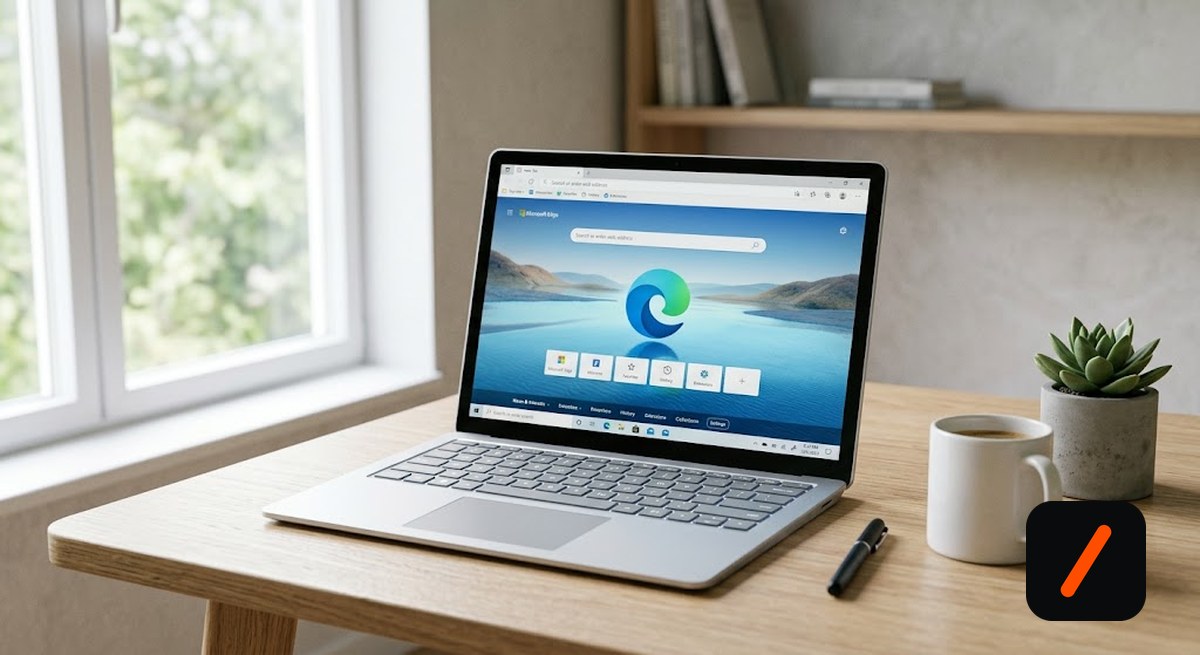
Microsoft Edge 150, released July 2, 2026, does something that would have been unthinkable a few years ago: it lets you sign into the browser with a Google account. The same release quietly kills two features, the AI-powered history search and the custom primary password, and sets up a move to a two-week release cadence starting with Edge 152. Read together, these changes tell a clear story. Microsoft has stopped trying to wall users into its own account system and is now optimizing Edge for retention and speed in a browser market where Chrome still owns roughly two-thirds of everything.
- Edge 150 adds Google-account sign-in on Windows and macOS, letting users bring Google-based identity into Microsoft's browser.
- Microsoft dropped the AI-powered history search feature and, as of June 4, 2026, removed the custom primary (master) password option.
- Starting with Edge 152, Microsoft moves to a two-week release cycle, matching the faster pace of its Chromium peers.
- The pattern is pragmatism over lock-in: reduce friction, ship faster, and cut AI features that did not earn their keep.
Why let people sign in with Google?
For most of Edge's life, Microsoft pushed a Microsoft account as the gateway to sync, favorites, and settings. Allowing Google sign-in is an admission that a huge share of potential Edge users live inside Google's identity system, and forcing them to create or use a Microsoft account was pure friction that sent them back to Chrome. By meeting users where they already are, Microsoft removes one more reason not to try Edge. It is a confident move disguised as a small toggle: you only offer this when you believe your browser is good enough to keep people once they are in, regardless of whose login they used.
RelatedFirefox Halves Its Release Cycle to Two Weeks
Why cut the AI features?
The removals are just as telling. Microsoft has aggressively pushed Copilot and AI into Edge, but the AI-powered history search did not survive, and the custom primary password was pulled in June. Not every AI feature justifies its maintenance cost, and shipping then quietly retiring the ones that do not land is healthier than keeping bloat around for the marketing line. It is a small counter-narrative to the idea that every browser must cram in more AI: sometimes the right call is to remove a feature users did not adopt.
What does the two-week cadence mean?
Moving to a two-week release cycle from Edge 152 puts Microsoft on a faster drumbeat, closer to how modern Chromium browsers ship. Faster cadence means security fixes and web-platform features reach users sooner, which matters in a year when the browser is becoming an agent that acts on your behalf and the attack surface grows accordingly. The tradeoff is more frequent updates for IT departments to manage, but the direction of travel across the industry is clear: shorter, safer, more incremental releases.
Who is affected, and does the market move?
Everyday users get a lower-friction Edge and quicker updates. Enterprises get a faster patch cadence to plan around and one fewer identity roadblock for mixed Google-and-Microsoft shops. On market share, this will not dethrone Chrome, which still holds around 65 percent, but it chips at the switching cost. The strategic signal is that Microsoft is playing a long retention game rather than a lock-in game, betting that Edge's performance and Copilot integration can hold users who arrive through any front door. In a browser war increasingly defined by which AI acts inside your tabs, keeping users in the building matters more than which account they used to enter.
RelatedChrome Moves to a Two-Week Stable Release Cadence
Why does cadence matter for security now?
The two-week release cycle is easy to dismiss as housekeeping, but it is a security story. As browsers turn into agents that can read pages, fill forms, and take actions on a user's behalf, the amount of sensitive behavior running inside the browser explodes, and so does the value of any exploit against it. A browser that can act for you is a browser worth attacking, and a faster patch cadence shrinks the window between a vulnerability being found and a fix reaching users. Chrome moved to rapid releases years ago for exactly this reason. Edge matching that pace is table stakes for a browser that wants Copilot acting inside your tabs without becoming a liability. The tradeoff lands on IT departments, who now manage more frequent rollouts, but the security math clearly favors shipping smaller updates more often.
- Edge 152. The first release on the two-week cadence, and whether stability holds at that pace.
- Copilot depth. Which AI features Microsoft keeps investing in after cutting the ones that flopped.
- Share trend. Whether lower friction actually nudges Edge's flat market share upward.
Our take
Edge 150 is a quietly confident release. Letting people sign in with Google is the kind of move a company makes when it has stopped fearing its rival's ecosystem and started competing on the product itself. Pairing that with a willingness to delete AR features that did not work, and a faster release cadence, shows a team optimizing for real usage rather than press releases. It will not flip the market, but it is the right posture: reduce friction, ship fast, and let the browser earn its keep. In a year where every browser is racing to become an AI agent, the boring fundamentals still decide who stays installed.
- OfficialMicrosoft Edge 150 release notes Microsoft Learn
- ReportEdge, Chrome and Firefox browser updates gHacks
- ReferenceBrowser market share, July 2026 Martech Zone
Original analysis by GenZTech. Reporting via Microsoft Learn.