
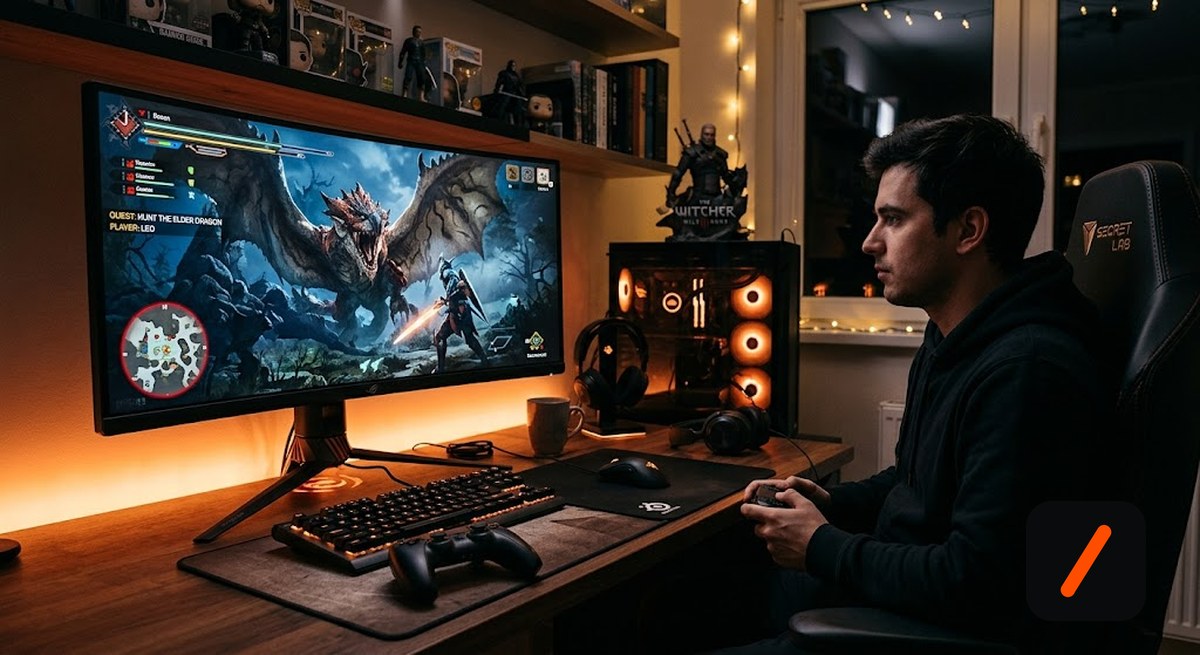
Capcom is giving Monster Hunter Wilds a permanent price reduction alongside new DLC bundles. For a first-party tentpole from one of Capcom's biggest franchises, a permanent price cut this early is a deliberate strategy, not a fire sale: it is a bet that a lower entry price plus paid content will grow the active player base and lifetime revenue more than holding a premium sticker price ever could.
- The move: a permanent, not temporary, price cut on Monster Hunter Wilds, paired with new DLC bundles.
- The logic: a cheaper base game widens the funnel, and Monster Hunter's co-op loop monetizes best with more players in the hunt.
- The model: Capcom is optimizing for the long tail, sustained engagement and add-on sales, over launch-window revenue.
- The context: live-service-style thinking is reshaping how even premium single-purchase franchises are priced and supported.
What is Capcom actually doing?
Capcom is applying a permanent reduction to Monster Hunter Wilds' price and rolling out new DLC bundles at the same time. The pairing is the whole strategy. A permanent cut, as opposed to a limited-time sale, tells the market this is the game's new baseline, lowering the barrier for anyone who was on the fence at full price. The DLC bundles give both new and existing players fresh reasons to spend. Together they reposition Wilds from a premium launch product into a lower-friction, longer-lived title designed to keep growing its audience well past the initial sales window.
RelatedPalworld 1.0 Lands July 10 With the World Tree
Why cut the price of a hit franchise?
Because Monster Hunter's economics reward scale. This is fundamentally a co-op game: the core loop of hunting massive monsters with friends gets better, stickier, and more social as more people are playing. A larger active population means faster matchmaking, more vibrant communities, and, crucially, a bigger pool of players to sell add-on content to. Holding a premium price maximizes revenue per copy but caps the size of that population. Cutting the price trades margin per sale for a wider funnel, and for a game that monetizes ongoing engagement through DLC, the wider funnel can easily win. It is the same instinct behind live-service pricing, applied to a premium single-purchase title.
Is this a sign the launch underperformed?
Not necessarily, and reading it that way misses the strategy. Even a strong-selling game eventually exhausts the pool of buyers willing to pay full price, and the smart move is to reprice before momentum stalls rather than after. A permanent cut early in the life cycle captures the large second wave of price-sensitive buyers while the game is still culturally relevant and its community is active, which is exactly when new players have the best experience. Capcom has a long history of extending its games' tails through updates, expansions, and repricing, and treating Wilds as a multi-year property rather than a launch-quarter product is consistent with how the publisher manages its biggest franchises.
What does it mean for players?
For prospective buyers, it is straightforwardly good news: a lower entry price for a major title, plus bundles that package the base game with add-on content at better value. For existing owners, the DLC bundles are the relevant offer, and a growing player base improves the core experience by keeping hunts populated and the community lively. The one thing worth watching is how the DLC is structured, whether it is meaningful content that deepens the game or the kind of granular monetization that fragments it. Monster Hunter's audience is discerning about that line, and Capcom's long-term relationship with the franchise gives it reason to stay on the right side of it.
RelatedHalloween: The Game Launches With Michael Myers and Rough Edges
- Player-count response. A visible bump in concurrent players would confirm the wider-funnel bet is working.
- DLC structure. Whether the add-ons feel like substantial content or fragmented monetization.
- Follow-on updates. Free title updates alongside paid DLC are Capcom's usual formula for a long tail.
- Industry copycats. More premium franchises may adopt early permanent cuts as a growth lever.
Our take
A permanent price cut on a flagship this early looks like weakness only if you read it as a sale. It is smarter to read it as portfolio management: Capcom repositioning Monster Hunter Wilds as a multi-year, community-driven property rather than a launch-window earner. The logic is sound because the franchise monetizes engagement, and engagement scales with population, so a lower price that grows the hunting community can lift lifetime revenue even as it lowers revenue per copy. The risk is entirely in execution, specifically in how the DLC is structured, because a great franchise can erode goodwill fast with the wrong monetization. Bet on Capcom knowing its audience. For anyone who skipped Wilds at full price, this is the moment to jump in, ideally with friends.
- OfficialMonster Hunter Wilds the official game site and updates
- ReferenceCapcom publisher news and pricing announcements
Original analysis by GenZTech. Based on Capcom announcements as of July 2026.