
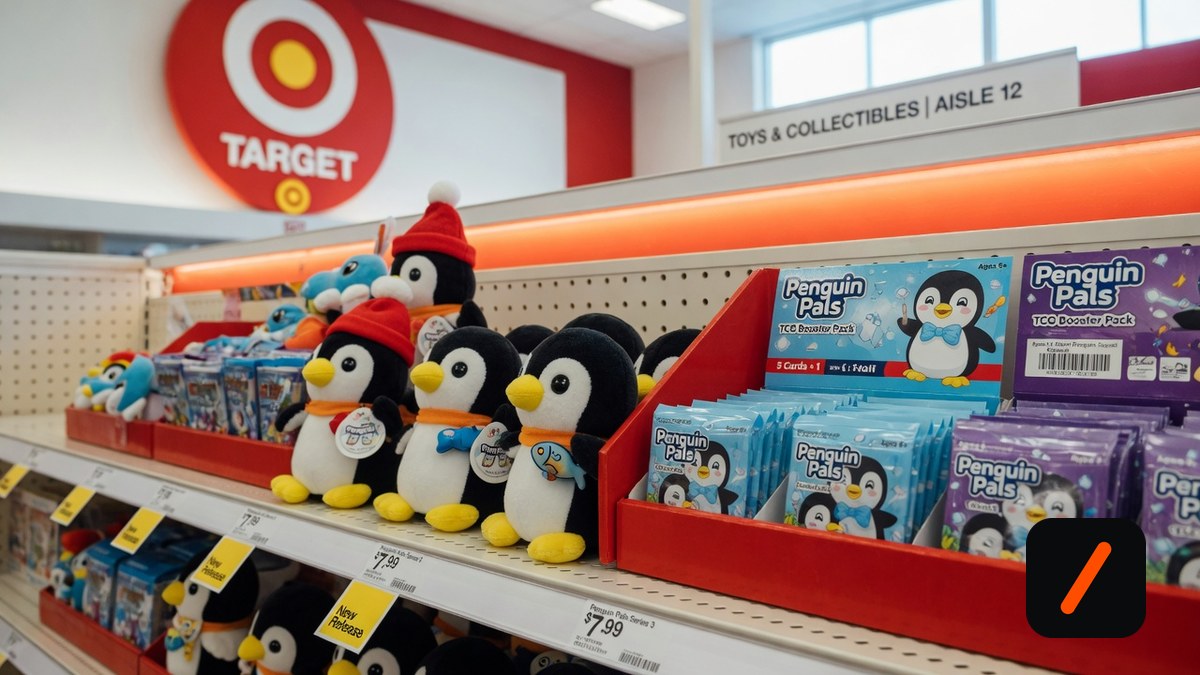
Pudgy Penguins just did something almost no memecoin ever does: it landed on the shelves of a national retailer. New Pudgy Penguins trading cards launched in Target stores nationwide, pushing the brand behind the PENGU token squarely into the mainstream. It is a reminder that Pudgy Penguins is playing a different game from the average Solana meme, one built on characters, licensing, and physical products rather than a bonding curve and a countdown to zero.
- Pudgy Penguins trading cards hit Target nationwide, taking the IP behind PENGU into mainstream physical retail.
- The strategy is brand-first: real toys, cards, and licensing, not just an on-chain token.
- PENGU is a rare memecoin with durable IP underneath, insulating it somewhat from the 24-to-72-hour meme lifecycle.
- It stands out in a market where, on a typical day, ~1.5% of new Pump.fun tokens even graduate.
Why is a Target deal a big deal?
Because memecoins almost never touch the physical world, and the ones that endure are the ones that build a brand people recognize off-chain. Getting trading cards into Target nationwide gives Pudgy Penguins mainstream distribution and legitimacy that a purely on-chain project cannot buy. It puts the characters in front of shoppers who have never opened a crypto wallet, and it turns the IP into something with independent commercial value, a product line, licensing revenue, a place on a shelf next to established toys. For a token, that is a fundamentally different kind of support than a chart and a Discord.
RelatedPopcat Rides Solana's Memecoin Revival Back to Life
How is this different from a normal memecoin?
The typical memecoin lifecycle is brutal. On a single day in mid-2025, more than 2,000 tokens were created on Pump.fun and only about 31 graduated, roughly 1.5%, while the overwhelming majority lose all value within 24 to 72 hours. That world is pure attention arbitrage: no product, no company, no reason to exist once the hype moves on. Pudgy Penguins started as an NFT collection, built a genuine brand around its penguin characters, expanded into physical toys, and launched PENGU as the token for an ecosystem that already had fans and products. The token is one expression of the brand rather than the entire thing, which is precisely what gives it staying power most memes never earn.
Does the token capture the brand's value?
This is the honest tension. A thriving toy and card business is great for Pudgy Penguins the company, but the link between merchandise success and PENGU's price is indirect. Retail deals build awareness and legitimacy, and awareness tends to lift community-driven tokens, but a trading-card line does not pay dividends to token holders. PENGU still trades on sentiment, and it remains a high-risk, high-volatility asset like any memecoin. The IP makes the brand durable; it does not make the token a stable investment. Buyers should separate "this is a real brand" from "this token will go up," because the first can be true while the second stays a coin flip.
Our take
Pudgy Penguins is the clearest example of the one memecoin strategy that actually survives: build a brand, not just a ticker. In a category defined by tokens that live for hours, an IP with recognizable characters, physical products, and now Target shelves is genuinely differentiated, and it explains why PENGU has outlasted thousands of memes that launched with more noise. That said, the caution is the same as always. A great brand does not guarantee a great token, and the correlation between merch wins and price is loose at best. What is impressive here is the durability of the business; whether that durability translates into token value over time is a separate, much less certain bet. This is factual analysis, not investment advice, memecoins remain speculative and most go to zero, but if you want to see what a memecoin with a real moat looks like, this is it.
Relatedpump.fun and launchpads: the memecoin casino’s engine
- Sell-through at Target. Whether the cards actually move decides if this is a milestone or a photo op.
- More licensing. Additional retail and media deals would deepen the brand moat further.
- Token-brand linkage. Watch whether PENGU's value tracks the brand's growth or drifts on pure sentiment.
The playbook other projects will copy
Expect imitators. Pudgy Penguins has effectively drawn a map for turning an internet-native brand into a real consumer business: build recognizable characters, earn genuine affection, then extend into physical products and mainstream retail before leaning on the token. Plenty of projects will try to shortcut it by slapping a token on thin IP and chasing a licensing deal, and most will fail, because the affection has to come first and it cannot be manufactured. What makes Pudgy Penguins credible is the order of operations: the brand earned an audience before it asked that audience to buy anything off a shelf. That sequence, not the Target deal itself, is the part worth studying.
- OfficialPudgy Penguins brand, products, and ecosystem
- ReportingCoingabbar PENGU retail expansion and meme market context
Original analysis by GenZTech. Not investment advice. Figures current as of July 2026.