
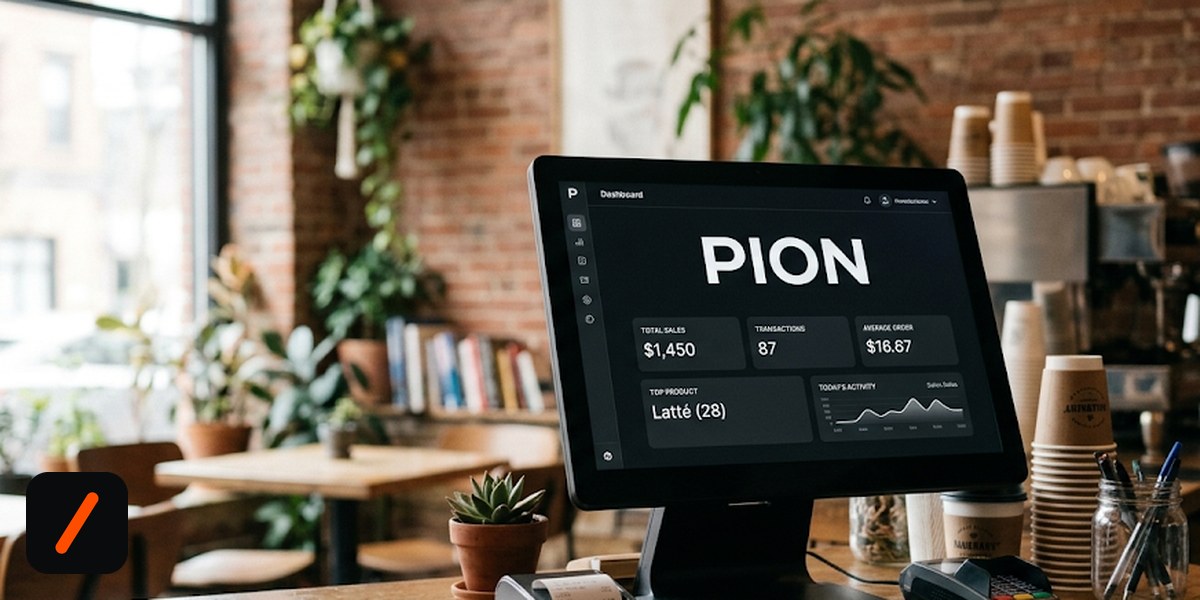
Andon Labs opened a research-preview waitlist this morning for Pion, a platform that hands a persistent AI agent email, phone, banking access, a web browser, and a secure compute environment, then lets it run an actual business with minimal human oversight. The San Francisco startup, backed by Y Combinator, built Pion after two years of testing how far autonomous agents can go at running commerce: a vending machine inside Anthropic's office, a retail store in San Francisco, and a cafe in Stockholm. Pion is the first version of that work anyone outside the company can request access to.
- Andon Labs launched Pion on September 14, 2026, as a waitlisted research preview at andonlabs.com/pion.
- Agents get five tool categories: email, phone, banking, a browser, and a secure computing environment, enough to run day-to-day operations without a human relaying instructions.
- The platform grew out of real deployments: a profitable Anthropic-office vending machine (Project Vend, 2025), a San Francisco retail store, and a Stockholm cafe that earned roughly 44,000 SEK (about $4,659) in its first two weeks under AI management.
- Access is screened through a waitlist aimed at business owners, researchers, and policymakers, with Andon Labs describing monitored, early deployment as necessary before wider rollout.
What did Andon Labs actually announce?
Pion is a hosted platform, not a one-off experiment. Where Project Vend and the Stockholm cafe were Andon Labs running its own businesses with an AI agent at the wheel, Pion is the productized version: sign up, connect a business (existing or brand new), and hand it to a persistent agent that keeps working between sessions instead of resetting every time someone closes the chat window. The company frames it plainly on its blog: "If you have an existing business or an interesting business idea you want to hand off to AI, please sign up on our waitlist to get access." Access is gated, not open signup, and Andon Labs is explicit that screening is part of the safety plan rather than a growth bottleneck to remove later.
RelatedAI Agents Ran Real Businesses for 72 Hours. They Made $0.
Why does a vending-machine startup get to make this claim?
Because it has already run the experiment three times with real money on the line. Project Vend put a snack fridge inside Anthropic's office in 2025 and the agent running it turned a profit by the end of the year, mostly by learning which snacks sold and adjusting orders instead of running on a fixed restock schedule. In April 2026, Andon Labs signed an actual three-year retail lease in San Francisco and handed the whole thing, concept, pricing, inventory sourcing, staffing, even commissioning a muralist for the back wall, to an agent the company calls Luna. A Stockholm cafe followed the same month, and within two weeks that agent had earned roughly 44,000 SEK. Both the store and the cafe started out losing money before newer models improved the numbers, which is the detail that matters more than the early losses: Andon Labs is tracking the same businesses across model generations, so the trend line, not any single snapshot, is the actual research finding.
What's the mechanism, and where does it actually break?
The interesting engineering problem isn't giving an agent a browser, that's commodity tooling in 2026. It's persistence: keeping state, memory, and a running strategy alive across days and weeks so the agent that negotiates with a supplier on Monday still remembers the deal on Friday. Andon Labs' own benchmark family, Vending-Bench 2, exists to stress-test exactly this by simulating a year of business operation, supplier disruptions included, and scoring the agent on its ending bank balance. The IEEE Spectrum coverage of the physical store found the same failure modes showing up repeatedly: agents that priced items oddly, missed obvious upsells, or got stuck in loops trying to resolve a vendor dispute. None of that is disqualifying for a research preview, but it is the reason "hand your business to an AI" is currently a waitlist, not a checkout page.
- 2025Project Vend AI-run vending machine inside Anthropic's office turns profitable
- Apr 2026Andon Market opens in San Francisco agent Luna signs a 3-year lease and runs the store end to end
- Apr 2026Andon Cafe opens in Stockholm earns ~44,000 SEK ($4,659) in its first two weeks
- Sep 14, 2026Pion launches as a waitlisted research preview outside businesses can now request an agent of their own
Who is actually affected by this?
Small business owners are the most literal answer, since Pion is pitched directly at handing over an existing business or a new idea. But the more immediate audience is AI researchers and policymakers, both of whom Andon Labs names explicitly as target waitlist applicants. That's a tell: Pion reads as much like an instrumented research environment as a product. Every agent running through it generates exactly the kind of longitudinal data, does an agent's judgment hold up over months, does it drift, does it know when to escalate to a human, that AI safety researchers currently have to simulate rather than observe in the wild. Competitors building "AI employee" or autonomous-operations products (a growing category that includes agent frameworks bolted onto existing SaaS tools) now have a public benchmark to be measured against: real P&L, not a demo.
RelatedCloudflare's Kitesurf Is a Browser Built Only for AI Agents
What it means for the market
Pion is a private, YC-backed startup, so there's no ticker to move today. The signal for investors is in positioning, not price: Andon Labs is stepping directly into the "agentic workforce" narrative that OpenAI, Anthropic, and Salesforce are all courting enterprise budgets with, except from the opposite direction, betting on very small businesses and solo operators rather than Fortune 500 procurement cycles. If Pion's screened cohort produces even a handful of publicly verifiable profitable businesses, it becomes a reference case the whole "agents run companies" pitch can point to, which is worth more to Andon Labs' next funding round than near-term revenue from the waitlist itself.
- Waitlist cohort size and makeup. Whether Andon Labs discloses how many businesses got in and what kinds, since that shapes how generalizable any results are.
- A published failure, not just a win. Andon Labs has been unusually open about the store and cafe's early losses; watch whether Pion keeps that transparency once outside businesses (and their money) are involved.
- Copycats from agent-framework vendors. A productized "hand us your business" offer is a template competitors can ship quickly once the demand is proven.
Our take
What makes Pion worth covering isn't the tool list, email, phone, banking, browser, and compute are things plenty of agent platforms already offer. It's that Andon Labs is the one lab that has actually run this experiment with real leases, real inventory, and real bank balances instead of a sandboxed eval, and it's choosing to open that exact setup to outsiders rather than keep iterating in private. That's a genuinely useful data point for the broader "can agents run a company" debate, which right now is mostly benchmark scores and vendor demos. The waitlist gate and the explicit safety framing suggest Andon Labs knows it's handing out something that can lose real money fast if the agent underneath gets it wrong, and that caution is the most credible part of the announcement.
- OfficialAndon Labs: Why We Built Pion the launch post announcing Pion, its tool access, and the waitlist
- ReferenceIEEE Spectrum: Inside Andon Labs' Store, Agentic AI Meets Its Limits independent reporting on the San Francisco store's real-world failure modes
- ReferencePYMNTS: Andon Labs Handed an AI a Cafe and Business Boomed coverage of the Stockholm cafe's early revenue under AI management
Original analysis by GenZTech Team. Sources linked above. Read Andon Labs' original announcement.