
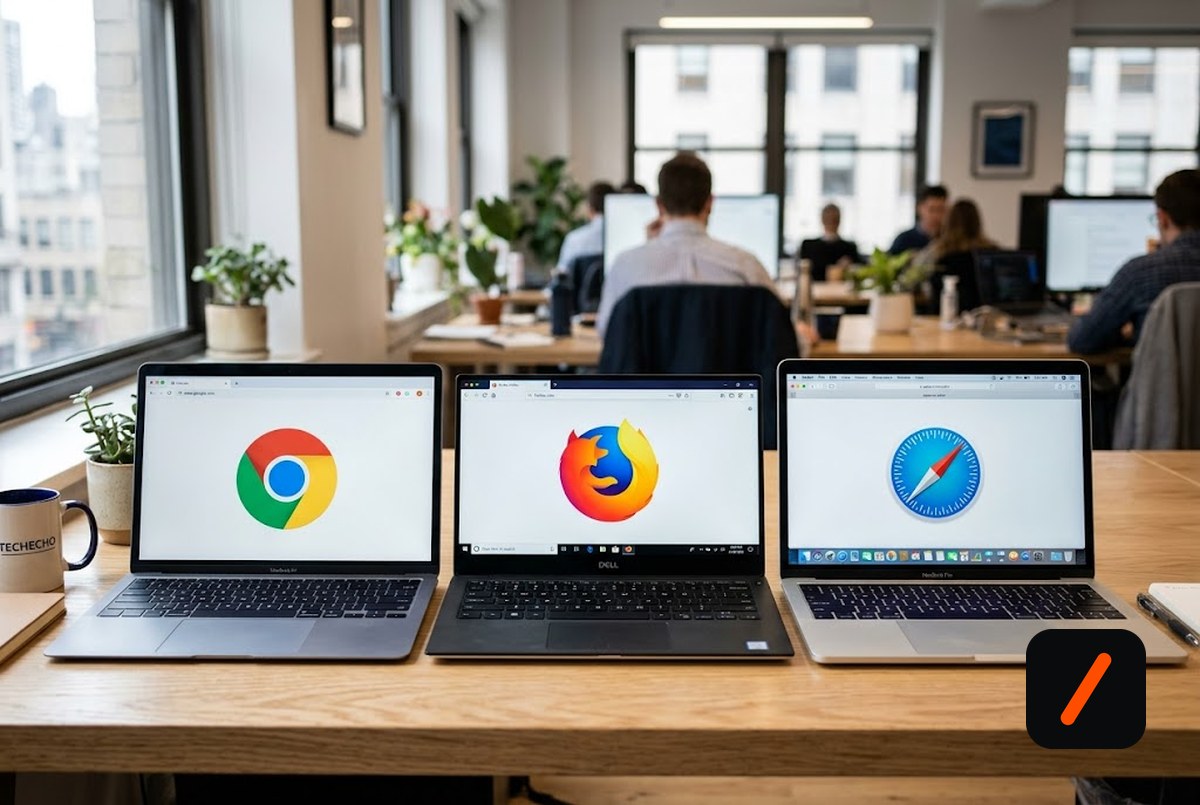
Interop 2026, the annual pact where Apple, Google, Microsoft, Mozilla and partners commit to passing the same web-platform tests, has landed baseline support for View Transitions, the Popover API, WebGPU and CSS anchor positioning across Chrome, Firefox, Safari and Edge. That means features developers used to ship behind polyfills and browser checks now work the same way everywhere, which is the whole point of the project.
- Interop is a joint effort by Apple, Google, Microsoft, Mozilla, Bocoup and Igalia that picks features each year and commits every engine to the same test suites.
- Interop 2026 shipped baseline support for View Transitions, the Popover API, WebGPU and anchor positioning across all major browsers.
- These are the primitives behind smooth animated navigations, native tooltips and menus, GPU compute in the tab, and tethered pop-ups without hacks.
- For production, the web is now largely a two-engine problem: pass in Blink and WebKit and you reach about 97 percent of sessions.
What is Interop and what shipped this year?
Interop is a rare example of the browser makers cooperating in public. Each year Apple, Google, Microsoft, Mozilla and testing partners Bocoup and Igalia choose a set of web-platform features, wire them to shared Web Platform Test suites, and commit all major engines to passing the same tests. Progress is tracked openly on a public dashboard. In 2026 the project delivered baseline support for View Transitions, the Popover API, WebGPU and anchor positioning across Chrome, Firefox, Safari and Edge, moving those features from patchily-supported to something you can reasonably assume is present.
RelatedInterop 2026 Makes Anchor Positioning Work Everywhere
Why does cross-browser parity matter?
Every gap between browsers is a tax on developers. When a feature works in Chrome but not Safari, teams write fallbacks, ship polyfills, add feature detection, and sometimes just avoid the feature entirely. That drag is why the web often feels years behind native apps even when the capability technically exists. Interop attacks the problem at its root by making parity a shared, measurable commitment rather than a hope. When View Transitions or anchor positioning reach baseline, the calculus flips: developers can use them directly, and the platform advances for everyone at once instead of one engine at a time.
| Feature | What it does | 2026 status |
|---|---|---|
| View Transitions | Smooth animated transitions between DOM states and pages | Baseline across engines |
| Popover API | Native tooltips, menus and pop-ups with correct focus and layering | Baseline across engines |
| WebGPU | Low-level GPU access for graphics and ML compute in the tab | ~82% of users |
| Anchor positioning | Position elements relative to an anchor without JS hacks | Baseline across engines |
What do these features actually unlock?
View Transitions let a site animate between two states, including full page navigations, with a few lines of CSS instead of a heavy JavaScript framework, closing part of the gap with native app polish. The Popover API gives menus, tooltips and dialogs correct focus handling and stacking for free, which is a real accessibility win over the hand-rolled versions most sites ship. Anchor positioning lets a pop-up tether to the element that triggered it without brittle measurement code. And WebGPU exposes the GPU for both graphics and machine learning, so an entire language model can run inference inside a browser tab. Together they are the difference between working around the platform and building on it.
Is the browser still fragmented?
Less than it used to be, and in a specific way. For the production web, testing is largely a two-engine problem: if something works in Blink, which powers Chrome, Edge, Brave, Opera, Vivaldi and Samsung Internet, and in WebKit on iOS Safari, it reaches about 97 percent of sessions. Firefox's Gecko remains the important third engine and a genuine check on a Blink-and-WebKit duopoly, even as its share slips. Interop matters precisely because it keeps all three, plus Edge, moving in lockstep on the features that count, rather than letting the smaller engines fall behind and quietly narrow the web to whatever Chrome ships.
RelatedWebGPU Goes Cross-Browser, Unlocking In-Browser AI
- Adoption follows baseline. Features counting as baseline only matters if developers actually reach for them. Watch usage climb.
- The 2027 focus list. Which features vendors pick next signals where the platform is heading.
- WebGPU and AI. In-browser model inference is the sleeper story; wider WebGPU support unlocks private, local AI.
Our take
Interop is the least glamorous and most important thing happening on the web platform. There is no launch event and no hype cycle, just four browser makers agreeing to pass the same tests so developers stop paying a fragmentation tax. Getting View Transitions, Popover, anchor positioning and WebGPU to baseline in a single year is a genuine gift to anyone who builds for the web, because it turns capabilities that used to require caveats into things you can simply use. The web advances fastest when the engines move together, and Interop 2026 is the clearest proof that, on the features that matter, they still can.
- OfficialInterop 2026 dashboard live cross-engine scores
- Referenceweb.dev - Interop 2026 the year's focus areas explained
- ReferenceWebKit blog Safari's interop progress notes
Original analysis by GenZTech. Support figures reflect the public Interop dashboard as of July 2026.