
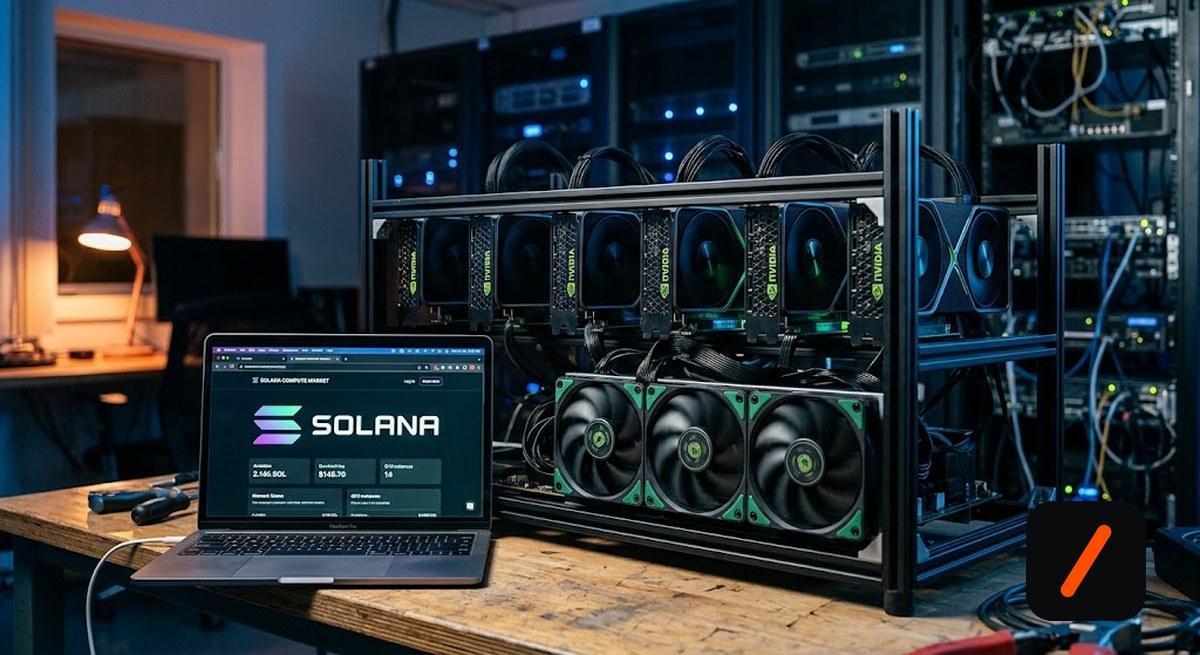
Nosana, a Solana-based decentralized GPU compute network, is having a moment on the back of the same force reshaping all of tech: an AI compute crunch that centralized clouds cannot satisfy fast enough. The project pools GPUs into a marketplace where anyone can rent or supply compute for AI inference and other workloads, and its token has run up sharply as traders bet that DePIN's cheap, distributed capacity is a real answer to the shortage. It is a clean example of the sector's strongest 2026 narrative: physical infrastructure demand as economic inevitability.
- Nosana is a Solana-based DePIN offering decentralized GPU compute for AI and related workloads.
- Its token has risen sharply, with one tracked move of about 135%, on AI-compute-demand momentum.
- The thesis: distributed GPUs fill demand centralized clouds cannot scale to meet, at lower cost.
- It sits in the same Solana DePIN cluster as Helium and io.net, all riding the compute crunch.
What is Nosana and why is it moving?
Nosana is a decentralized physical infrastructure network built on Solana that turns distributed GPUs into a rentable compute marketplace, aimed at AI inference and similar jobs. The token's sharp move, one tracked figure put it up about 135%, reflects traders pricing in the AI compute crunch: demand for GPUs is outrunning what centralized providers can build, and networks that aggregate idle or independent hardware are positioned to soak up the overflow at lower cost. When the dominant macro story is a shortage of exactly the resource your network supplies, the token tends to follow.
RelatedRender Network Rides the AI GPU Compute Crunch
Why is the compute-crunch narrative so strong?
Because it may be the one DePIN thesis grounded in structural, not speculative, demand. AI models are growing faster than centralized infrastructure can scale, turning the compute shortage from a temporary bottleneck into a persistent one. That is the sector's most powerful pitch in 2026: DePIN as economic inevitability rather than crypto incentive. Render leads the category on the same logic for GPU rendering and inference, io.net aggregates GPU clusters, and Nosana plays the Solana-native compute angle. The common thread is real external customers paying for a service, not tokens paying users to participate.
What separates winners from hype?
The dividing line in 2026 DePIN is non-token revenue: networks with actual paying customers versus those propped up by emissions. The strongest names, Helium pulling a growing share of revenue from enterprise, Hivemapper selling data to automakers, are succeeding because outsiders pay for the output. For Nosana, the question that matters more than a 135% candle is whether AI developers are genuinely renting its GPUs at scale, or whether the price move is momentum front-running usage. A compute network is only as durable as its paid utilization.
| Network | Nosana | Render | io.net |
|---|---|---|---|
| Focus | GPU compute (Solana) | GPU render / inference | GPU clusters |
| Chain | Solana | Solana | Solana |
| Demand driver | AI compute crunch | AI + 3D rendering | AI compute |
| Key question | Paid utilization | Utilization gap | Tokenomics balance |
What is the risk?
DePIN has a chronic divergence between network usage and token price, and a fast 135% move is exactly the kind of gap that can snap back if real demand does not materialize. GPU DePINs also compete against hyperscalers with vastly deeper capital and better reliability guarantees, and enterprises with mission-critical workloads may not trust a distributed, permissionless supply pool. Token incentives can bootstrap supply, but they cannot manufacture the paying demand that separates a durable network from a hype cycle. The upside is real; so is the reflexivity.
RelatedAkash adds Nvidia B200 and H200 to its GPU marketplace
- Paid utilization. The metric that matters is real compute revenue from AI customers, not token price or supplied capacity.
- Usage-vs-price gap. If the token ran ahead of demand, watch for a reversion; sustained usage would validate the move.
- Enterprise trust. Whether any serious AI workloads move to distributed GPUs versus staying on hyperscalers.
Our take
Nosana is riding the best story DePIN has: a genuine, structural shortage of the exact resource it supplies. That is far more compelling than the token-emission flywheels that defined the sector's first wave, and it is why compute DePINs are the names to watch in 2026. But a 135% move is a bet on demand, not proof of it. The projects that survive this cycle will be the ones where AI developers actually pay to use the GPUs, quietly and repeatedly, long after the candle cools. Watch the utilization, not the chart.
How do the token incentives hold up?
Every DePIN faces the same bootstrapping puzzle: you need supply to attract demand, but supply attracted purely by token emissions evaporates the moment rewards thin. Nosana's durability therefore depends on whether its incentive design can transition from emission-subsidized supply to usage-funded rewards, where paying AI customers, not the treasury, cover what suppliers earn. That is the exact line separating the DePIN names likely to survive this cycle from those destined to fade with their token charts. A 135% move signals the market is betting the compute crunch makes that transition inevitable, but incentives can conjure GPUs into the network far more easily than they can conjure customers to rent them. Sustainable demand is the only thing that turns a supply flywheel into a business.
- AnalysisThe DePIN protocols seeing record activity FalconX
- DataDePIN network explorer DePIN Scan
Original analysis by GenZTech. Data via FalconX. Speculative asset, not investment advice.