
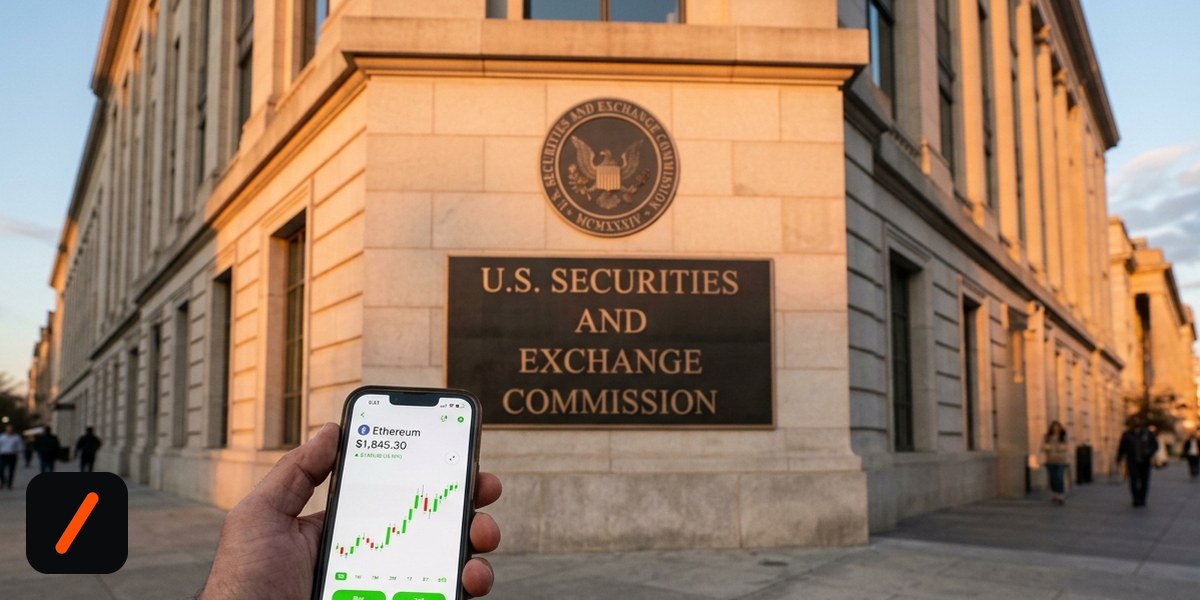
The SEC just opened a five-year legal lane for stocks to trade on public blockchains without anyone needing a stock-exchange license. On September 17, 2026, the agency issued what it calls the Innovation Exemption: a temporary, conditional order letting approved venues run on-chain trading of tokenized versions of real NMS-listed stocks, using permissioned automated market maker pools instead of a traditional order book. It expires five years after publication, and the SEC says it will spend that window writing permanent rules.
- The order lets "Tokenized Securities Venues" (TSVs) trade tokenized NMS stock through permissioned AMM liquidity pools without registering as a stock exchange under the Exchange Act.
- The exemption runs five years from publication and comes with a public comment request, with the SEC intending to develop durable rulemaking during that window.
- Only tokens backed by real underlying shares qualify. Synthetic tokens that merely track a stock's price are excluded.
- AMM liquidity providers supplying their own capital also get a conditional exemption from being classified as securities dealers.
How does a Tokenized Securities Venue actually work?
The SEC's order defines a TSV as a venue that brings buyers and sellers of tokenized NMS stock together in two specific ways: it runs AMM liquidity pools where permissioned participants agree on trade terms, and it sets the access standards for who can trade in those pools. That second part is the whole design. This is not a permissionless DeFi pool anyone can dump tokens into. It is a gated venue built on infrastructure that happens to be public, where the gatekeeper is a regulated operator, not the blockchain itself.
RelatedThe CLARITY Act Isn't Stuck on Crypto Rules. It's Stuck on Ethics.
The token side has to hold up too. A TSV must verify its tokenized stock carries the same rights as the traditional NMS shares of the same class before listing it. If the token wraps a company's stock without that company's own program behind it, the TSV must give the issuer written notice and a chance to object before trading starts. That issuer-objection right is a real brake on unauthorized wrappers, and it is arguably the most consequential line in the whole order.
What conditions did the SEC actually attach?
Beyond gating and issuer notice, the order layers on operational conditions. Smart contracts must be auditable, public, and deployed on a public, permissionless ledger, so settlement stays open even while trading access does not. Trading must stop the instant the underlying stock halts on its primary listing exchange. The order caps symbols and trading volume against limit up, limit down volatility tiers, though the SEC's materials do not print the numeric caps. Books-and-records rules, transaction transparency and technology safeguards apply too. Transaction data in dollars, price, size, time, pool address, end-of-day pool size and daily volume, must be published regularly.
| Tokenized stock on a TSV | Registered national exchange | Offshore synthetic token | |
|---|---|---|---|
| Backing | Real shares held 1:1, verified rights | Real shares, standard clearing | No real shares; tracks price only |
| Venue registration | Exempt from exchange registration under the order | Registered national securities exchange | Not published; typically unregistered |
| Participant access | Permissioned, access standards set by the TSV | Open to any brokerage client | Often open, minimal KYC |
| Settlement layer | Public, permissionless blockchain | Traditional clearing (DTCC-style) | Varies, often permissionless chain |
| Halt handling | Must halt when the listing exchange halts | Sets the halt itself | Not published |
| Data transparency | Public price, size, time, pool data on a schedule | Public tape, real time | Not published |
| Sunset | Five years, then durable rulemaking or lapse | Permanent | Not published |
Why did this land the same week the CLARITY Act died?
The timing is hard to ignore. The CLARITY Act, Congress's attempt at crypto market-structure legislation, failed a Senate cloture vote 46-43 on September 16, 2026. One day later, the SEC issued the Innovation Exemption on its own authority. Congress could not agree on a statute, so the agency used an order instead: regulation-by-exemption filling the gap legislators left behind. It is a pattern worth watching. When Capitol Hill stalls, agencies keep moving through exemptive relief rather than wait for a bill that may never pass.
- 2026-09-16CLARITY Act fails Senate cloture, 46-43. Crypto market-structure legislation stalls in Congress.
- 2026-09-17SEC issues the Innovation Exemption. Press release 2026-90, plus Commissioner Uyeda's supporting statement.
- 2026-09-17Public comment period opens. No deadline given in the release.
- 2026-2031SEC develops durable rulemaking. Stated intent is to replace the exemption with permanent rules.
- Sept 2031Innovation Exemption expires. Five years after publication, unless superseded first.
What it means for the market
This does not create a new asset class from nothing, but it hands a green light to companies already circling tokenized equities. The obvious candidates are exchanges and brokers with existing tokenization ambitions, think Coinbase (COIN), Robinhood (HOOD), Nasdaq and Kraken, plus tokenization-native platforms like Ondo, Backed, Dinari and Superstate. None is confirmed to have applied for or received this exemption; they are simply the names best positioned to use it. The public-chain requirement points at Ethereum and Solana as the likely settlement rails, making ETH and SOL indirect beneficiaries. The signal for investors is that regulatory uncertainty around tokenized equities just narrowed, not that any specific stock or token got easier to trade. Genztech covered Pump.fun's tokenized-stock pairs and the tokenized real-world-asset market's climb past $30 billion earlier this year; this order is the regulatory scaffolding that activity was missing.
RelatedCoinbase Files to Bring 24/7 Stock Perpetuals to the US
What could still go wrong?
The five-year sunset is a race clock, not a guarantee. If the SEC does not finish durable rulemaking in time, TSVs face a cliff unless the agency extends or replaces the order. The unpublished symbol and volume caps mean nobody outside the SEC knows exactly how big a TSV can get, which makes long-term planning harder. And the issuer-objection right, while a real brake on unauthorized wrappers, is untested. Nobody yet knows how issuers will use it, or how fast an objection can shut a pool down once trading has started.
- Who actually applies. The first named TSV applicant will tell you which incumbents are serious about this versus watching from the sidelines.
- The unpublished caps. Watch for the SEC to eventually disclose the specific symbol and volume limits tied to LULD tiers.
- Issuer objections in practice. The first real objection case will set the template for how much power issuers actually have over unaffiliated token wrappers.
- Rulemaking pace. Commissioner Uyeda's push for "technology-neutral regulation" hints at where permanent rules might land; watch the comment docket for direction.
Our take
This is the SEC moving first and letting Congress catch up later, and given the CLARITY Act's collapse a day earlier, that is probably the only way anything happens here before 2027. The design is smarter than a blanket approval: permissioned pools on public chains thread the needle between DeFi's open settlement layer and securities law's insistence on knowing who is trading. The issuer-objection right matters most, because it decides whether tokenization stays under issuer control or happens to them. Five years is long enough to build real infrastructure, short enough to force the SEC to finish the rulemaking it promised. Chairman Paul Atkins called it a significant step into the digital age, and for once the framing fits the substance.
- OfficialSEC press release 2026-90 the Innovation Exemption order and comment request
- GovernanceCommissioner Uyeda's statement supporting statement on outcomes-based, technology-neutral regulation
- ReferenceSecurities.io summary plain-language breakdown of the order's conditions
- ReferenceGenZTech: CLARITY Act fails cloture 46-43 the legislative gap this order fills
Original analysis by GenZTech. Primary source: SEC press release 2026-90.