
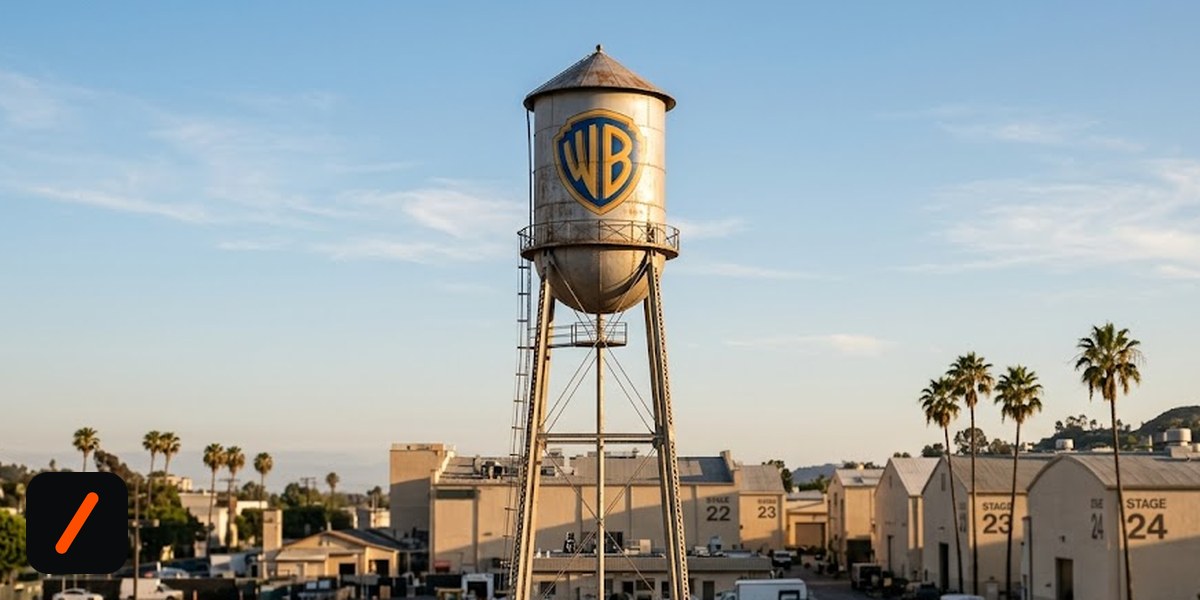
Warner Bros. Discovery sued Amazon on Tuesday, July 21, in Los Angeles County Superior Court, accusing it of talking an HBO Max marketing executive into walking out on a contract with 15 months still to run. The executive is Pia Barlow, who ran originals marketing for HBO Max and has joined Amazon MGM Studios to head series marketing. Her Warner term agreement, the complaint says, does not expire until October 31, 2027.
The remedy Warner wants is the interesting part. Alongside damages, it is asking for an injunction stopping Amazon from hiring any Warner employee who is inside a term agreement before that agreement runs out. California outlawed the non-compete decades ago. The fixed-term personal services contract is the one instrument that survived, and Warner is betting that a 2021 appellate loss suffered by Netflix means it still bites.
RelatedFTC sues Hims & Hers over health data sent to Meta, Snap
- Who filed. Warner Bros. Discovery and Warner Media Services, in Los Angeles County Superior Court on July 21, 2026.
- The hire at issue. Pia Barlow left HBO Max originals marketing for Amazon MGM Studios; her Warner deal ran to October 31, 2027.
- A second attempt, per the complaint. Warner says Amazon also went after an employee whose term deal runs into December 2027, and failed.
- What Warner wants. Damages plus a preliminary and permanent injunction barring Amazon from hiring Warner staff still inside a term agreement.
What exactly is Amazon accused of doing?
Not hiring, exactly. Nothing in the filing claims Barlow was forbidden to leave, and California would not let an employer say so anyway. The claim lands one step to the side: that Amazon knew about the term agreement, recruited her regardless, and made the pitch safe by promising to cover her if Warner came after her. The complaint is blunt about it. Amazon, it says, "has gone rogue by attempting to induce Plaintiffs' employees with term employment agreements to breach those agreements with impunity, backed up with the ready assurance that Amazon will defend and indemnify them should they be held to account."
That indemnity allegation is load-bearing. Inducing a breach of contract is a tort in California, and it is far easier to prove against a defendant who is alleged to have priced the breach in advance and offered to pay for it. Amazon MGM Studios declined to comment. Barlow has said nothing publicly.
Why can a term contract do what a non-compete cannot in California?
Section 16600 of the California Business and Professions Code voids any agreement that restrains someone from practicing a lawful profession. That is why the standard tech non-compete is dead paper in the state, and why engineers cross between rivals in Silicon Valley without a lawyer's letter turning up the next morning. Studios never leaned on non-competes. They lean on fixed-term deals instead: employment for a set number of years at agreed money, where leaving early is a breach rather than a resignation. The Labor Code caps those terms at seven years, a rule that exists because Olivia de Havilland sued Warner Bros. in the 1940s and won. Inside that window, though, the contract holds.
Netflix tested exactly this and lost. It hired two Fox executives out of fixed-term deals in 2016, Fox sued, and Netflix countersued for a declaration that the deals were an unlawful restraint on mobility under Section 16600, arguing Fox was pushing take-it-or-leave-it contracts that suppressed pay and blocked new entrants. A California appeals court rejected that in 2021 and left an injunction in place barring Netflix from poaching Fox's fixed-term staff. The line the court drew: Section 16600 protects an employee's right to move, it does not hand a competitor licence to induce contract breaches.
- 2016Fox sues Netflix Two executives leave mid-contract; Netflix countersues to void fixed-term deals.
- 2021Netflix loses the appeal A California appeals court affirms the injunction and rejects the Section 16600 attack.
- Jun 13, 2026DOJ clears the Warner sale Paramount Skydance's roughly $111 billion acquisition of WBD gets federal antitrust approval.
- Jul 20, 2026A judge pauses the deal A federal judge in Oakland halts closing amid state antitrust challenges; WBD stock falls about 4%.
- Jul 21, 2026Warner sues Amazon Inducing breach and tortious interference, filed in Los Angeles County Superior Court.
- AheadThe injunction hearing No merger closing until five days after a ruling in the antitrust case, or June 1, whichever is earlier.
Has a studio actually won one of these?
Fox did, and the shape has repeated since. Disney sued YouTube over its hiring of former ESPN executive Justin Connolly, and that case settled. Three fights, three different endings, and not one of them a jury verdict that knocked out the fixed-term contract itself.
| Fox v. Netflix | Disney v. YouTube | WBD v. Amazon | |
|---|---|---|---|
| Executive at issue | Tara Flynn, Marcos Waltenberg | Justin Connolly (ESPN) | Pia Barlow (HBO Max) |
| Core claim | Inducing breach, unfair competition | Inducing breach of a term deal | Inducing breach, tortious interference |
| Remedy sought | Injunction plus damages | Injunction plus damages | Roster-wide injunction plus damages |
| Where it ended | Injunction affirmed on appeal, 2021 | Settled | Pending |
Amazon's real exposure is not the damages number attached to one marketing hire. It is the shape of the injunction Warner has asked for, which would work as a standing no-hire order across an entire contracted roster rather than a ruling about one person.
Why is Warner Bros. Discovery losing executives right now?
Timing is the piece most coverage leaves out. Warner is in the middle of being sold. The Justice Department cleared Paramount Skydance's roughly $111 billion acquisition of the company in June. On July 20 a federal judge in Oakland paused the deal while state-level antitrust challenges play out, and WBD shares dropped about 4% that day. Days later the two sides agreed not to close until five days after a ruling in that case, or June 1, whichever comes first.
RelatedThe Teen Suing Meta Over Addiction Just Dropped the Case
Put yourself in a Warner executive's chair. Indefinite wait, new owner, reorganisation with an unknown number of seats at the end of it. That is precisely when rival recruiters call, and precisely when the contracts holding people in place stop being paperwork and start being the only thing between a studio and an exodus of the people who know how to sell its shows. Suing the first big acquirer to test those contracts, loudly and in public, is a message aimed at everyone still on the roster as much as at Amazon.
What it means for the market
The damages here will not register on Amazon's income statement. The signal worth tracking is strategic: Amazon MGM has been buying its way into prestige television, and an injunction covering Warner's contracted staff would shrink the hiring pool for exactly the marketing and programming roles that business runs on. For anyone holding WBD, the lawsuit is a symptom rather than a driver, and the question it raises is whether talent flight during a long pause quietly degrades the asset Paramount Skydance agreed to buy. The injunction hearing is a cheap early read on how hard Warner plans to defend its bench while the sale hangs.
What if you are the one signing a term deal?
Know what the document is. It is not a non-compete, and the enforcement risk sits with whoever hires you early rather than with you. The protection is in the drafting: the length of the term, whether there is a defined exit or buyout, what happens if your role or reporting line changes under you, and whether the employer can extend on its own option. An indemnity from a new employer is a real thing companies offer, as Warner alleges happened here, but it pays your legal bill. It does not undo an injunction that stops the hire from happening at all.
- The injunction, not the damages. Whether a judge grants relief covering Warner's whole contracted roster is the only ruling with industry-wide reach.
- Whether Amazon attacks the contracts. Netflix ran the Section 16600 argument and lost in 2021. If Amazon runs it again on a different record, fixed-term deals go back on trial.
- The merger clock. With no closing until a ruling or June 1, Warner faces months of raid exposure. Expect more filings if the first one lands.
- The second name. The complaint says one target stayed put. If more surface, this stops looking like one hire and starts looking like a plan.
Our take
Warner picked a fight it has good reason to think it wins, at a moment when winning matters more than the money does. The precedent runs its way, the alleged promise to indemnify reads badly in front of a judge, and the remedy it wants costs Amazon far more than a damages cheque would. The uncomfortable part is what the case defends. The instrument keeping these people in place would be void if it were written as a non-compete, and survives because it is written as a term of employment instead. Warner Bros. lost the case that capped those terms at seven years, in 1944, to an actress who wanted out of one. Eighty-two years later it is the studio arguing the term should hold.
- StatuteCal. Business and Professions Code 16600 the section that voids non-competes in California
- StatuteCal. Labor Code 2855 the seven-year cap on personal services contracts
- LegalSeyfarth Shaw on the Fox v. Netflix appeal why the injunction survived the Section 16600 challenge
- ReportTheWrap: the complaint's contents filing date, court, contract dates, relief sought
- DealNPR: DOJ clears the Paramount Skydance acquisition the merger context behind the timing
Original analysis by GenZTech. Story first flagged via TechCrunch.