
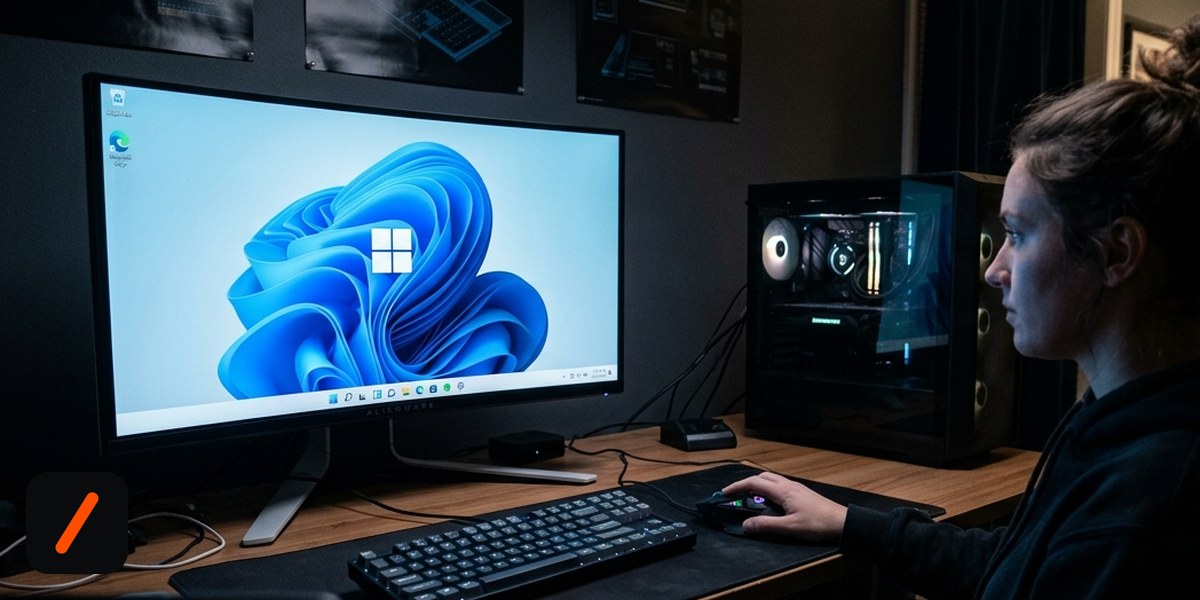
Microsoft is about to flip a security switch on millions of Windows 11 PCs that owners never touched themselves. Starting in October 2026, routine Windows Update patches will begin automatically turning on Memory Integrity, and on some hardware, Virtualization-Based Security alongside it, a pairing that has spent four years earning a reputation among PC gamers for eating frame rate.
- Microsoft's Windows IT Pro Blog confirmed the change on September 1, 2026, in a post titled "Expanding memory integrity protection across Windows devices," with general availability lining up with October's Patch Tuesday on the 13th.
- The rollout is gradual and eligibility-gated: Windows checks a device's hardware, compatibility, and performance profile before enabling anything, so not every PC gets it on day one.
- If you or your IT department already turned Memory Integrity off on purpose, that choice sticks. The update targets devices where the setting was simply never touched.
What is Microsoft actually changing?
Memory Integrity, sometimes labeled Hypervisor-Protected Code Integrity or HVCI in Microsoft's own documentation, uses the hypervisor to fence off the Windows kernel from untrusted code. Only signed, verified drivers get to run in kernel mode. It has shipped as an option since Windows 10 and has been the default on brand-new, security-baseline-compliant PCs for a few years already. What changes in October is scope: Microsoft is now pushing it onto the much larger population of existing devices that shipped without it, or where nobody ever opened Windows Security to turn it on.
RelatedZelda 40th Anniversary Switch 2 Is $520, Out October 29
On machines that also lack Virtualization-Based Security, the update can switch that on too, since Memory Integrity depends on it. VBS carves out a hypervisor-isolated memory region that even the kernel itself can't touch, which is exactly why it costs some CPU cycles and, in a subset of games, frame rate.
Why does a security feature cost frame rate?
Memory Integrity's overhead comes from where it runs its checks, not from what it checks. Kernel-mode code validation normally happens right there in the kernel, fast and cheap. VBS moves the trust boundary into a hypervisor-isolated container, so certain operations now have to cross into that isolated region and back. Games that hammer the CPU with frequent driver calls, physics ticks, or anti-cheat hooks feel that round trip more than a browser or a spreadsheet does.
Independent testing has tracked this for years, not just theorized it. Tom's Hardware's benchmark pass found frame-rate losses in the single digits to low teens depending on the title and CPU, and outlets like XDA Developers have reported that switching Memory Integrity off can lift 1% low frame times by 15 to 25% in the worst-affected games, which is the difference between a smooth session and visible stutter. Microsoft itself acknowledged the trade-off back in 2022, telling gamers plainly that "in some scenarios and some configurations of gaming devices there may be a performance impact."
| Setting | Kernel protection | Typical gaming impact | Who it's for |
|---|---|---|---|
| Memory Integrity + VBS on | Blocks unsigned/malicious kernel-mode drivers via hypervisor isolation | Reports range from negligible to a low-double-digit percent frame-rate hit, worse on older or budget CPUs | Default for most users after October 2026; recommended for shared, work, or internet-exposed PCs |
| Memory Integrity off | Kernel-mode checks stay in the kernel, no hypervisor round trip | Closer to the device's uncapped performance ceiling | Dedicated gaming rigs where the owner accepts the trade-off knowingly |
Who's actually affected, and how do you check?
The people most likely to notice are gamers on mid-range or older hardware running a Windows 11 PC that was set up years ago and never had this setting touched. Newer high-end CPUs with strong virtualization support tend to absorb the overhead better. To see where a machine stands right now, open the Windows Security app, go to Device Security, then Core Isolation, and check whether Memory Integrity is listed as on or off. If it's off today and nobody has explicitly disabled it through policy, expect it to flip on sometime after this device becomes eligible in the gradual rollout.
Anyone who wants to keep it off for a gaming machine still can. The toggle in Core Isolation isn't going away, and Microsoft's own messaging says an explicit off stays off. The practical shift is that the default is moving from "off unless you turned it on" to "on unless you turned it off."
RelatedXbox Outage Blocks Disc Games, Not Just Digital Ones
- 2020Memory Integrity ships as an optional Core Isolation setting in Windows 10 and 11.
- 2022Microsoft publishes gaming-performance guidance, confirming HVCI and Virtual Machine Platform can cost frames.First official acknowledgment
- 2023-2025New, security-baseline-compliant PCs increasingly ship with it on by default out of the box.
- 2026-09-01Microsoft announces the expanded rollout to existing devices via the Windows IT Pro Blog.
- 2026-10-13General availability targeted alongside October's Patch Tuesday.Gradual, eligibility-gated
Why is Microsoft doing this now?
Kernel-level malware and driver-exploiting attacks have not slowed down, and unprotected kernels are a favorite target precisely because a compromised driver runs with almost unlimited trust. Rolling the protection out through quality updates, rather than waiting for a Windows 12 or a fresh PC purchase cycle, closes that gap for the huge installed base of Windows 11 machines already in people's homes and offices without anyone having to take action. It also simplifies security posture for IT teams managing large fleets, who no longer have to chase down which devices still have the setting off.
What it means for the PC and component market
This isn't a stock-moving event on its own, but it quietly favors two groups: CPU makers pushing newer architectures with better virtualization efficiency, and PC OEMs selling systems already tuned around the always-on baseline. AMD and Intel have both spent recent generations narrowing the VBS performance tax through firmware and silicon-level improvements, and this rollout is a real-world stress test of that work at scale. Anyone shopping for a new gaming PC this fall has one more reason to check how a given chip handles Memory Integrity enabled, not just its raw benchmark numbers with security features off.
- Rollout pace. Watch whether Microsoft publishes eligibility criteria in more detail as devices start getting flipped on; a vague "eligible" is doing a lot of work in the current announcement.
- Fresh benchmarks. Expect a new wave of before-and-after gaming benchmarks in October as the update actually lands on real hardware, which will settle whether the 2022-era performance hit still holds on current chips.
- Anti-cheat friction. Kernel-level anti-cheat systems already interact closely with VBS; a sudden default change is worth watching for compatibility hiccups in specific competitive titles.
Our take
Turning on kernel protection for machines that have quietly gone without it for years is the right security call, and it is hard to argue Microsoft should keep leaving that door open just because a minority of gamers might lose a few frames. The bigger issue is communication. Burying a default-behavior change inside a routine quality update, discoverable mainly by people who already read IT blogs, is how you end up with confused users wondering why their PC suddenly feels different in October. A clear, one-time notification the first time this triggers on a given device would cost Microsoft nothing and would save a lot of "did Windows Update break my game" threads.
- OfficialMicrosoft Windows IT Pro Blog: Expanding memory integrity protection across Windows devices Sept 1, 2026 announcement, rollout timeline and eligibility criteria
- ReferenceMicrosoft Learn: Enable virtualization-based protection of code integrity technical explanation of Memory Integrity and VBS
- BenchmarkTom's Hardware: Benchmarked, do Windows 11's security features really hobble gaming performance? independent frame-rate testing of Memory Integrity and VBS
Original analysis by GenZTech, based on Microsoft's official announcement and independent gaming benchmarks. Read Microsoft's announcement.