
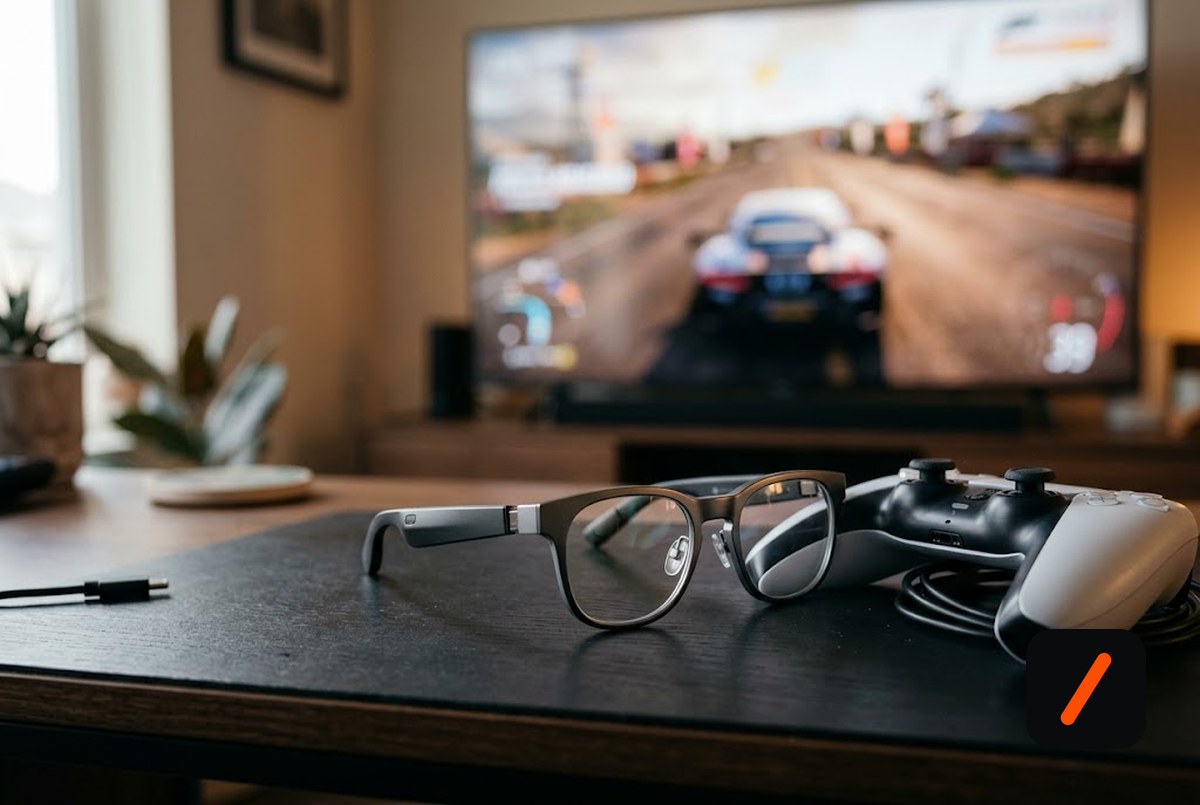
Xreal's R1 AR glasses, shipping from July 2026, project a 171-inch virtual display at up to 240Hz and are built for one clear job: being a giant, high-refresh monitor for PC, PlayStation and Xbox players. That focus is the point. While Apple and Meta chase spatial computing and mixed-reality platforms, Xreal is selling a screen you wear, and it is a reminder that the most useful face computer right now might just be a very good display.
- The Xreal R1 delivers a 171-inch virtual screen at up to 240Hz, targeting gamers who want a huge, fast display anywhere.
- It is designed for PC, PlayStation and Xbox, positioning as a portable monitor replacement rather than a standalone computer.
- Available to preorder now with availability from July 2026, it competes on refresh rate, a spec that matters for fast games.
- The pitch is deliberately narrow: not a metaverse headset, a wearable display that does one thing well.
What is the Xreal R1 for?
A wearable monitor, full stop. Plug it into a gaming PC, a PlayStation or an Xbox and it renders a 171-inch virtual screen floating in front of you, at a refresh rate up to 240Hz that keeps fast motion sharp. There is no onboard game console, no spatial operating system, no attempt to reinvent how you compute; the R1 takes a video signal and gives you a huge, smooth display anywhere you sit. For anyone gaming in a dorm, on a couch, in a hotel, or beside a partner who wants the TV, that is a genuinely useful proposition, and the narrow scope is what lets Xreal nail the one spec, refresh rate, that gamers actually feel.
RelatedSamsung's Galaxy Glasses Bet AI Beats a Screen
Why does 240Hz matter more than resolution here?
Because motion clarity is what your eyes notice in a fast game. Refresh rate is how many times per second the display redraws the image, and at 240Hz the screen updates four times as often as a standard 60Hz panel, which keeps quick camera pans, aim flicks and scrolling backgrounds crisp instead of smeared. For competitive shooters and racing games, that smoothness translates directly into readability and reaction time, which is why high-end gaming monitors chase the same number. Resolution and pixel density still matter for text and detail, but a wearable display sits close to the eye and is used mostly for motion-heavy play, so leading with refresh rate is a deliberate read of what the audience values. It is also a spec that many bulkier mixed-reality headsets, tuned for comfort and battery life over raw speed, do not match, which is how a pair of glasses ends up outrunning a far more expensive visor on the one number gamers care about most.
The tradeoff is that hitting those numbers depends on the source device doing the heavy lifting, since the glasses render whatever the PC or console outputs. A weak host caps the experience, so the R1 rewards players who already own capable hardware.
How is this different from Apple and Meta headsets?
| Trait | Xreal R1 | Mixed-reality headset |
|---|---|---|
| Core job | Wearable display | Spatial computer |
| Compute | Tethered to PC/console | Onboard, standalone |
| Refresh focus | Up to 240Hz | Typically 90-120Hz |
| Form factor | Glasses | Bulkier visor |
| Price class | Accessory | Premium platform |
The contrast is the strategy. Headsets ask you to adopt a new computing platform; the R1 asks only to replace your screen. That makes it cheaper, lighter and easier to reason about, and it sidesteps the content and ecosystem problems that have slowed every ambitious face computer to date.
RelatedApple iPhone Duo: Price, Specs and Release Date
Where it fits, and where it does not
- Best for tethered gaming. Big-screen play from a PC or console in tight spaces is the clear win, and 240Hz is a real advantage in fast titles.
- Comfort and optics. The experience lives or dies on weight, brightness and how the virtual screen holds at the edges over a long session.
- Not standalone. It needs a source device. This is an accessory, not a console, and that limits it to where you already have hardware.
- The memory backdrop. With component costs high across the industry in 2026, pricing and availability are worth confirming before preordering.
Our take
The R1 is refreshing precisely because it does not try to change your life. Years of metaverse and spatial-computing promises have produced expensive headsets in search of a use, while the genuinely handy thing, a big private screen you can wear, kept getting buried under platform ambitions. Xreal's decision to build a great wearable monitor for gamers and stop there is the more honest product, and the 240Hz spec shows it understands its audience. It will not be for everyone: it needs a device to plug into and lives or dies on comfort and optics. But as a portable second screen for PC and console players, it is the kind of narrowly excellent gadget that tends to outlast the grand platforms it sits quietly beside.
- OfficialXreal product specs and preorder
- ReferenceStuff: upcoming devices 2026 gadget roundup context
Original analysis by GenZTech. Figures current as of July 2026.