
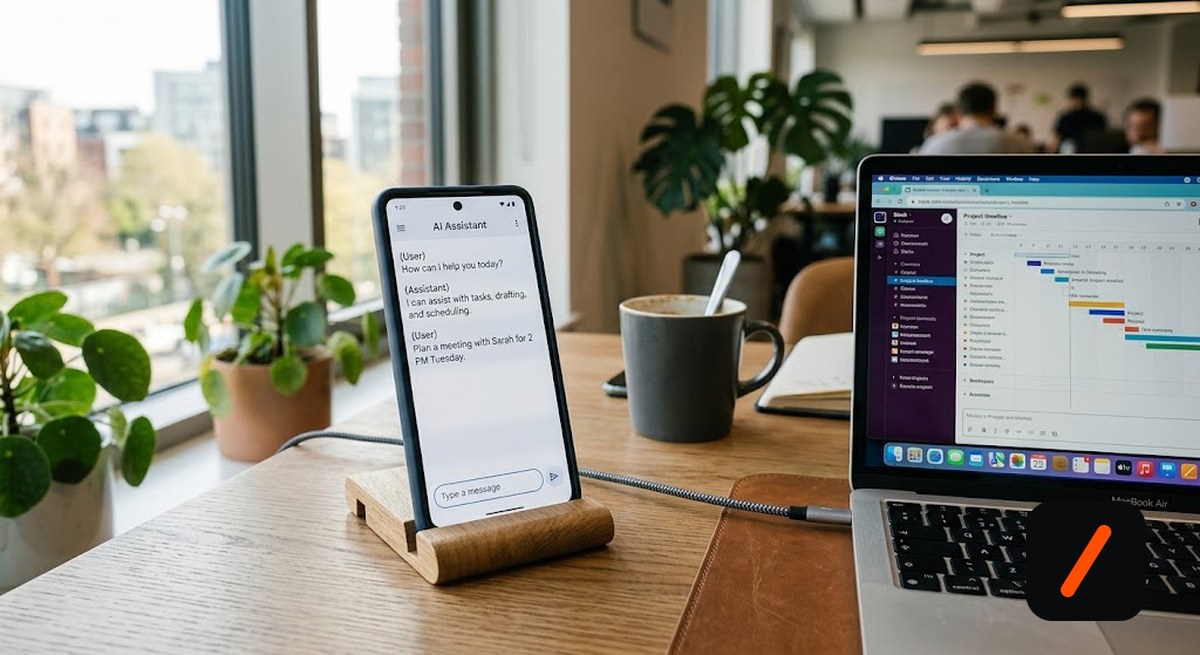
The agent wars stopped being about chatbots on July 9, when Anthropic launched Claude Cowork for web and mobile on the same day OpenAI shipped ChatGPT Work and folded Codex into a single app. Both products chase the same prize: an AI that does multi-step knowledge work across your documents, spreadsheets, and tools while you watch from anywhere. The headline shift is mobility. Long-running agent sessions no longer need a desktop left open.
- Anthropic released Claude Cowork on web and mobile, letting users delegate document, spreadsheet, and presentation tasks and monitor long-running sessions from a phone instead of a tethered desktop.
- OpenAI shipped ChatGPT Work the same day and merged Codex into ChatGPT, pitching one app for both coding and office tasks with a broader integration directory at launch.
- The Decoder called Cowork a preemptive move, suggesting Anthropic knew ChatGPT Work was coming and shipped first to blunt it.
- The real contest is trust: Anthropic leans on its Constitutional AI safety stack and enterprise governance, OpenAI on reach and integrations.
What actually shipped on July 9?
Anthropic pushed Claude Cowork to both web and mobile, positioning it as an agentic workspace where you hand off a task and it works across your files while you do something else. The mobile piece matters more than it sounds: earlier agentic sessions effectively required a desktop client to stay awake, which meant you could not start a two-hour research-and-drafting job and walk away. Cowork on mobile removes that constraint, letting you kick off, monitor, and steer long-running sessions from a phone. OpenAI countered the same day by launching ChatGPT Work and collapsing its Codex coding agent into the main ChatGPT app, so one surface now spans office tasks and software work.
RelatedCursor Builds 'Sand' Agent to Rival Claude Cowork
How do Cowork and ChatGPT Work differ?
Both are agentic knowledge-work platforms aimed squarely at enterprise productivity, so the differences are about posture, not category. ChatGPT Work arrives with a broader integration directory, reflecting OpenAI's head start on connectors and its consumer install base. Claude Cowork leans on Anthropic's governance story: the Constitutional AI safety stack, enterprise controls, and a reputation for reliability on long-horizon tasks. For a buyer, the question is whether you optimize for the widest tool coverage today or the tightest control over what an autonomous agent is allowed to touch.
| Dimension | Claude Cowork | ChatGPT Work |
|---|---|---|
| Launch | Jul 9, web + mobile | Jul 9, plus Codex merged in |
| Core pitch | Governed long-horizon agents | One app for work + code |
| Mobile sessions | Yes, monitor remotely | Yes |
| Integrations | Growing | Broader directory at launch |
| Edge | Safety + enterprise controls | Reach + ecosystem |
Why did both ship on the same day?
This is the part that reveals the strategy. Shipping within hours of a rival is not a coincidence; it is a signal that neither company wants the other to define the category alone. The Decoder framed Cowork as a preemptive strike, and the timing supports that read. Anthropic has spent 2026 pulling ahead on self-reported revenue and enterprise coding reliability, so it has an interest in being seen as the default for serious, auditable agent work rather than reacting to OpenAI's consumer gravity. OpenAI, meanwhile, wants the simplicity story: one app, coding and office work together, minimal switching.
Who is actually affected?
Knowledge workers and the IT teams who buy for them. The mobile shift changes the daily pattern: agents become something you supervise in the background, like a colleague you check on, rather than a tool you sit in front of. That raises the stakes on permissions and audit trails, because an agent editing live documents or firing off actions from your phone is only useful if you can trust and review what it did. Expect procurement conversations to hinge on logging, approval gates, and data boundaries as much as on raw capability.
RelatedChatGPT, Claude and Grok Go Down Together in Rare Outage
What it means for the market
The signal for investors is that agentic knowledge work is now a two-horse product race with real switching costs forming. Microsoft, which resells OpenAI through Copilot, benefits from ChatGPT Work's reach, while Anthropic's enterprise momentum pressures every incumbent productivity suite to ship comparable agents or risk looking static. Watch seat-based pricing: if agents do multi-hour jobs unattended, per-seat economics get strange fast, and whoever cracks usage-based pricing for autonomous work sets the template the rest of the industry copies.
- Reliability data. The first independent benchmarks on task completion, not demos, will decide which agent enterprises trust.
- Permission models. Whoever ships the clearest approval and audit layer wins regulated buyers.
- Pricing. Per-seat breaks when one seat runs ten background agents; usage pricing is coming.
- Integration race. Anthropic closing the connector gap would neutralize OpenAI's biggest launch-day edge.
Our take
The mobile untethering is the quietly important move here, more than either brand name. Once an agent session survives without a desktop babysitting it, the mental model flips from tool to delegate, and that is a genuinely different product to sell and to govern. Anthropic shipping first, on both surfaces, reads as a company confident that its safety-and-control pitch is the durable one as agents get more autonomous. OpenAI's counter is reach, and reach usually wins early adoption. But this category will be decided by trust under load: the agent that quietly finishes real work and shows its receipts, not the one with the flashiest launch. Both launched on the same Thursday; the winner gets sorted out over the next hundred boring, high-stakes tasks.
- OfficialAnthropic Newsroom Claude Cowork announcement
- OfficialOpenAI ChatGPT Work and Codex merge
- ReportingThe Decoder framing of the same-day launches
Original analysis by GenZTech. Figures current as of July 2026.