
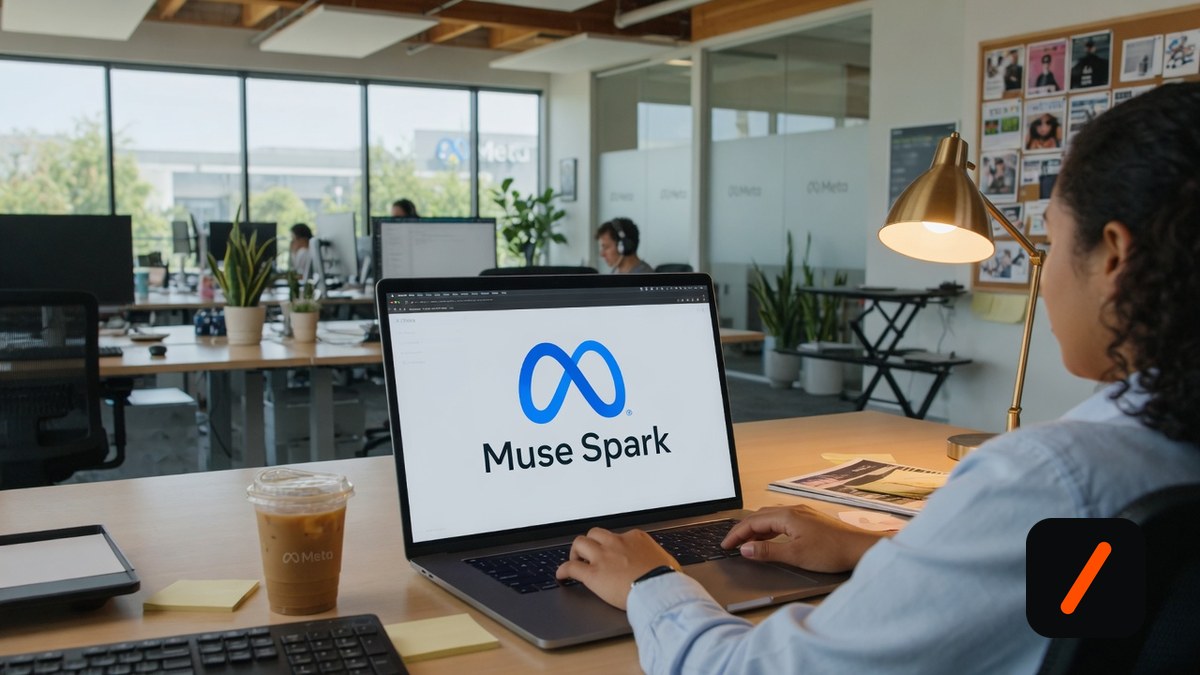
Meta launched Muse Spark 1.1 this morning, a paid, closed-weights AI model built for agentic coding and computer use, and opened it to United States developers in public preview on the Meta Model API. Announced by Meta Superintelligence Labs on July 9, 2026, it is the clearest sign yet that Meta is walking away from its open-source Llama roots and selling access to proprietary models, putting it head to head with Anthropic and OpenAI. AI chief Alexandr Wang called it Meta's "strongest model for agentic and coding work yet."
- Muse Spark 1.1 is a proprietary, paid model reached through an API, not a free download like Llama, and it ships with a 1-million-token context window.
- Pricing is $1.25 per million input tokens and $4.25 per million output tokens, with $20 in free credits to start. Wang framed it as "very aggressive and attractive" versus Anthropic and OpenAI.
- It is built for agentic work: writing and debugging code, driving software through "computer use," and orchestrating multi-agent systems as both a primary agent and a subagent.
- Early API partners are Replit, Cline, and Box. The model also runs in "Thinking" mode on the Meta AI app and is set to replace Llama across WhatsApp, Instagram, Facebook, and Meta's smart glasses.
What did Meta actually launch?
Muse Spark 1.1 is a multimodal reasoning model that understands text, images, and video and is tuned for the kind of long, multi-step tasks that agents run. It can write and debug code, call external tools, and carry out workflows with less human hand-holding than a chat model. The headline capability is "computer use": when text-based scripting is not enough, the model can automate work across multiple desktop applications, either by writing its own automation scripts or by interacting directly with a user interface. It also supports a 1-million-token context window and is designed to orchestrate multi-agent systems, acting as a primary agent that delegates to parallel subagents to cut end-to-end latency. This is the 1.1 update to the first Muse Spark, which launched in April to a handful of "select partners" behind a private API preview.
RelatedGPT-6.1 Sol: OpenAI's Cheap Model Nears Astra's Power
Why is this a big deal for Meta?
Because it is a strategy reversal. For years Meta positioned open-weight Llama as the counterweight to closed labs, betting that giving models away would commoditize the frontier and keep rivals from renting out a moat. Muse Spark is the opposite bet. It is proprietary, it is metered per token, and for now it lives only on Meta's own properties rather than neutral marketplaces like OpenRouter. Meta is no longer trying to erode the paid-API business; it wants a seat at that table. That is a direct answer to a simple commercial reality: the money in AI increasingly sits in selling reliable, agentic inference, and open weights do not capture it.
| Attribute | Muse Spark 1.1 | Llama (prior Meta) | Claude / GPT rivals |
|---|---|---|---|
| Weights | Closed, proprietary | Open, downloadable | Closed, proprietary |
| Access | Meta Model API (US preview) | Free download, self-host | Vendor APIs, marketplaces |
| Pricing | $1.25 in / $4.25 out per 1M | Free (you pay compute) | Metered per token |
| Context window | 1M tokens | Varies by version | Up to ~1M tokens |
| Built for | Agentic coding + computer use | General open model | Agentic coding, tools |
The pricing slots Muse Spark deliberately into the mid-market. At $1.25 per million input tokens and $4.25 per million output tokens, it sits above OpenAI's entry-level GPT-5 mini and Anthropic's low-cost Claude Haiku 4.5, but below Anthropic's higher-end Claude Sonnet 4.6. Signing up grants $20 in free credits before pay-as-you-go billing kicks in. It is a challenger price, positioned to win developers who find the top-tier models too expensive for high-volume agent loops.
How did we get here?
- Apr 2026First Muse Spark ships. Released to "select partners" behind a private API preview.
- Jul 9, 2026Muse Spark 1.1 launches. Public preview on the Meta Model API for US developers, priced pay-as-you-go.
- NowRolls into Meta apps. Available in "Thinking" mode on meta.ai; set to replace Llama on WhatsApp, Instagram, Facebook, and smart glasses.
- Late 2026Watermelon. A far larger model, still training, using vastly more compute, expected later this year.
What it means for the market
For Meta (META), Muse Spark is an attempt to turn its enormous AI spending into a product line with revenue attached, not just a cost center that powers free apps. If developers adopt the API at scale, Meta gains a recurring, high-margin inference business to set against the billions it pours into data centers. The companies most exposed are the ones Muse Spark undercuts on price: mid-tier coding and agent models from Anthropic and OpenAI, and the developer-tooling startups building on them. Notably, early partners Replit, Cline, and Box signal Meta is going straight for the AI coding market rather than consumer chat. The signal for investors is that AI is consolidating into a handful of frontier labs selling agentic inference, and Meta just declared it intends to be one of the sellers, not merely the open-source spoiler. The number to watch is developer uptake once the waitlist opens beyond early partners.
RelatedSakana AI Ditches the Frontier Model for Fugu Ultra v2
What about safety and the catch?
Meta says it evaluated Muse Spark 1.1 under its Advanced AI Scaling Framework across chemical and biological risk, cybersecurity, and loss-of-control categories, and that the model operates within defined safe margins, with a full report described as forthcoming. The practical catches are real, though. Access is US-only for now, gated behind a waitlist beyond the launch partners, and confined to Meta's own API rather than third-party marketplaces, which limits how easily developers can compare it side by side with rivals. And the "computer use" capability, while powerful, is exactly the kind of feature that raises the stakes on reliability: a model that writes its own automation scripts and clicks through real applications can do real damage when it is wrong.
- Independent coding scores. Meta claims agentic and coding strength but has not published a confirmed SWE-bench number. Independent evals will settle where it actually ranks.
- The waitlist pace. A public preview only matters if access opens quickly beyond Replit, Cline, and Box. Slow onboarding blunts the launch.
- Watermelon. Meta is telegraphing a much larger model later this year. Muse Spark 1.1 may be the warm-up, not the main event.
- OpenRouter and beyond. Keeping the model on Meta's own API limits reach. If it lands on neutral marketplaces, adoption could jump.
Our take
This is the most consequential thing Meta has done in AI in a year, and it is not the model itself. It is the business-model switch. Open-weight Llama was a genuine gift to the ecosystem and a clever way to deny closed labs a moat, but it never made Meta a dollar directly. Muse Spark 1.1 admits that the durable money is in selling agentic inference, and that admission reshapes the competitive map more than any single benchmark would. The pricing is smart, the coding-first partner list is the right target, and the computer-use pitch is aimed at the fastest-growing slice of demand. The open question is whether Meta can be a credible paid-API vendor after years of positioning as the open alternative, and whether developers trust a US-only, Meta-only preview enough to build on it. If Watermelon lands strong later this year, today looks like the opening move of a serious platform play. If it slips, Muse Spark risks being a mid-tier model from a company that gave up its most distinctive advantage.
- OfficialMeta AI blog Introducing Muse Spark on the Meta Model API
- ReportingCNBC Meta jumps into the AI coding market
- BenchmarkGenZTech AI Coding Leaderboard where confirmed coding models rank today
- ReferenceMeta Newsroom official company announcements
Original analysis by GenZTech. Figures current as of July 2026.