
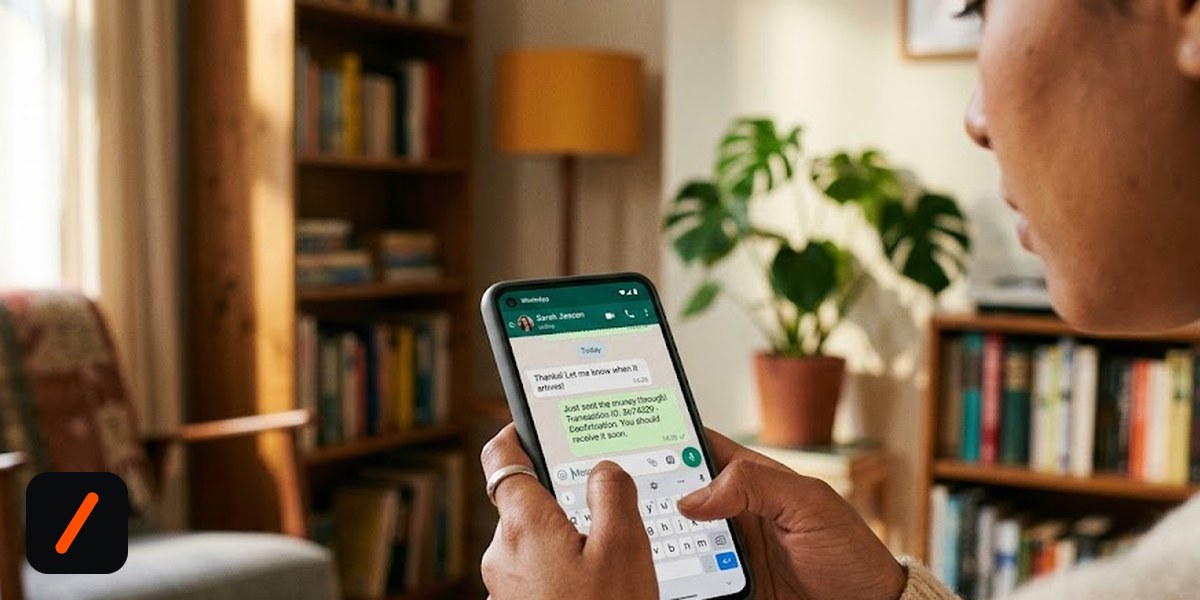
Félix, a Miami startup that lets Latino immigrants send money home over WhatsApp, has raised $200 million in new funding. The Series C round, announced around September 1 and 2, 2026, was co-led by Andreessen Horowitz (a16z) and General Catalyst, and it pushes Félix's total funding to nearly $300 million since the company was founded in 2020.
- The $200 million splits into an $87 million equity round led by a16z, joined by QED Investors, Castle Island Ventures, Switch Ventures, Contour Venture Partners and Endeavor Catalyst, plus a separate $113 million debt facility from General Catalyst's Customer Value Fund.
- Félix says its valuation "increased threefold" since its Series B but didn't give a number, a strong hint the company has crossed $1 billion.
- Founded by Manuel Godoy and Bernardo García, Félix runs remittances as a WhatsApp chat, using AI for the conversational interface and USDC stablecoin rails to move money across Latin America.
- The new money funds a push into loans and savings, plus expansion into new Latin American markets.
Why run remittances through WhatsApp instead of an app?
Because the people Félix is trying to reach are already there. Most Latino immigrants sending money home use WhatsApp daily, often as the main way they talk to family in Mexico, Colombia, Guatemala or wherever they came from. Asking someone to download and learn a second app, with its own login and its own trust bar to clear, is exactly the kind of friction that keeps underbanked populations locked out of formal financial products. Félix skips that step. Send money the same way you'd send a voice note to your mom: open the chat you already have open, tell Félix's assistant how much and to whom, confirm, done.
RelatedPixxel Raises $100M in India's Largest Spacetech Round
That's the real bet behind the round, more than the AI branding suggests. WhatsApp is the distribution channel. The AI is what lets a conversation, rather than a form, handle amounts, recipients, exchange rates and support questions without a human on the other end for every single transfer.
Why split $200 million into equity and debt?
Fintech rounds that move real money almost always end up structured this way once volume gets serious, and Félix's is a clean example. The $87 million in equity, led by a16z, is dilutive capital that funds what equity is supposed to fund: engineering, product, new markets, headcount. The $113 million from General Catalyst's Customer Value Fund is debt, and it exists for a narrower job. It's the float. Every remittance a company sends has to be pre-funded somewhere before it lands on the other end, and financing that float with equity would mean giving away ownership just to hold cash that's constantly moving in and out. Debt is cheaper for that purpose and doesn't dilute the founders or the investors from the last three rounds. It's a structure General Catalyst has used with other portfolio companies, and one that most remittance and lending fintechs eventually adopt once transaction volume gets real.
How does USDC actually help move the money?
Traditional cross-border remittances usually ride correspondent banking rails, the SWIFT network and a chain of intermediary banks, each taking a cut and adding a day or two of settlement delay. USDC, a stablecoin pegged to the US dollar, settles on a blockchain in minutes rather than days and doesn't need a chain of correspondent banks to clear a payment. Félix uses it as the backbone for moving dollars into Latin American markets efficiently, then converts to local currency for the actual payout. The stablecoin leg isn't something the sender or recipient ever sees or thinks about. It's infrastructure, the same way a bank's core ledger is infrastructure. It just needs to be fast and cheap enough that Félix can promise a transfer lands quickly without eating the fee itself.
| Dimension | Félix | Wise | Remitly | Traditional wire |
|---|---|---|---|---|
| Distribution | WhatsApp chat, no separate app to download | Standalone app and website | Standalone app | Bank branch or teller |
| Settlement rail | USDC stablecoin plus local payout network | Internal multi-currency ledger | Bank and cash-pickup partner network | Correspondent banking (SWIFT) |
| Typical speed | Minutes | Minutes to about a day | Minutes to same day | 1 to 3 business days |
| Funding raised | ~$300M total, including this $200M round | Public company (LSE: WISE) | Public company (Nasdaq: RELY) | N/A, bank service |
What's next: loans, savings and new markets
Félix isn't planning to stay a pure remittance app. The company says the new capital goes toward broader financial services, loans and savings products built on top of the same WhatsApp relationship, plus expansion into new Latin American markets beyond wherever it currently operates. That's the standard playbook for a remittance company that has earned trust and transaction history with a user: once you know how much someone sends home every month and how reliably, you have the underwriting signal most banks would kill for, and one that traditional credit bureaus in Latin America often can't provide. Turning a payment habit into a lending relationship is the harder, slower part of the plan, but it's also where the bigger revenue sits.
RelatedAlpaca Raises $135M for Agent-First Brokerage Rails
What it means for the market
a16z and General Catalyst don't write $200 million checks casually, and the names alongside them, QED Investors, Castle Island Ventures and Endeavor Catalyst among them, are firms with specific fintech and crypto-rails track records rather than generalist money chasing a hot sector. That's a signal in itself: serious venture capital is still willing to bet on AI-plus-stablecoin fintech aimed squarely at underserved and immigrant populations, a customer base the traditional banking industry has mostly ignored or overcharged for decades. GenZTech tracks rounds like this one on its own Funding Tracker, and it's worth reading Félix's raise alongside the broader trend on our Biggest AI Funding Rounds page: capital is flowing hardest toward AI companies that can point to a real distribution wedge and a real underserved market, not just a chatbot wrapper.
Our take
Messaging-app-native fintech is the actual unlock here, not the AI layer sitting on top of it. The conversational interface matters because it lowers the trust barrier, but the real innovation is refusing to make people leave WhatsApp in the first place. Underbanked users worldwide, not just Latino immigrants in the US, already live inside a handful of messaging apps for everything else in their lives. Any fintech that insists on its own standalone app is competing against habit itself, and habit usually wins. Félix's $200 million says investors are starting to believe that too, and the equity-debt split shows they understand what building for a genuinely underserved market actually costs: not just product spend, but a lot of patient capital sitting there ready to move real money. If Félix pulls off the jump into loans and savings without breaking the thing that made it work, WhatsApp-native finance stops being one Miami startup's bet and starts looking like the obvious way to reach the billions of people banks still can't be bothered to serve well.
- FundingCrunchbase News: Félix raises $200M round breakdown and investor list
- CoverageRefresh Miami: Félix raises $200 million Miami startup context and product roadmap
- CoverageThe Investor Society: Félix raises $200 million expansion plans beyond remittances
- RoundupTech Startups: Startup funding news, September 2, 2026 Félix among the day's funding rounds
Original analysis by GenZTech Team.