
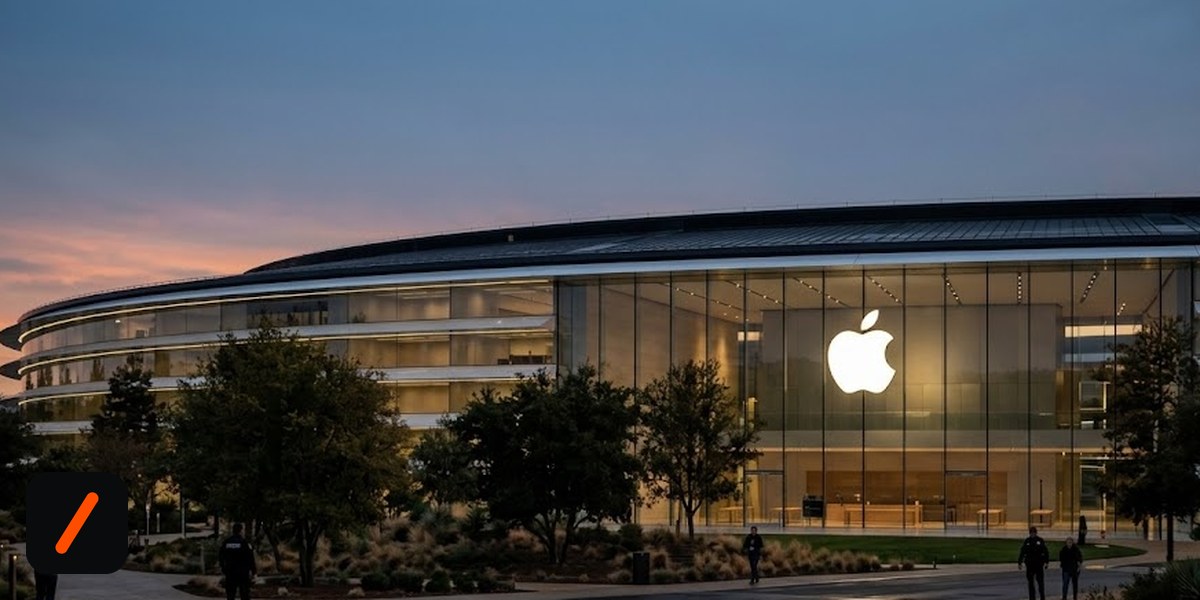
John Ternus started his first day as Apple's chief executive today, September 1, closing out Tim Cook's fifteen years running the company. The handover itself was announced back in April, but the details that landed in the past 24 hours are new: Cook's actual last day as CEO was August 31, and on the same day Apple confirmed that Phil Schiller, the executive who has run the App Store and Apple's product events since 2020, is stepping back from both roles too. The App Store now belongs to services chief Eddy Cue, the same job he held until 2015.
Two leadership changes landing on the same 24 hours isn't a coincidence. It's Apple clearing out a layer of Cook-era structure right as Ternus takes the wheel, and it's worth separating what actually happened from what was already known.
RelatedApple's price for letting you pay outside the App Store: 15%
What changed today, and what was already announced?
The CEO swap itself is old news by tech-cycle standards: Apple's board approved it back in April, and Cook told staff the company will "remain his No. 1 priority" even from the sidelines. What's new is that the transition took effect, and that Apple used the moment to also reshuffle a second, unrelated executive seat. Schiller, 66, has spent the past six years as an "Apple Fellow" after stepping down as marketing SVP in 2020, working what one 2024 report clocked at nearly 80 hours a week running the App Store and orchestrating every Apple keynote. As of this week, both jobs move elsewhere. Carson Oliver now runs App Store operations day to day, reporting up to Cue. Nola Weinstein takes over event production, reporting to communications VP Kristin Huguet Quayle. Schiller keeps his Fellow title and, per Apple, will work on unspecified initiatives, which several people close to the company are reading as the on-ramp to an eventual full retirement.
Why bundle it with the CEO handover?
Because a new chief executive's first week is exactly when a company absorbs changes it would rather not explain twice. Ternus inherits Apple's board seat today too, and Arthur Levinson, who chaired the board for fifteen years, is stepping down to lead independent director on the same date. Burying the Schiller move inside that wider transition means nobody has to write a separate "why is the App Store changing hands" story disconnected from the leadership news everyone already expected. It also means Ternus starts the job with the App Store, one of Apple's highest-margin, most regulator-scrutinized businesses, already off Schiller's desk and onto Cue's, who ran it before and knows exactly where the antitrust exposure sits.
Who is John Ternus, and why him?
Ternus joined Apple in 2001 on the product design team and spent the next two-and-a-half decades in hardware, eventually running engineering across the iPhone, Mac, iPad, and Apple Watch lines as senior VP from 2021 onward. He was one of the public faces of the AirPods and iPad launches, comfortable on stage in a way that made him an obvious internal successor once Cook's board started formal succession planning. What he hasn't run is software or AI, and that's the gap analysts keep circling. Apple's Siri overhaul has slipped multiple times, and the company is widely seen as behind OpenAI, Google, and Anthropic on frontier model work. A hardware chief taking over right as the hardest open question at Apple is a software one is not a subtle staffing choice, and it's the first thing Ternus will be judged on.
RelatedWindows 11's Weather App Is Eating Over 1 GB of RAM
What does this mean for the stock?
AAPL enters the handover in decent shape: shares are up about 3.6% in August against a flat-to-down S&P 500, and the stock sits near $310, down modestly from its recent high but well off any panic level. Wall Street's reaction to the original April announcement was muted, shares slipped roughly 1% after hours the day it was confirmed, which is itself a signal: the market had priced in a Cook-to-Ternus transition well before it happened, largely because Apple telegraphed it as an orderly, board-approved process rather than a surprise exit. The Schiller move is unlikely to register as its own catalyst; App Store leadership changes rarely move the stock unless they come with commission-rate or antitrust news attached, and none has here. The signal worth watching isn't this week's price action. It's whether Ternus uses his first product cycle, starting with the September 9 hardware event he'll lead solo, to show he can extend Apple's AI roadmap without Cook's operational hand on the wheel.
| Role | Sept 1, 2026 (now) | Through Aug 31, 2026 |
|---|---|---|
| Chief Executive Officer | John Ternus | Tim Cook |
| Board role for Cook | Executive Chairman | CEO, board member |
| Lead independent director | Arthur Levinson | Non-executive chairman |
| App Store leadership | Eddy Cue (services), day-to-day: Carson Oliver | Phil Schiller |
| Apple product events | Nola Weinstein, reporting to comms | Phil Schiller |
| Chief Operating Officer | Sabih Khan (since Nov 2025) | Sabih Khan |
- Jul 2025Apple announces Jeff Williams will retire as COO, with Sabih Khan named successor.
- Nov 2025Williams's retirement becomes official; Khan is fully in place as COO.
- Apr 20, 2026Apple's board approves the Cook-to-Ternus CEO succession and announces it publicly.
- Aug 31, 2026Tim Cook's last day as CEO. Apple confirms Phil Schiller is stepping down from App Store and events leadership.
- Sept 1, 2026John Ternus becomes CEO and joins the board. Cook becomes Executive Chairman. Arthur Levinson becomes lead independent director.
- Sept 9, 2026Apple's "Surprise and shine" hardware event, Ternus's first as CEO, run without Cook on stage.
Our take
Apple didn't have to announce the Schiller move this week. Nothing forced Cue's promotion and Cook's exit onto the same calendar date, and that's what makes the pairing worth noticing. A new CEO's honeymoon period is the cheapest time in a company's life to reassign a job someone has held for six years, because the story becomes "leadership transition" instead of "we moved the App Store." Handled this way, it barely registers as its own headline. That's smart management, and it's also a preview of how Ternus is going to run things: quietly, through structure, rather than through the kind of stage-presence moments Schiller built his reputation on. Whether that instinct serves Apple depends entirely on whether the AI roadmap can move at the same quiet pace, or whether it needs the kind of loud, visible push a hardware-first CEO isn't naturally built to give it.
- The Sept 9 event. Ternus's first solo keynote is the first real test of whether Apple's product cadence changes under new leadership.
- Eddy Cue's App Store priorities. He ran it once before 2015; watch whether commission structure or third-party app policy shifts now that he's back.
- Schiller's actual exit. "Apple Fellow" with no defined role has historically preceded a full departure within a year or two for other Apple veterans.
- Siri and AI roadmap updates. The clearest signal of whether a hardware-background CEO can close Apple's software gap.
- OfficialApple Newsroom: Tim Cook to become Executive Chairman, John Ternus to become CEO
- Reporting9to5Mac: Phil Schiller steps down from leading the App Store and Apple events
- Reporting9to5Mac: Today is Tim Cook's last day as Apple CEO, Ternus takes over
- ReportingBloomberg: Apple's Phil Schiller steps down from running App Store and product events
- ReportingAppleInsider: Apple COO Jeff Williams retiring, replaced by Sabih Khan
Original analysis by GenZTech, synthesizing Apple's own newsroom announcement, Bloomberg's and 9to5Mac's reporting on the App Store handover, and market data on AAPL heading into the transition.