
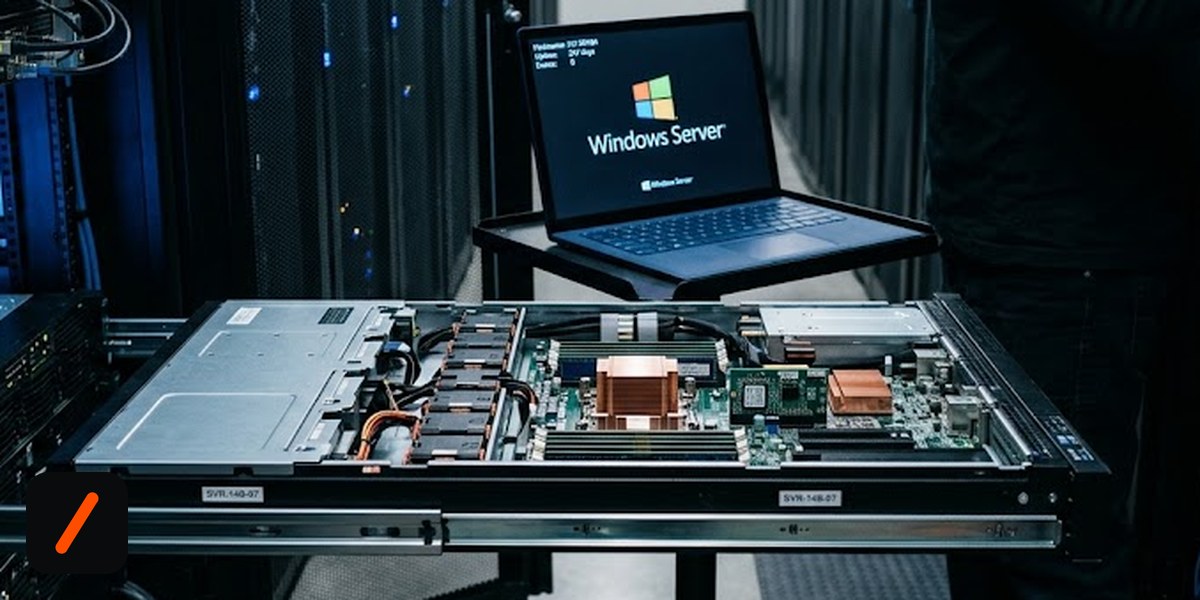
Microsoft is not coming for the pirated copy of Windows on your desk. The guidance it put on its Windows IT Pro blog on July 22, which went wide across tech news in the past day under headlines about a TPM piracy crackdown, changes exactly one thing: an organization's KMS host, the internal server that hands out volume activations to company machines, will eventually have to prove with a TPM that it is the certified hardware it claims to be. Nothing in the document inspects the PC you are reading this on.
That gap between the headline and the document is worth closing, because the ways people actually activate Windows without paying mostly do not involve a real KMS host at all.
RelatedWindows Server 2025 Memory Change Is Crashing SQL Server
What did Microsoft actually announce?
The feature is called KMS Hardware-Secured. Today a KMS host earns trust by holding a valid KMS host key. That is a software secret, and software secrets copy. Under the new model the host also has to present TPM-backed key attestation: cryptographic proof that the private key lives inside a genuine TPM on that specific certified machine, plus proof that the platform has not been tampered with since that identity was established. Fail either half and the host does not get to issue activations.
The rollout is deliberately slow. From August 2026, Windows Server 2025 begins reporting eligibility rather than enforcing it. Admins get a new line in the output of slmgr /dlv, along with matching event log entries, stating either that the machine can serve as a hardware-secured KMS host or that it does not qualify. Enforcement lands with the next Windows Server LTSC release, which Microsoft has not dated. Everything already deployed keeps working until then.
The scope is narrow in a second way that most coverage skipped. Multiple Activation Key, Active Directory-based activation, and retail or OEM licensing are all untouched. So are the Windows 11 clients on the receiving end: no new hardware check is being added to the machines that request activation. Microsoft's guidance is also written for physical hosts. Virtual KMS hosts, which is how a lot of organizations actually run this, get separate guidance in a later post. The company has not published the attestation protocol, the platform measurements it evaluates, what data leaves the host, whether there is a grace period, or what a non-compliant host will experience on enforcement day.
Why did this read as a piracy story?
Because KMS really has been a piracy surface for over a decade, and the shorthand stuck. Volume activation was built for a corporate network where hundreds of machines phone home to an internal server and renew every 180 days. Activation tools have leaned on that design for years by standing up a fake KMS server on the same PC, usually on localhost, that speaks the protocol and returns a valid-looking response. No real host, no stolen key, no Microsoft anywhere in the loop.
Microsoft has closed doors on that road before. KMS38, which pushed activation expiry out to the year 2038 by abusing the generic volume license key path, stopped working in 2025. The Massgrave collective that maintains the best known open-source activation scripts moved on rather than folding. Its current flagship, TSforge, attacks the client's own product key and licensing store directly instead of impersonating an activation server.
So when a change arrives carrying the words KMS, TPM and activation, "Microsoft ends pirated Windows" writes itself. It is still wrong.
What does this change for someone running an unlicensed copy?
Nothing today, and most likely nothing after enforcement either. Two reasons, and they are structural rather than temporary.
First, the dominant method is not KMS. It is HWID, which registers a hash of the machine's hardware against a digital license held on Microsoft's own activation servers. Once that registration exists, the machine reactivates itself after a clean wipe with no local server involved at any point. Changing the trust model of enterprise KMS hosts does not intersect with it.
Second, KMS emulators never talk to a real KMS host. They pretend to be one. Requiring genuine hosts to attest their hardware raises the cost for an attacker who has obtained a real corporate KMS host key and stood up a rogue server with it, which is a genuine abuse pattern and plainly what Microsoft is targeting. It does nothing whatsoever to a local emulator that was faking the entire conversation to begin with.
RelatedMicrosoft Fixes Teams and Outlook Crashes on ARM Windows PCs
| Activation path | Who uses it | Affected by KMS Hardware-Secured |
|---|---|---|
| Retail / OEM key | Consumers, prebuilt PCs | No |
| Multiple Activation Key | Smaller volume-licensed fleets | No |
| AD-based activation | Domain-joined enterprise fleets | No |
| On-prem KMS host | Enterprises activating at scale | Yes, TPM attestation required |
| HWID digital license | Most unlicensed installs | No |
| Local KMS emulator | Older activation scripts | No |
| TSforge | Current Massgrave tooling | No |
Is it a security change or a licensing change?
Both, and the security framing is the more honest one. A KMS host key is a high-value credential: leak one and anyone who can reach a server holding it can activate machines that were never licensed, at the licensee's expense and under the licensee's name. Binding the host key to attested hardware means a leaked key alone is no longer enough, because the copy cannot reproduce the TPM it was supposed to live in. That is a standard, sensible hardening of a credential that has been portable for far too long, and it belongs in the same family as every other push to tie secrets to hardware roots of trust.
The licensing benefit is real but secondary, and it lands on organizations rather than individuals. Microsoft gets fewer rogue hosts issuing activations against real corporate keys. Nobody at home notices.
Who actually has to do something?
Admins running their own on-premises KMS host, and only them. The prep work before the next Server LTSC ships:
- Confirm the KMS host hardware is certified on the Windows Server Catalog. Attestation depends on hardware Microsoft recognizes.
- Check that a TPM is physically present and enabled in firmware. Plenty of long-lived internal servers have one sitting disabled.
- Run Get-TpmSupportedFeature -FeatureList "Key Attestation" to confirm the TPM supports the specific capability this depends on.
- Inventory the aging boxes. A KMS host is exactly the kind of low-attention workload that ends up on hardware nobody has rebooted in three years, and that is the hardware most likely to fail the check.
- Wait for the virtualization guidance before rebuilding a virtual host. Microsoft has said it is coming and has not said what it will require.
The August readiness messaging is the useful part of this timeline. It turns the question from "will we be caught out" into a command you can run across the estate and get an answer from, months before anything is enforced.
- Jul 22, 2026Microsoft publishes KMS Hardware-Secured guidance Windows IT Pro blog
- Jul 26-27, 2026Story spreads as a consumer piracy crackdown Framing the document does not support
- Aug 2026Windows Server 2025 starts reporting eligibility slmgr /dlv plus event logs, no enforcement
- UndatedSeparate guidance for virtual KMS hosts Promised, not yet published
- Next Server LTSCTPM attestation becomes mandatory No release date announced
Our take
This is a good change described badly. Tying a portable, high-value key to attested hardware is the correct direction for KMS, and doing it with a year of visible readiness signaling before enforcement is more warning than Microsoft usually gives. The problem is that the company shipped it into a news cycle primed to read any Windows plus TPM story as another squeeze on consumers, and then left the most-asked question, what happens to a non-compliant host, unanswered in the same document.
The piracy angle is also a distraction from a more interesting question: how many organizations are quietly running production KMS on hardware that cannot attest anything. That number is not zero, and August is when they will find out.
- The virtualization guidance. If Microsoft requires a vTPM backed by an attestable host, a lot of KMS hosts living on shared clusters become a migration project rather than a checkbox.
- What non-compliance looks like. Hard refusal to activate versus a warning state is the difference between a scheduled upgrade and an outage.
- Whether the enforcement date arrives with the next LTSC. Microsoft has tied it to a release it has not dated, which is the easiest deadline in the world to let slip.
- Massgrave's response. TSforge already bypasses the activation-server model entirely. If the tooling does not change at all after this, that is the clearest confirmation that consumer piracy was never in scope.
- OfficialStrengthening Key Management Service (KMS) with Hardware-Based Trust Microsoft Windows IT Pro blog, July 22, 2026
- ReferenceKMS activation planning Microsoft Learn, how volume activation and KMS hosts work
- ReferenceGet-TpmSupportedFeature The PowerShell cmdlet that tells you if a host can attest
Original analysis by GenZTech. Reported from Microsoft's Windows IT Pro guidance and follow-up coverage including TechSpot and Windows Latest.