
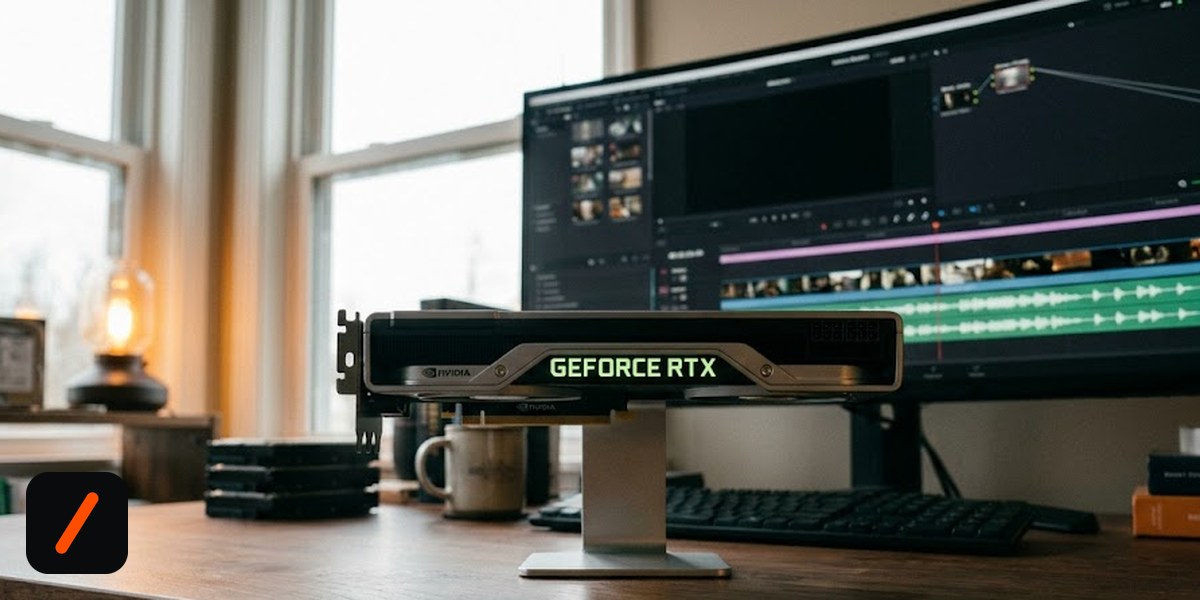
MiniMax released the weights for H3, its omni-modal video model, this morning, and ComfyUI shipped native support the same day. That closes a gap the company opened at the end of July, when it launched H3 as an API product and said the weights would follow "within days" without committing to a date. They landed today. Anyone with a Hugging Face account can now download a 33B-parameter model that generates up to 15 seconds of 24 fps video with 32 kHz stereo audio baked into the same forward pass, and run it on hardware that does not cost more than a car.
- The weights are live at MiniMaxAI/MiniMax-H3 on Hugging Face, with a ComfyUI-packaged mirror at Comfy-Org/MiniMax-H3.
- H3 is a 33B-parameter dense, single-stream Transformer, roughly 13B of which sits in AdaLN-related branches. Output is 4 to 15 seconds at 24 fps with 32 kHz stereo audio generated jointly, not dubbed on afterwards.
- ComfyUI 0.30.0 ships three day-0 templates: text-to-video, image-to-video, and reference-to-video.
- Int8 quantization plus dynamic offloading cut the total memory footprint from 123.6 GB to 42.5 GB, which is what makes the "runs on an RTX 3060" claim possible. Read that number carefully; it is a footprint, not a VRAM requirement.
What actually shipped today?
Three things, and it helps to keep them apart. The first is the model card and weights on Hugging Face, published under the MiniMax H3 Community License Agreement. The second is a ComfyUI-packaged copy of those weights under the Comfy-Org organisation, which is what the official workflows point at. The third is the ComfyUI integration itself, which requires version 0.30.0 or a Comfy Cloud account and ships three templates in the GitHub template library.
RelatedQwen3.8-27B ships open weights, scoreboard attached
The architecture is more modular than the marketing suggests. H3 is not one giant video transformer. Preprocessing lives in a component called H3-Context-IR, generation happens in H3-Base, and the 2K resolution everyone quoted at launch comes from a separate upscaling module named H3-Regenerate-2K. H3-Base itself decomposes further into H3-Encoder, H3-VisualVAE and H3-AudioVAE feeding an H3-Omni-Transformer. Native output defaults to a 768 pixel short side. The 2K figure is real, but it is a second pass, not the base sampling resolution, and anyone budgeting compute should plan for both.
The parameter split is also worth noting. Of the 33B dense parameters, roughly 13B sit in AdaLN-related branches, which is a large fraction of the model devoted to conditioning rather than to the trunk. That is a design choice you see in models built to take heterogeneous input, and it lines up with what H3 is being sold on: reading text, images, video and audio in one context and producing coherent audiovisual output from any mix of them.
Which workflow do you actually want?
The three day-0 templates map onto three different jobs, and picking the wrong one is the most common way to waste a generation.
| Template | What you feed it | Best for |
|---|---|---|
| T2V | A text prompt only | Original shots with no visual anchor |
| I2V | A still image plus a prompt | Animating existing art, product shots, keyframes |
| R2V | Reference images, video or audio | Character and style consistency, editing an existing clip |
R2V is the interesting one. Reference-to-video accepting audio as a reference input, not just images, is what separates H3 from the open video models that came before it. At launch MiniMax pointed at Artificial Analysis rankings that put H3 first in video editing among the models that firm tracks. Editing is exactly the workload R2V targets, and it is also the workload that has kept most production teams on proprietary APIs.
Can it really run on an RTX 3060?
Partly. The claim is doing something specific, and it is worth unpacking before anyone orders hardware on the strength of it.
ComfyUI credits three techniques: int8 convrot quantization, custom kernels that reduce peak VRAM during inference, and dynamic VRAM offloading. Together they take the footprint from 123.6 GB down to 42.5 GB. But a 12 GB RTX 3060 does not hold 42.5 GB of anything. Dynamic offloading means weights get shuttled between system RAM and the card as each stage runs, so the practical requirement is a lot of ordinary system memory, and the practical cost is time. "Runs on" is accurate. "Runs fast on" is not what anyone said.
If you are provisioning for this, budget system RAM generously and expect a 3060 to be a proof-of-concept tier rather than a production tier. A single 48 GB card holds the optimised footprint outright and skips the shuttling entirely, which is where the real speed difference lives.
Why does native audio matter here?
Most open video pipelines treat sound as a separate problem: generate the picture, then find or synthesise audio, then align them. H3 puts an H3-AudioVAE inside the same base model as the visual VAE and feeds both into one transformer, so the 32 kHz stereo track comes out of the same sampling process as the frames. Lip movement, footsteps and ambient sound are conditioned on the same latent state that produced the image rather than fitted to it afterwards.
RelatedFLUX 3 Puts Video, Audio and Robot Actions in One Model
That is the part that is genuinely hard to replicate with a bolt-on, and it is the reason this release matters more than another point on a video quality chart. A team that previously needed a video model, an audio model and an alignment step can now test whether one download covers all three.
What about the license?
The weights ship under the MiniMax H3 Community License Agreement, which is a custom license rather than Apache 2.0 or MIT. Community licenses in this category typically carry usage conditions, attribution requirements or scale thresholds, so read the actual text before building a commercial product on it. The download being free is not the same thing as the terms being permissive, and that distinction has caught teams out before with other open-weight releases.
Our take
The interesting fact is not that a Chinese lab released a capable video model. It is that the weights arrived days after the API, with day-0 support in the tool most independent creators actually use. Open-weight video has lagged open-weight text by roughly a generation, largely because the compute and the data are harder. H3 does not close that gap on quality alone, but it closes it on access: joint audio-video generation, editing workflows, and a footprint you can run without a datacenter is a combination that was not downloadable yesterday.
The catch is the same one every open-weight release carries. A 33B dense model with a separate upscaling pass is not a casual weekend download, the license is custom rather than standard, and the "3060" headline compresses a lot of offloading into two characters. Worth testing this week. Worth reading the license before it goes anywhere near a client deliverable.
- Quantized community builds. Expect GGUF-style and further int8 variants within days. That is usually where the real consumer-hardware story gets settled.
- Independent editing benchmarks. The video editing ranking came from launch materials. Third-party runs on the open weights will confirm or deflate it.
- License interpretation. Watch how commercial studios read the Community License Agreement. That determines whether H3 becomes infrastructure or stays a hobbyist tool.
- Audio quality under scrutiny. Joint generation is architecturally elegant. Whether the 32 kHz stereo output survives a critical listen is a separate question, and nobody has answered it yet.
- OfficialMiniMax H3 Day-0 Support in ComfyUI ComfyUI blog, 3 August 2026, VRAM and workflow details
- Model cardMiniMaxAI/MiniMax-H3 on Hugging Face architecture, parameter count, output specs, license
- WeightsComfy-Org/MiniMax-H3 the ComfyUI-packaged mirror the templates point at
Original analysis by GenZTech, built from the ComfyUI day-0 announcement and the MiniMax H3 model card published 3 August 2026.