
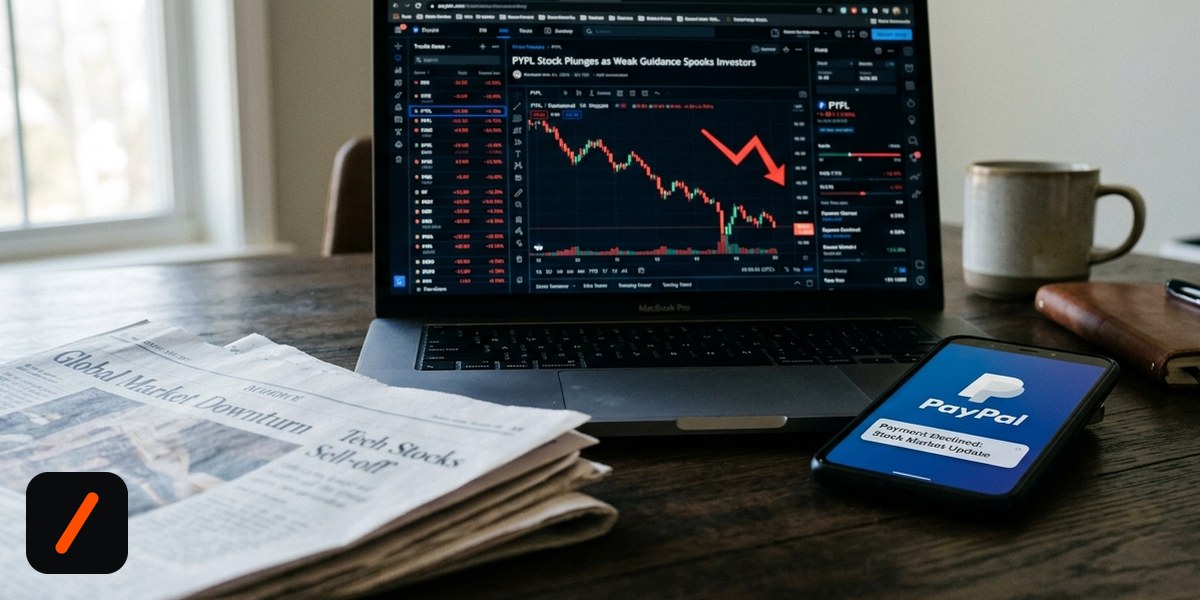
PayPal shares dropped roughly 13% on August 28, 2026, after Bloomberg reported that Stripe and private equity firm Advent International had abandoned their attempt to buy the company in a deal that had been valued at close to $50 billion. Some outlets pegged the intraday move closer to 12.7%. Either way, it was the kind of single-day drop that gets a stock trending, and it happened because a deal Wall Street had spent six weeks pricing in simply stopped existing.
GenZTech first covered this story back on July 16, when word broke that Stripe and Advent had put together a consortium offering to take PayPal private at around $53 billion. That report set off a run in PayPal's stock, up roughly 30% in the weeks since, as investors bet a deal would actually close. It didn't. The August 28 collapse is the other half of that story, and it's the one that matters now.
RelatedWebGPU Hits Every Browser and Runs AI in the Tab
Why did the Stripe-Advent bid for PayPal fall apart?
According to reporting from Motley Fool, Yahoo Finance, and SeekingAlpha, the Stripe-Advent group had offered $60.50 per share for PayPal. PayPal's board reportedly viewed that number as too low. What followed were weeks of back-and-forth over a higher valuation that, in the end, never landed anywhere both sides could live with. The bidders walked.
That's a fairly ordinary way for a mega-deal to die. Boards reject opening offers all the time, and buyers who think they've already stretched don't always come back with more. What made this one notable is the size of the number that evaporated: at $50 billion-plus, this would have ranked among the largest fintech acquisitions ever attempted, and it fell apart at the negotiating table rather than over financing or regulatory objections.
What is 'unbranded checkout' and why does it worry investors?
Part of what SeekingAlpha flagged in its coverage of the stock drop is a concern that predates the buyout talk entirely: unbranded checkout. That's payment processing PayPal handles behind the scenes, where the PayPal name and logo never actually show up at the point of sale. It's a real and growing piece of PayPal's business, but investors worry it carries thinner margins and less customer lock-in than PayPal's traditional branded checkout button, the one shoppers actively choose and trust.
Branded checkout is sticky. People recognize the button, they've used it before, and merchants like offering it because it can lift conversion. Unbranded processing is more of a commodity service, competing on price and reliability rather than brand pull. If PayPal's growth increasingly comes from the unbranded side, that's growth that's harder to defend and less profitable per dollar processed. With the buyout no longer around to paper over that question, it's back in full view.
How the bid rose and fell
The shape of this story is really a six-week arc, from rumor to walkaway.
- Mid-July 2026Bloomberg reports a Stripe-Advent consortium bid for PayPal Deal valued near $53 billion; PayPal stock starts climbing
- Mid-July to AugustConsortium offers $60.50 per share PayPal's board reportedly views the offer as inadequate
- Following weeksTalks continue over a higher valuation No agreement reached; PYPL is up roughly 30% on deal hopes
- August 28, 2026Stripe and Advent abandon the roughly $50 billion bid Bloomberg breaks the news; PYPL falls about 12-13% same day
- AheadPayPal resumes its standalone turnaround plan Next earnings report becomes the key checkpoint
What happens to PayPal now?
With no buyer at the table, PayPal goes back to running its own turnaround, and it does so in a tougher spot than before the bid rumors started. Apple Pay and Google Pay keep chipping away at consumer mindshare on both sides of a transaction, embedded into phones people already carry and increasingly trusted for one-tap checkout. PayPal still has scale, a huge base of linked bank accounts and cards, and Venmo as a genuinely popular consumer product, but scale alone hasn't been enough to keep the stock priced like a growth story in recent years.
The unbranded checkout question is the one PayPal's management actually controls the answer to, at least partly. If they can show that unbranded volume converts into durable revenue rather than thin-margin processing fees, some of the market's skepticism eases. If the next few quarters show margin compression alongside unbranded growth, expect that narrative to get louder, not quieter.
RelatedChatGPT's __obi Ad Cookie Tracks You Across 1,029 Sites
It's also worth saying plainly: this wasn't the first time in 2026 that a big fintech or payments name found itself the subject of takeover speculation, and it won't be the last. Consolidation talk has become a fairly constant background hum in payments, partly because so many players are chasing the same checkout real estate and partly because private equity has plenty of capital looking for a home. Not every rumor turns into a signed deal, and this one is proof a serious, well-funded bid can still walk away empty-handed.
What it means for the market
PYPL's roughly 13% drop is best read in two layers. The first is mechanical: a chunk of the stock's 30% run-up since mid-July was pure takeover premium, investors pricing in a buyout that would have paid $60.50 a share or more. Once that buyout evaporated, so did the reason to hold shares at a price built around it. That's not really new bad news about PayPal's business, it's old optimism getting corrected.
The second layer is real, though: standalone execution risk is back on the table in a way it wasn't while a sale was pending. A savvy investor watching PYPL from here has a short, specific list. Watch PayPal's next earnings report for any color on unbranded-checkout margins specifically, since that's the metric analysts flagged as the actual point of concern. Watch whether another bidder, or even a restructured Stripe-Advent offer, resurfaces now that the stock has repriced lower. And watch how PayPal talks about competing with Apple Pay and Google Pay, whether it sounds like a company playing defense or one with a credible plan to hold its checkout share. None of this is a call to buy or sell; it's simply where the next real signal is likely to come from.
Our take
Deals this size don't usually die over a few dollars a share, they die because one side genuinely believes the business is worth meaningfully more than the other is willing to pay, and neither blinks. PayPal's board saying no to $60.50 is either a confident bet on the turnaround or a costly miscalculation, and right now the market is voting for the second interpretation. That could flip fast if the next earnings call shows unbranded checkout isn't the margin drag people fear. It could also get worse if it is. What's clear is that PayPal doesn't get to lean on a buyer's balance sheet anymore. It has to prove the standalone case with its own numbers, in public, on a quarterly clock.
- PayPal's next earnings report for unbranded-checkout margin detail
- Whether Stripe, Advent, or a new bidder re-approaches PayPal at a lower valuation
- Consumer checkout share trends against Apple Pay and Google Pay
- Any management commentary reframing the standalone growth strategy
- Reporting Motley Fool: PayPal falls 13% after Stripe and Advent abandon $50B takeover
- Analysis Yahoo Finance: Why PayPal (PYPL) shares are plunging
- Reporting Yahoo Finance: PayPal just lost its $53 billion deal
- Market data SeekingAlpha: PayPal stock tumbles 12%, partly on unbranded checkout growth concerns
Original reporting on the deal's collapse comes from Bloomberg News, relayed here through Motley Fool's August 28 market wrap, with GenZTech's analysis built on top of that and the other sourcing above.