
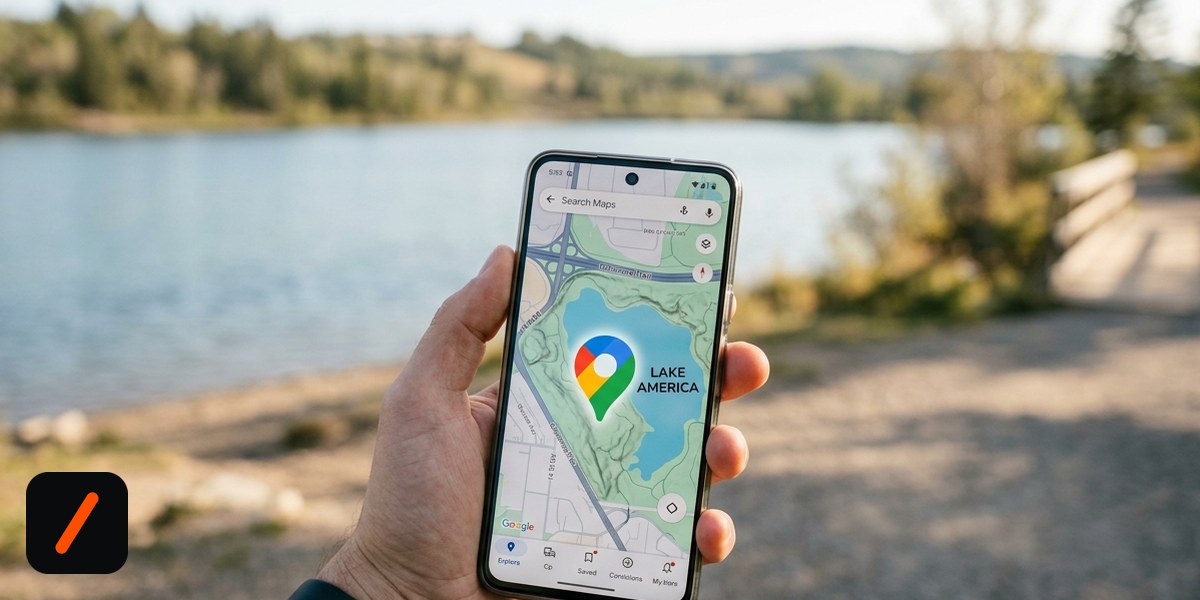
Google Maps now shows a different name for Lake Ontario depending on where you're standing. Type it into the U.S. app today and you get Lake America. Open the same app in Toronto and it still says Lake Ontario. That split isn't a bug, it's Google following a policy it wrote in 2025: match the map to whichever government's database you're standing in, and let the rest of the world see both names at once.
- President Trump signed an executive order on August 27, 2026, renaming Lake Ontario to Lake America "effective immediately" for federal government use, as part of an escalating trade war with Canada.
- Google began showing Lake America to U.S. users around August 30, after the Interior Department's Board on Geographic Names updated the federal name database the order pointed to.
- Canadian users still see Lake Ontario, and users outside North America see both names, the identical three-way split Google built for the Gulf of Mexico rename in January 2025.
- MapQuest refused to follow, posting that it is "not changing the name of Lake Ontario," while Canadian Prime Minister Mark Carney pointed out the lake's name predates both countries by roughly 400 years.
What did Trump's executive order actually change?
Trump signed the order in the Oval Office on August 27, directing that Lake Ontario be treated as Lake America "effective immediately" across federal maps, contracts, and communications, and giving the Interior Secretary 30 days to make sure every agency reflects it. He called it something he'd "been thinking about for a long time." The timing wasn't subtle: the order landed the same weekend a fresh round of 50 percent U.S. tariffs on Canadian goods took effect and Canada announced retaliatory levies of its own, after trade talks between Washington and Ottawa broke down. A lake name change doesn't move any tariff schedule. It's a shot aimed at national pride, aimed at an ally that isn't backing down, and Google Maps just became the delivery mechanism.
RelatedAmerica.gov: The US Government's Gemini and Grok Chatbot
Why does a mapping app answer to an executive order?
Because Google built the pipe that way on purpose. The federal government maintains an official name for every geographic feature in the country through the Geographic Names Information System, run by the U.S. Geological Survey together with the Board on Geographic Names inside the Interior Department. When Trump's order told that board to update its record, it created a new authoritative answer to "what is this lake called," and Google has said publicly, since the Gulf of America episode, that it updates Maps "as soon as the name is changed in official government sources" as a matter of "longstanding practice." That's a real policy, not a dodge, but it also means a single signature from the president can reach into hundreds of millions of phones within about 72 hours, without Google ever having to take a public position on whether the rename is deserved.
How closely does this mirror the Gulf of America episode?
Almost exactly, mechanically. In January 2025, Trump ordered the Gulf of Mexico renamed Gulf of America, GNIS updated within days, and Google (with Apple following soon after) rolled out the same country-conditional labeling: Gulf of America for U.S. users, Gulf of Mexico for users in Mexico, both names everywhere else. That earlier rename got messy fast, the Associated Press lost its White House press-pool access for weeks after refusing to drop "Gulf of Mexico" from its own copy. Lake Ontario is a rougher case for the same playbook, though. The Gulf of Mexico borders one government the U.S. was picking a fight with; Lake Ontario is shared with Canada, a treaty partner, a fellow G7 member, and until this year, one of the closest security and trade relationships Washington has. Renaming a border lake mid-trade-war reads less like an assertion of American geography and more like needling a neighbor because the tariffs alone weren't landing hard enough.
| Platform / source | Google Maps | MapQuest | U.S. federal record (GNIS) |
|---|---|---|---|
| Label shown to U.S. users | Lake America | Lake Ontario (unchanged) | Lake America |
| Label shown to Canadian users | Lake Ontario | Lake Ontario | n/a, not a federal jurisdiction |
| Follows the Aug 27 order | Yes, per-country | No | Yes, by definition |
| Public stance | "Longstanding practice" of matching official sources | "We're not changing the name of Lake Ontario" | Interior Dept has 30 days to update all agency use |
Who's pushing back, and does it actually matter?
Reaction on both sides of the border landed somewhere between mockery and a shrug. Carney's response leaned on history rather than outrage: the name Ontario, adapted from a Wyandot word for "beautiful lake" or "great lake," has been in use for roughly four centuries, well before either country existed in its current form. MapQuest turned it into a one-line brand moment, flatly stating it wouldn't change anything. None of that carries legal weight. No company is obligated to adopt a U.S. federal name for a body of water two countries share, which is exactly why this comes down to each platform's own editorial call rather than a rule anyone can appeal. Apple Maps matched Google on the Gulf of America rename within weeks in 2025; whether it does the same here, for a lake instead of a gulf, is still an open question as of publication.
RelatedGoogle Tests a Flipkart Buy Button Inside Gemini in India
- Jan 2025Trump orders the Gulf of Mexico renamed Gulf of America; Google and Apple adopt the same per-country display split within weeks.
- Aug 27, 2026Trump signs an executive order renaming Lake Ontario to Lake America, effective immediately for federal use. Signed in the Oval Office; ties directly to the Canada trade dispute.
- Aug 29, 2026A fresh 50% U.S. tariff on Canadian goods takes effect; Canada announces retaliatory tariffs.
- Aug 30, 2026Google Maps begins showing "Lake America" to U.S. users, matching the updated GNIS record. MapQuest publicly declines to follow.
- By ~Sept 26, 2026Interior Department's 30-day deadline to reflect the rename across all federal agency maps, contracts, and documents.
Our take
The actual news here isn't that a lake has a new nickname on one app. It's how thin the layer turned out to be between a president signing a piece of paper and a few hundred million phones displaying different words by the following weekend. Google's answer, that this is purely a data-sourcing decision and not a political one, is defensible and also conveniently avoids ever having to say whether "Lake America" is a good idea. That's the same posture it took in 2025, and it will probably work again, right up until a government Google can't afford to annoy makes the opposite demand. The more interesting story to watch isn't Lake Ontario. It's how few choke points, a names database, an app-store review, a DNS registrar, stand between a head of state and what your screen shows by default.
- The 30-day compliance window. Watch whether every federal agency, not just Maps-adjacent ones, actually switches over by late September.
- Apple and Bing. Apple matched Gulf of America in weeks last time; a similar move here would confirm this is now a standard industry response, not a one-off.
- Canada's next move. Ottawa has already met tariffs with tariffs; a symbolic countermeasure, renaming something on Canadian federal maps, wouldn't be a surprise.
- Whether this becomes a template. If Lake Ontario sticks without real consequence, expect the same tool used on the next contested name in the next dispute.
- OfficialThe White House: executive order renaming Lake Ontario as Lake America
- OfficialGoogle: how the GNIS Lake Ontario / Lake America change appears in Maps
- ReferenceUSGS: what is the Geographic Names Information System (GNIS)
- ReportingNPR: Trump directs federal government to rename Lake Ontario to Lake America Carney's 400-year-old-name response
- ReportingPBS NewsHour: Lake Ontario now called Lake America on Google Maps MapQuest's response
- ReportingCNN: Google Maps changes Lake Ontario to Lake America in US searches
Original analysis by GenZTech, synthesizing the White House executive order, Google's own policy statement, and wire reporting on the rollout.