
Prime Intellect raised a $130 million Series A led by Radical Ventures to scale up something most of the industry assumes is impossible: training large AI models on GPUs scattered across many locations rather than packed into one giant data center. The bet is that the future of AI compute does not have to be a handful of billion-dollar superclusters owned by a few companies, and that distributed training can pool the world's idle and dispersed GPUs into a credible alternative.
- Prime Intellect raised $130M Series A (July 8, 2026), led by Radical Ventures.
- Its focus is decentralized training: coordinating geographically scattered GPUs to train one model, instead of a single co-located cluster.
- It has run open, distributed training efforts publicly, positioning itself as the counter-narrative to closed superclusters.
- The thesis attacks the industry's biggest bottleneck, access to concentrated compute, by making dispersed compute usable.
What is decentralized training?
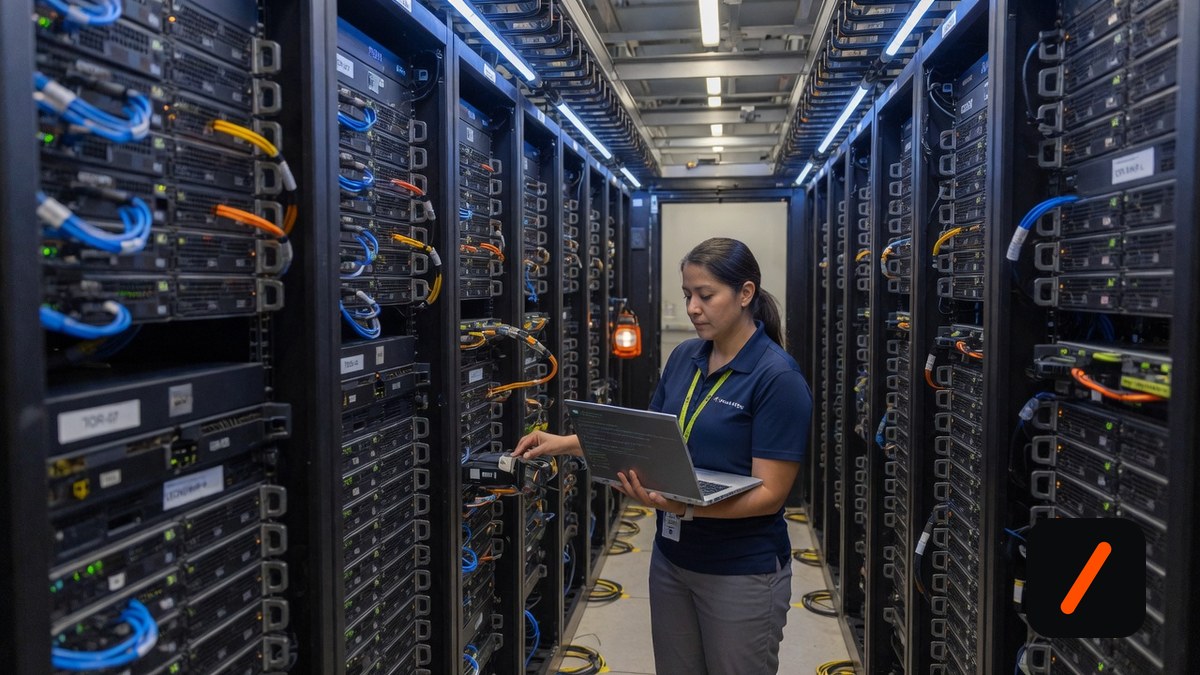
Training a large model normally requires thousands of GPUs sitting side by side in one building, wired together with ultra-fast interconnects, because the chips have to exchange enormous amounts of data at every step. That physical concentration is why frontier training is so expensive and so exclusive: you need a purpose-built supercluster and the capital and power to run it. Decentralized training tries to break that constraint by coordinating GPUs across different locations, tolerating slower links between them through clever algorithms that reduce how often the machines must synchronize. If it works at scale, you no longer need everything in one room, you can pool compute that already exists in many places.
RelatedNetris Raises $15M From a16z to Wire Up AI Neoclouds
Why does this matter?
Because compute concentration is arguably the defining power dynamic of the AI era. A small number of companies control the superclusters, and that control shapes who can build frontier models at all. Decentralized training is a direct challenge to that structure: it could let universities, smaller labs, and coalitions pool resources to train serious models without owning a data center, and it makes the vast amount of GPU capacity sitting outside the hyperscalers actually usable. A $130M round led by a respected AI-focused investor says serious money believes this is more than a research curiosity, that dispersed compute could become a real supply source in a market defined by scarcity.
What it means for the market
The obvious tension is with the supercluster economy, the hyperscalers and Nvidia, whose current advantage rests on concentrated compute. If decentralized training matures, it expands the effective supply of usable GPUs and chips away at the moat that co-located superclusters provide, which is broadly good for everyone who is not one of the few companies that own them. It also fits neatly beside the open-model movement: cheaper, more accessible training plus open weights is a two-part answer to a closed, centralized AI industry. For investors, the signal is that capital is flowing not just into models and inference but into rethinking the training layer itself, the most concentrated and expensive part of the stack.
Our take
Prime Intellect is one of the more intellectually interesting bets in AI infrastructure because it attacks the industry's central chokepoint instead of competing inside it. The technical challenge is genuinely hard, network latency between distributed GPUs is exactly the problem superclusters were built to avoid, and skeptics are right that it will not match a co-located cluster on efficiency any time soon. But it does not have to win on raw efficiency to matter; it has to make dispersed compute good enough to be worth using, and it has been demonstrating exactly that in public. The upside case is significant: a world where training is not a privilege of the few is a healthier, more competitive AI ecosystem. This round buys Prime Intellect the runway to find out whether that world is buildable, and that is a bet worth watching closely.
RelatedGeneral Intuition Raises $320M to Train AI on Games
- Scaling limits. How large a model decentralized training can handle before latency dominates is the core technical question.
- Real adopters. Watch whether labs and coalitions actually train useful models this way, not just benchmarks.
- Compute supply. If it unlocks dispersed GPUs at scale, it reshapes the economics of who can build frontier AI.
The catch nobody should ignore
Decentralized training is not free lunch. The reason superclusters exist is that training is extraordinarily communication-heavy, and links between distant data centers are orders of magnitude slower than the interconnects inside one building. Prime Intellect's approach leans on algorithms that reduce how often machines have to synchronize, but there is an inherent efficiency tax: the same model may take more total compute or wall-clock time to train across scattered GPUs than in a co-located cluster. The honest framing is that decentralized training does not need to beat superclusters head-to-head; it needs to be good enough that pooling otherwise-unusable, cheaper, or idle compute comes out ahead on cost. Whether that trade lands in the black at frontier scale is exactly the question this funding round exists to answer, and it is far from settled.
- FundingTech Startups funding roundup Prime Intellect Series A details
- DataGenZTech Funding Tracker our running record of AI rounds
- DataBiggest AI Funding Rounds ranked by size
- OfficialPrime Intellect platform and research
Original analysis by GenZTech. Figures current as of July 2026.