
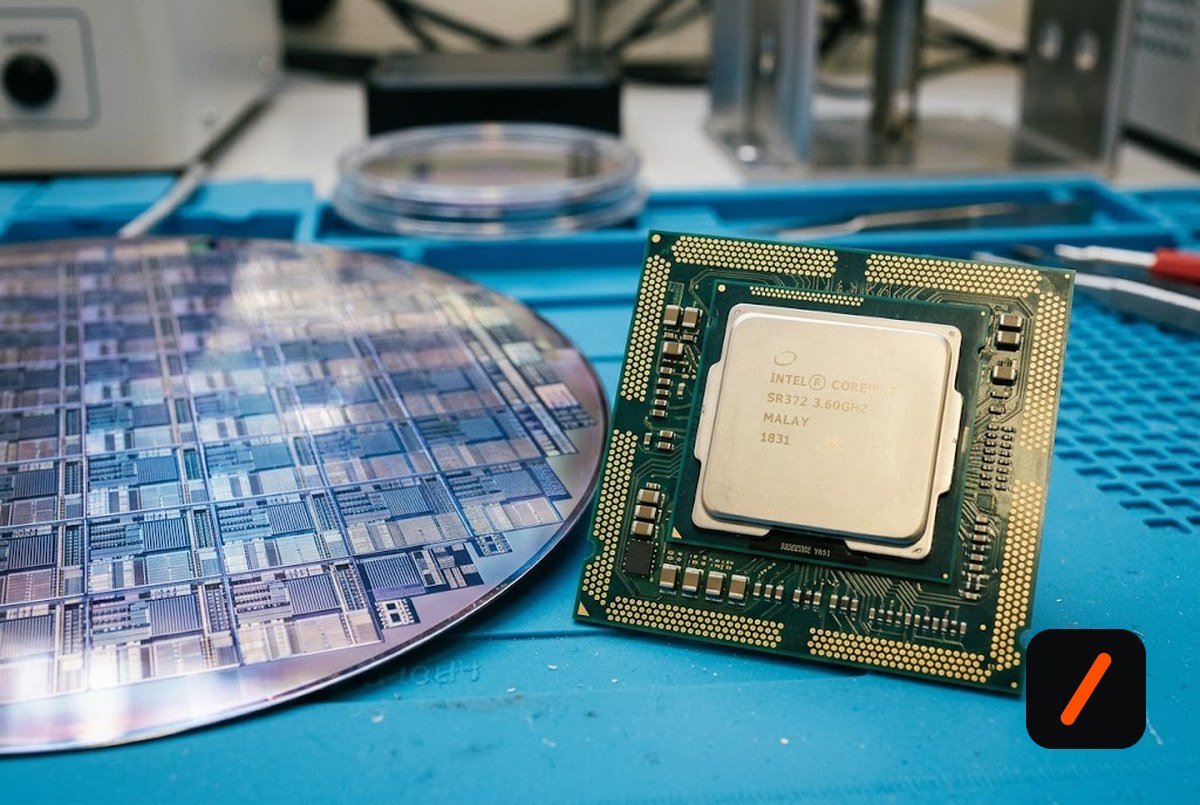
Oxmiq, the semiconductor startup led by Raja Koduri, the former graphics chief at both Intel and AMD, has raised $35 million to chase an unusually ambitious idea: one chip architecture that does the jobs of a GPU, a CPU, and a TPU at once. Rather than bolting separate accelerators together, Oxmiq wants a single programmable engine that handles graphics, general compute, and AI tensor math in one design. It is an early, high-risk bet, but the pedigree behind it is why the round is worth watching.
- Oxmiq raised $35M to build a unified compute architecture merging GPU, CPU, and TPU roles into one engine.
- Founder Raja Koduri ran graphics at both AMD (Radeon) and Intel, giving the pitch rare credibility in a brutal field.
- The thesis: modern AI systems waste power and complexity shuttling data between separate chips; unify them and you cut that overhead.
- It is seed-stage and unproven. Silicon is slow and expensive, and the incumbents are Nvidia, AMD, and Intel.
What is Oxmiq actually building?
A unified compute architecture, meaning one programmable engine designed to handle the three jobs currently split across distinct chips. A CPU runs general logic and control flow; a GPU runs massively parallel graphics and compute; a TPU or NPU accelerates the tensor math at the heart of AI. In most systems those are separate pieces of silicon, and moving data between them costs power, time, and design complexity. Oxmiq's thesis is that a single engine flexible enough to do all three eliminates that overhead. It is a hard problem, which is exactly why it takes a founder who has shipped large-scale graphics silicon before to make the pitch land with investors.
RelatedOxmiq Raises $35M to Be the Arm of AI Chips
Why does the founder matter here?
Because chip startups are graded on credibility as much as ideas, and Raja Koduri has an unusually rare resume: he led graphics at AMD, where he was central to Radeon, and later ran graphics and accelerated computing at Intel. Very few people have designed high-end GPUs at two of the three giants that dominate this market. That does not guarantee success, plenty of pedigreed chip startups have failed, but it earns the benefit of the doubt from investors who know the field is unforgiving. A $35 million seed is modest for silicon, where tape-outs run into the tens of millions, so this is early capital to prove the architecture, not to manufacture at scale.
How hard is this really?
Very. Building competitive silicon is one of the most capital-intensive, time-consuming endeavors in technology, and Oxmiq is aiming at a market defended by Nvidia's CUDA moat, AMD's roadmap, and Intel's fabs. The unified-engine idea is elegant on a slide, but the reasons CPU, GPU, and TPU diverged in the first place are real: each is optimized for a different workload, and a jack-of-all-trades risks being master of none. The upside if it works is meaningful, simpler systems that waste less energy moving data, which matters enormously as AI power consumption becomes a hard constraint. The realistic read is that this is a multi-year bet with a low base rate and a high ceiling.
There is a macro reason this pitch is landing now rather than five years ago. AI training and inference have turned power efficiency from an engineering nicety into the binding constraint on the entire industry, and a meaningful share of that power is spent not on computation but on moving data between memory and separate accelerators. An architecture that keeps more work inside one engine attacks that waste directly. Investors are not funding Oxmiq because a unified chip is easy; they are funding it because the cost of the status quo, in watts and in system complexity, keeps climbing, and any credible attempt to bend that curve is worth an early check.
RelatedGimlet Labs Raises $300M at $3B to Bet Against Nvidia Lock-In
- First silicon or emulation. The next real milestone is a working proof, on FPGA, emulation, or an early test chip, not a bigger deck.
- Software story. Nvidia's moat is CUDA, not just chips. Whatever Oxmiq builds needs a programming model developers will actually adopt.
- Follow-on funding. A $35M seed proves interest; a large Series A would signal the architecture survived first contact with reality.
Our take
Oxmiq is a classic high-variance semiconductor bet, and it should be read as one. The idea of collapsing CPU, GPU, and TPU into a single engine is genuinely interesting because it attacks a real and growing problem, the energy and complexity cost of shuttling data between specialized chips, and that problem only gets worse as AI scales. Raja Koduri is one of the few founders who can credibly attempt it, which is why a modest seed is drawing attention. But credibility is not a product, and the graveyard of chip startups is full of brilliant architectures that never survived the brutal economics of fabrication and the gravity of CUDA. Worth watching, worth rooting for, and worth remembering that the honest base rate here is low. The next proof point, not this round, is what will matter.
- ReferenceTech Startups · funding roundup the round in context
- FundingLatest AI startup deals deal tracking
Original analysis by GenZTech. Figures current as of July 2026. Source: Tech Startups.