
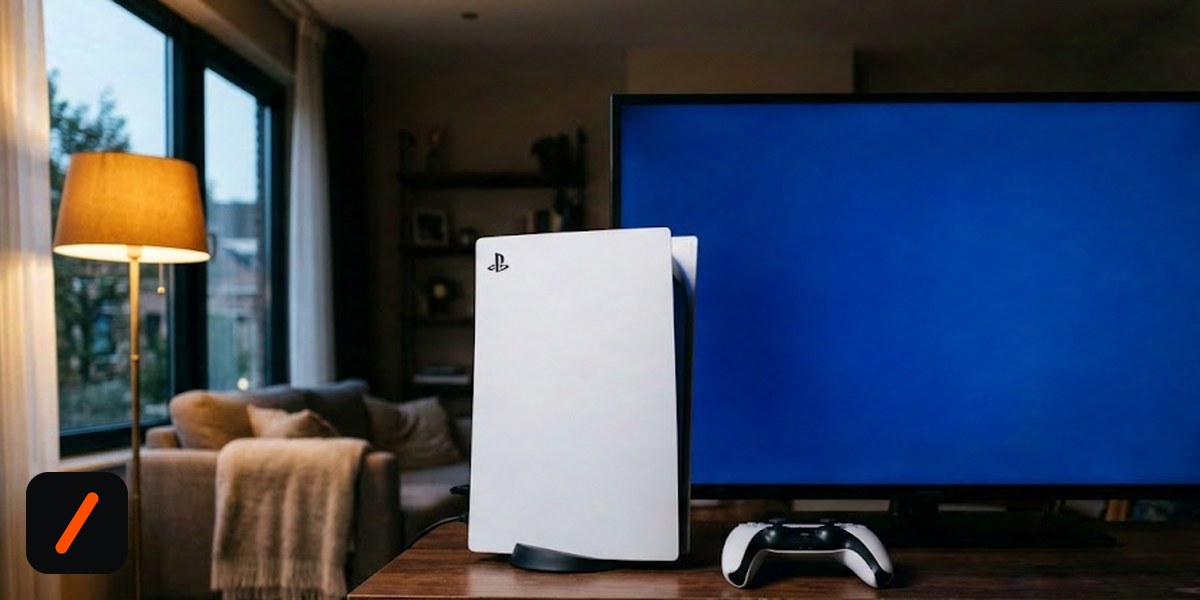
PlayStation Network went down worldwide on Friday morning and stayed down for most of the day. The outage broke the obvious things, sign-in, multiplayer, the store. It also broke something less obvious and more uncomfortable: players who bought their games digitally could not launch them, single player included, because the console could not reach PSN to confirm they were allowed to.
Reports surged on Downdetector starting around 7:13 a.m. ET (11:13 UTC). Sony's own status page spent part of the morning insisting everything was running normally while thousands of players said otherwise, then flipped to listing effectively every service as impaired. Six hours in, Sony still had not said what happened.
RelatedXbox Outage Blocks Disc Games, Not Just Digital Ones
What actually stopped working?
By the time PlayStation's status page caught up with reality, it showed problems across account management, game streaming, the PlayStation Store, PlayStation Direct, and platform services stretching back to PS3 and PS Vita. Player reports matched:
- Sign-in failures. Accounts would not authenticate, which is the root of most of the rest.
- Online play. Matchmaking failed and sessions dropped mid-game.
- Store and account features. No purchases or downloads, plus intermittent trouble with cloud saves, trophies and friends lists.
- Digitally purchased games refusing to open, blocked at the licence check rather than at any online feature.
The first three are what an outage is supposed to look like. The fourth is a design decision showing its teeth.
Why does a single-player game need PSN's permission?
A digital PlayStation purchase is an entitlement attached to your account, not a file that proves itself. The console reconciles the two by asking PSN whether this account is currently allowed to run this game. There is one standing exception: you can designate a console for console sharing and offline play, and on that machine your library runs without asking. Everywhere else, and for anyone signed in as a secondary user, the check happens over the network.
That design is reasonable on paper. It lets a family share a library, it lets you sign in at a friend's house, and it makes casual copying pointless. The catch is that it turns Sony's authentication servers into a dependency for software that otherwise needs nothing but the console it is installed on. A campaign you finished downloading in March does not need the internet to render a frame. It needs the internet to ask a question that only has one plausible answer.
So when PSN stops answering, the failure lands in a strange place. Nothing was revoked. Nothing expired. The game is intact on the drive. It simply cannot get a yes.
| Setup | Sign-in | Online play | Single player launch |
|---|---|---|---|
| Digital, non-primary console | Blocked | Blocked | Blocked |
| Digital, console set for offline play | Blocked | Blocked | Works |
| Disc copy | Blocked | Blocked | Works |
Who got hit hardest?
Competitive play took the visible damage. The EA Sports FC 26 championship at the Esports World Cup was delayed by the outage, which is the kind of thing that turns an infrastructure problem into a scheduling problem for people with contracts and broadcast slots.
The timing was rough for Sony in another way. Friday was launch day for the free open beta of Marvel Tokon: Fighting Souls, a release whose entire point is getting a large number of people online at once on day one.
For everyone else the damage scaled with how they buy games. Disc owners lost multiplayer and kept their libraries. All-digital owners on a console not set for offline play lost the libraries too.
- 07:13 ETDowndetector reports spike login and connection errors across regions
- ~08:00 ETStatus page still shows services normal contradicting thousands of live reports
- 10:15 ETStill down, no Sony statement store and trophies partially returning for some
- 13:29 ETStatus page lists all services impaired Sony had not responded to press requests
What caused it?
Nobody outside Sony knows yet, and that is worth stating plainly because the vacuum filled quickly. Two theories circulated: a DDoS attack, and knock-on damage from an Amazon Web Services problem. Neither Sony nor Amazon has confirmed either, no group has produced evidence of an attack, and the AWS link is being repeated mostly by outlets citing each other rather than a status page. Treat both as unverified until someone with logs says otherwise.
RelatedMario Kart Tour Dies September 30 With No Offline Mode
What can be said from the outside is that the failure pattern looks like authentication rather than capacity. Sign-in broke first and everything downstream of identity broke with it, while some services that do not need a live account check drifted back sooner. That is a shape, not a diagnosis.
What does this mean for the all-digital future?
Sony has been steering the platform away from discs for years, and we wrote about the backlash to that earlier this month in the fight over what owning a PlayStation game even means. Friday supplied the argument for free. A disc is a bad experience in a dozen ways, but it answers the ownership question locally. A digital licence answers it over a wire that Sony controls and occasionally drops.
There is a practical takeaway that costs nothing. On the console you actually play on, set it for console sharing and offline play, under Settings, Users and Accounts, Other, Console Sharing and Offline Play. It takes ten seconds and it is the difference between an outage costing you multiplayer and an outage costing you your entire library for the afternoon.
- Whether Sony explains it. The company said nothing for the whole working day. A post-incident note would be a change of habit.
- Whether the AWS theory holds. If a third-party dependency took down console gaming for millions, that is a bigger story than the outage.
- Whether the licence check gets a grace period. A cached entitlement valid for a few days would make this failure mode disappear without changing the business model.
Our take
Outages happen and PSN will come back. The part worth remembering is which failure was avoidable by design. Losing matchmaking during an authentication outage is physics. Losing a finished single-player game you paid full price for is a policy choice, and one that a short offline grace window would fix tomorrow without letting a single extra person pirate anything.
Sony's silence is the other half of it. A status page that reported healthy services for hours while the network was visibly on fire is worse than no status page, because it told players the problem was on their end. Plenty of them spent the morning resetting routers.
- OfficialPlayStation Service Status Sony's own per-service status board
- ReferenceDowndetector: PlayStation Network report volume and timing
- ReportEngadget: PlayStation Network is down affected services, Esports World Cup delay, Sony non-response
Original analysis by GenZTech. Reporting on the outage from Engadget.