
375ai is chasing the least glamorous but most valuable prize in the AI race: the real-world data that physical AI actually runs on. Its bet is that the next wave of AI, self-driving cars, robots and world models, is starved not of compute but of continuous, labeled, real-world sensor data, and that the way to supply it is a distributed network of edge sensors and a paid human crowd rather than another web scrape. It is an ambitious, slightly uncomfortable idea, and the numbers the company puts behind it are big enough to take seriously.
- 375ai calls itself a "data layer for physical AI": continuous multimodal data (video, audio, spatial and environmental context) captured from real US locations as "ground truth" for AI models.
- Two products feed one network: 375edge, a fixed sensor node (six 4K cameras, mics, environmental sensors, on-board GPU) mounted on billboards, and 375go, a phone app that pays a crowd to scan shelves, signage and places cameras cannot reach.
- The company's own figures: 2.7 billion events observed, 11 million events per day, 13,000+ hours per week of labeled video, 100+ object categories, scaling toward 40,000 Outfront Media locations.
- It runs on a crypto-style incentive model (contributors earn rewards, branded $EAT), pitching itself as a decentralized alternative to synthetic data and in-house labeling.
What is 375ai actually building?
375ai frames the problem bluntly: it claims over 90% of the training data behind today's frontier models is synthetic, and argues that physical AI cannot be trusted to drive a car or move a robot if it only ever learned from simulated or scraped data. Its answer is a purpose-built pipeline for real-world "ground truth", continuous streams of what actually happens on real streets and in real stores, captured with timestamps, motion vectors and cause-and-effect chains rather than one-off images. The company sells that data to teams building world models and autonomous systems, delivered through familiar plumbing (S3, Parquet files, or a streaming API) so a machine-learning team can pipe it straight into training.
RelatedAI Supercomputer Finds 93,000 Hidden Ads in World Cup 2026
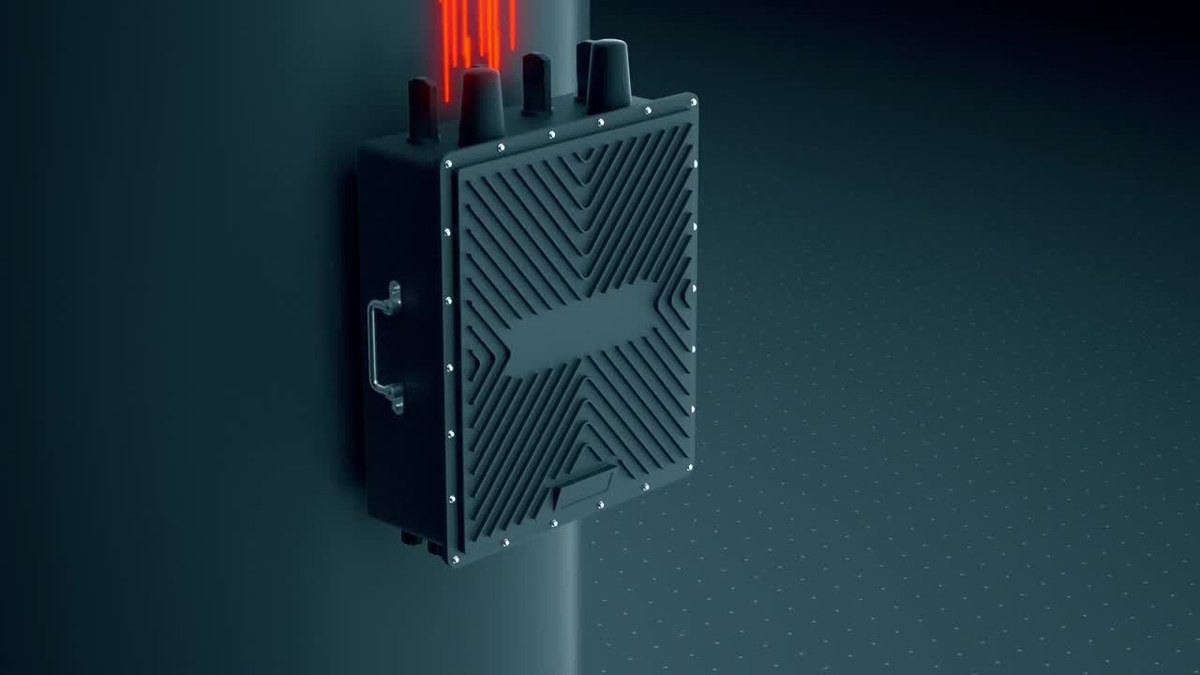
How does 375edge work?
375edge is the fixed half of the network, a multi-sensor node designed to bolt onto infrastructure the company already has access to, notably billboards through a partnership with out-of-home giant Outfront Media. Each node, per 375ai, carries six 4K cameras, ambient mics and environmental sensors, plus enough GPU to run inference on-device. That last detail is the whole design philosophy: the data is "fused at the edge", meaning objects are detected, tracked across frames and anonymized locally, so what leaves the node is structured, labeled data rather than raw surveillance footage. 375ai stresses there is no facial recognition and that personally identifiable information is stripped on-device, and describes the system as GDPR and CCPA compliant by design.
What is 375go, and why pay a crowd?
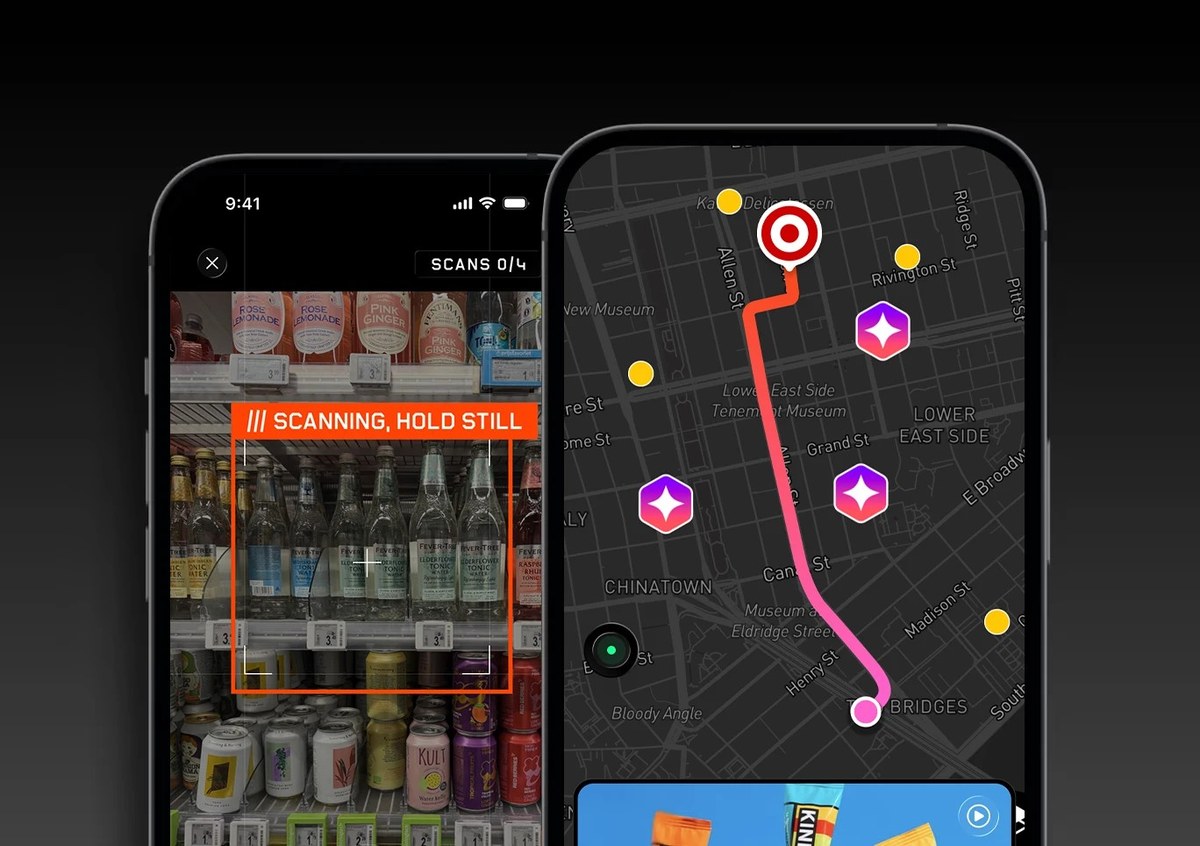
Fixed cameras cannot see everything, so 375ai built 375go, a smartphone app on the App Store and Google Play that turns a global gig workforce into mobile sensors. Contributors get dispatched to scan retail shelves, store layouts and signage, verify whether a model's prediction matches reality, and collect data on demand from indoor and point-of-interest locations a billboard camera will never reach. It is the same logic as the fixed nodes applied to human legs: cover the long tail of places and moments that static hardware misses, and pay people to close the gap. This human-in-the-loop layer is also how 375ai pitches "ground truth verification", using the crowd to check and correct what the automated systems infer.
| Approach | 375ai (real-world network) | Synthetic data | In-house labeling | AV fleet logs |
|---|---|---|---|---|
| Source | Edge nodes + paid crowd | Simulation / generative | Vendors, annotators | A single company's cars |
| Real-world ground truth | Yes, by design | No (simulated) | Depends on source | Yes, but narrow |
| Coverage | Many cities + indoor via crowd | Unlimited but unreal | Whatever you collect | Where the fleet drives |
| Freshness | Continuous streams | On demand | Batch | Continuous |
| Open to buyers | Yes (sold as a product) | Yes | Yes | Rarely (proprietary) |
The DePIN twist: earning rewards for data
What makes 375ai more than a data broker is the incentive layer. Rather than pay a fixed vendor rate, it uses a crypto-style rewards model, contributors and node hosts earn tokens (branded $EAT in the company's own materials) for the data they help capture and verify. That is the decentralized physical infrastructure, or DePIN, playbook: bootstrap a real-world sensor network by letting a crowd own a slice of it, instead of raising the capital to deploy every node yourself. It also explains the partner list, which leans crypto-native: Akave for verifiable edge storage, and Wingbits and Beacon Protocol for connecting physical-world data on-chain, alongside the traditional-media reach of Outfront. There is also a 375ai Foundation stewarding the network.
RelatedNvidia Pays Poolside $6B to Rent, Not Buy, Its Model Factory

Who buys it, and what about privacy?
375ai names its buyers directly: physical-AI and world-model teams, autonomous-vehicle companies, consumer-goods brands wanting retail intelligence, freight and logistics firms, advertisers, and civic, state and local governments. That last category, plus a published "ALPR usage and privacy policy" (ALPR being automated license-plate recognition), is where the story gets genuinely double-edged. A dense, always-on network of billboard cameras plus a roaming phone crowd is exactly the infrastructure privacy advocates worry about, regardless of the on-device anonymization. 375ai's mitigations, no facial recognition, PII stripped locally, GDPR and CCPA compliance, are real and non-trivial, but "we sell anonymized behavioral data from thousands of public cameras to governments" is a sentence that will draw scrutiny no matter how carefully it is engineered.
- Do the numbers hold up independently? 2.7B events and 11M a day are 375ai's own figures. The credibility test is whether named AV or world-model customers confirm they train on it.
- The DePIN sustainability question. Token-incentivized networks are easy to bootstrap and hard to sustain once rewards normalize. Watch contributor retention, not just node count.
- Privacy and regulation. Selling anonymized camera data to governments invites exactly the oversight that can slow a rollout. The ALPR policy is the canary.
- Data quality vs quantity. Physical AI needs clean, correctly labeled edge cases, not just volume. The crowd-verification layer is where this is won or lost.
Our take
375ai is attacking a real and under-served bottleneck. As robots and world models move from demos to deployment, the constraint stops being model size and becomes trustworthy real-world data, and a network that captures it continuously, anonymizes it at the edge and sells it through standard pipes is a genuinely useful thing to exist. The DePIN incentive model is a clever way to fund a national footprint that would otherwise need enormous capital, and the Outfront billboard access is a real distribution edge most data startups cannot match. The hard parts are the ones every ambitious data network hits: proving the quality and provenance of the data to skeptical ML teams, keeping a token-incentivized crowd engaged after the novelty fades, and navigating the legitimate privacy backlash that comes with pointing thousands of cameras at public space and selling what they see. If 375ai clears those, it is early infrastructure for the physical-AI era. If it does not, it is a cautionary tale about how the messiest input in AI is not the model, it is the world.
- Official375.ai the data layer for physical AI, products and figures
- Product375edge the fixed multi-sensor node
- Product375go the crowd-sourced phone sensor app
- Foundation375ai Foundation stewardship of the network
- PartnerOutfront Media · Akave · Wingbits billboard access, verifiable storage, on-chain data
Product images courtesy of 375ai. Original analysis by GenZTech, based on 375ai's public materials at 375.ai. Figures cited are the company's own.