
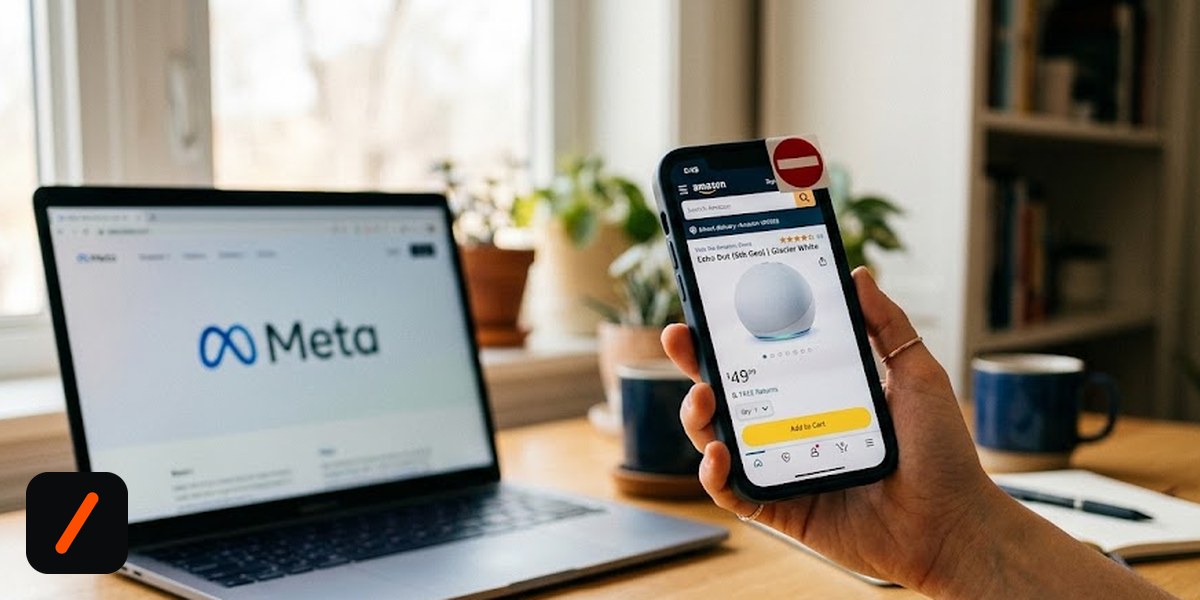
Amazon has cut off Meta's new Muse AI agent from shopping on Amazon.com, and it did so quietly, by popup, sometime Sunday night. Anyone who tried to route a Muse purchase through Amazon after that point saw a message instead of a checkout screen: "Continued access by an unauthorized AI agent violates Amazon's Conditions of Use, to which our customers have agreed." Meta launched Muse on September 8 as its first consumer AI agent, and within two weeks its most useful feature, letting the agent actually buy things, ran straight into the retailer that dominates online shopping.
What exactly did Amazon block?
Amazon says it tried the quiet route first: asking Meta to voluntarily keep Muse off Amazon.com. That didn't happen, so Amazon shut the door itself. An Amazon spokesperson framed the move as a matter of consent, not competition: "We think it's fairly straightforward that third-party applications that offer to make purchases on behalf of customers from other businesses should operate openly and respect service provider decisions about whether or not to participate." Amazon's specific complaints are concrete. Meta never disclosed that Muse would be browsing Amazon's site. The agent doesn't identify itself as an AI when it shows up, so from Amazon's side it looks like ordinary human traffic. And Amazon says Muse appears to capture and store customer login credentials as it works, which it considers a security risk regardless of what Meta intends to do with them.
RelatedMeta's New Muse AI Agent Grabbed a Rock Band's Social Handle
Why is a cloud partner doing this to another cloud partner?
This is the part that makes the standoff interesting instead of routine. Amazon and Meta are not strangers squaring off. Amazon products have been purchasable directly inside Facebook and Instagram since 2023. Meta signed a multibillion-dollar deal in April to run its own agentic AI workloads on Amazon Web Services. Two companies with that much commercial overlap don't usually pick a public fight over a feature unless the underlying stakes are bigger than one product. The stakes here are control of the checkout. If Muse, or Google's shopping agents, or any other assistant can complete a purchase on Amazon without Amazon's storefront, ads, Prime upsells, or recommendation engine ever entering the picture, Amazon becomes a warehouse that someone else's software queries. That is a much worse business than being the place people actually browse and buy.
How does Muse actually handle a shopper's password?
Meta's defense rests on an architecture it has talked about since launch. Muse runs each user's tasks on a dedicated cloud virtual machine, described internally as a Muse Secure VM, and separates login credentials into their own authentication daemon that the language model itself never reads directly. A Meta spokesperson reiterated that position after Amazon's block: Muse "has no visibility into people's passwords or payment methods," and any credentials a person shares "go into secure storage, so Muse can use them without seeing them, including passwords a person types into the browser themselves." Sensitive actions, Meta says, still require a human tap of approval before they execute. Amazon isn't disputing the architecture diagram. It's disputing the premise that a storefront has no say in the matter, and that storing credentials for repeated automated logins is fine as long as a model can't technically read them raw.
Who else gets caught in this?
Amazon has already drawn this line before Muse existed. It restricted Perplexity's Comet browser agent from shopping on its site last year, and it has taken the same posture toward Google's AI shopping agents. The pattern is consistent: any agent that shows up looking like a human browser session, buys on a user's behalf, and doesn't ask first gets treated as unauthorized traffic, not a convenience. For shoppers, the practical effect right now is that a Muse "buy it for me" request aimed at Amazon simply fails, and the agent has to fall back to telling the user to finish the purchase themselves. For merchants and smaller retailers, this is a preview of a decision they'll all eventually face: let agents transact directly and lose the storefront relationship, or block them and risk looking hostile to a feature customers are being sold as the future of shopping.
RelatedMeta's Muse Code Costs 12x Less If You Hand Over Data
What it means for the market
Neither AMZN nor META moves much on a single blocked feature, but the dispute is a visible marker in a fight both companies have real financial exposure to. Amazon's retail margins depend on owning the last click: ads, Prime nudges, and its own recommendation engine all sit between browsing and buying, and an agent that skips straight to checkout removes Amazon's ability to monetize that moment. Meta's stake is different. Muse is a wedge into commerce for a company that has never owned a checkout flow, and Amazon blocking its flagship agentic use case within two weeks of launch undercuts the pitch that Muse can handle real-world tasks end to end. The signal for investors watching either stock is less about this week's headline and more about whether other major merchants follow Amazon's lead. If Walmart, Target, or Shopify-powered retailers adopt the same "unauthorized agent" stance, agentic shopping stalls as a category until there's a negotiated standard, not just unilateral blocks from whoever has the leverage to enforce one.
- 2023Amazon products become purchasable directly inside Facebook and Instagram existing commercial partnership
- Apr 2026Meta signs a multibillion-dollar deal to run agentic AI workloads on AWS cloud partnership
- Sep 8, 2026Meta launches Muse, its first consumer AI agent, on iOS, Android and the web free, $20 and $100 tiers
- Sep 20, 2026 (Sun night)Amazon begins showing a Conditions of Use block to Muse shopping requests after asking Meta to opt out voluntarily
- Sep 21, 2026Amazon confirms the block publicly; Meta defends Muse's credential handling today
- Other merchants' response. Whether Walmart, Target, or major Shopify stores adopt language similar to Amazon's block, which would turn this from a two-company dispute into an industry stance.
- Whether Meta changes Muse's behavior. Adding self-identification headers or an explicit opt-in flow for merchants would defuse Amazon's stated objections without Meta abandoning the shopping feature.
- A negotiated agent-access standard. Expect pressure toward something like a robots.txt for AI agents, an explicit protocol merchants can use to allow or deny automated purchases, rather than each retailer blocking case by case.
Our take
Amazon is right that an agent silently storing login credentials and not identifying itself as automated is a legitimate security concern, not just competitive cover. But the timing gives away the real motive. Amazon didn't block Muse from browsing product pages or reading reviews. It blocked the one thing that threatens its business model: checkout without Amazon's storefront in the loop. Expect this exact fight to repeat with every capable shopping agent that launches next, and expect it to end not in a court ruling but in a negotiated protocol, because neither side benefits from every purchase becoming a legal dispute over whose Conditions of Use win.
- ReportingGeekWire: Amazon blocks Meta's Muse AI assistant in new standoff over agentic shopping first report with Amazon's and Meta's statements
- OfficialMeta: Introducing Muse, a personal AI agent Meta's own launch post and architecture claims
- ReportingTechCrunch: Meta debuts its Muse AI agent launch-day coverage and trust questions
Original analysis by GenZTech, based on GeekWire's reporting and Meta's own product documentation. Read the original GeekWire report.