
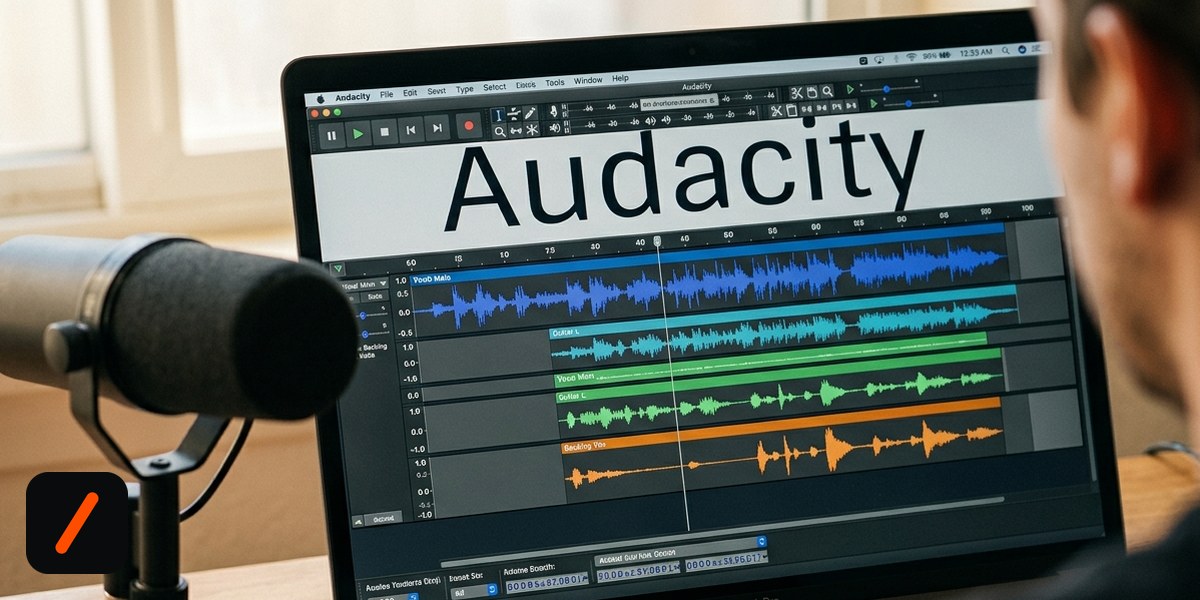
Audacity 4.0 shipped today, and it is the biggest change to the free audio editor since it first appeared in 1999. The interface has been rebuilt from scratch on Qt6, clips can now be grouped and dragged between mono and stereo tracks, and projects save to a new .aup4 format. The audio engine underneath, the part that actually reads, writes, and processes sound, was left almost entirely alone.
That last detail is the part most write-ups are skipping past, and it is the one that explains why this release looks so different from a typical version bump.
RelatedMicrosoft's Project Zenith Reboots Windows for AI Developers
What actually shipped in 4.0?
The headline change is the toolkit swap: Audacity's interface ran on wxWidgets for its entire 27-year history, and as of today it runs on Qt6, the same framework Muse Group already uses for MuseScore 4. That brings native high-DPI rendering, dockable panels, customizable toolbars, and three preset workspace layouts (Modern, Classic, and Music).
Clip handling changes the most in daily use. Clips can be selected and edited as a group, moved more freely, and dropped onto mono or stereo tracks without the friction earlier versions imposed. A dedicated splitting tool replaces some of the old context-menu detours. The playhead now stays visible while you scroll, recording can start from anywhere on the timeline, and Windows builds ship with ASIO support out of the box for lower-latency audio interfaces.
Projects move to a new .aup4 format. Existing .aup3 files still open in 4.0 and convert automatically, and the original file is left untouched by the conversion, so there's no forced one-way migration.
Why rebuild the whole interface instead of patching it?
Audacity's UI ran on wxWidgets since Dominic Mazzoni and his Carnegie Mellon professor Roger Dannenberg started the project in 1999. According to the team that led the rewrite, wxWidgets had become the bottleneck: routine UI changes took noticeably longer to implement than they should have, pixel-correct rendering and transparency were a constant fight, and behavior drifted between Windows, macOS, and Linux in ways that were expensive to chase down. Qt6 removes all three problems at once, and Muse Group already had a Qt team in house from building MuseScore 4, so reusing that framework was the practical choice rather than picking a new one from scratch.
What it didn't do is touch the part of Audacity that actually manipulates audio. File import and export, the built-in effects, project storage: all of that stayed on the existing engine. The new interface talks to it through au3wrap, a bridge module written specifically to connect the Qt front end to the untouched core. That's a deliberate risk-reduction move. Rewriting an audio engine and its UI at the same time is how open-source rewrites die; keeping the engine frozen means the parts of Audacity that already work reliably keep working exactly the same way while the interface catches up.
What's gone missing, and who does that hit?
4.0 is not a strict superset of 3.7. A handful of features didn't make the cut for this release: Time Tracks (variable playback speed over a timeline), built-in MIDI support, the Macro Manager for batch-processing files, VAMP and LADSPA plugin hosting, and Play-at-Speed. Anyone whose workflow leans on third-party LADSPA effects chains or MIDI scoring inside Audacity, rather than just recording and editing waveforms, has a real reason to stay on 3.7 for now rather than upgrade immediately.
RelatedTypeScript 7's Go Rewrite Promises a 10x Faster tsc
Everyday users lose less. The Select, Envelope, Draw, and Multi-tool modes are gone as separate modes, folded into tools that behave contextually instead, and Sync-Lock has been removed. Track headers now show live meters, and the spectrogram view has been redesigned. For a podcaster or musician doing straightforward recording, cleanup, and export, none of the removed features are likely to be missed; for a small niche relying on the plugin ecosystem or MIDI, this release is a hold, not an upgrade.
- 1999Dominic Mazzoni and Roger Dannenberg begin Audacity at Carnegie Mellon University
- May 2021Muse Group, which also owns MuseScore and Ultimate Guitar, acquires Audacity
- Oct 2024Development on the Qt-based rewrite formally begins, reusing MuseScore 4's Qt framework
- Jun 2026First public Audacity 4.0 beta ships for testing
- Sep 3, 2026Audacity 4.0 released, stable, for Windows, macOS, and Linux
What should current Audacity users actually do?
If your workflow is recording, trimming, and exporting, mostly straightforward editing without exotic plugins, 4.0 is a safe upgrade and the new clip model alone is worth the switch. If you depend on LADSPA or VAMP plugins, MIDI tracks, or the Macro Manager for batch jobs, stay on 3.7 until Muse Group confirms a timeline for bringing those back, and don't overwrite your only copy of a project until you've tested 4.0 on a duplicate. The .aup3-to-.aup4 conversion doesn't touch the original file, so testing costs nothing but disk space.
- Plugin support. Whether VAMP/LADSPA hosting returns in a 4.1/4.2 point release will decide whether the professional post-production crowd migrates or stays on 3.7 long-term.
- MIDI. Losing MIDI support is a bigger deal for the small slice of users doing composition inside Audacity than for the recording-and-editing majority; watch whether Muse Group treats it as a priority.
- 3.7 support window. Muse Group hasn't said how long 3.x keeps receiving security fixes, and that answer determines how much pressure holdout users are actually under.
Our take
Splitting the rewrite so the engine stays frozen while the UI moves to Qt is the right call, and it's the reason this release didn't turn into the kind of multi-year fork-and-stall story that swallows a lot of open-source rewrites. The tradeoff is that a real slice of Audacity's user base, the MIDI and plugin-chain crowd, is being asked to wait, and Muse Group hasn't published a concrete timeline for closing that gap. A free, 27-year-old tool with 100 million-plus downloads earns some patience, but "not yet" isn't the same as "coming soon," and the next few point releases will show which one this actually is.
- OfficialAudacity 4.0.0 release notes, GitHub — full changelog and known limitations
- ReferenceAudacity GitHub discussion #877 on the Qt rewrite — developer rationale for the toolkit switch
- ReferenceAudacity, Wikipedia — project history and Muse Group acquisition
Original analysis by GenZTech Team, based on the official Audacity 4.0 release notes and public development history. Source: Audacity 4.0.0 on GitHub.