
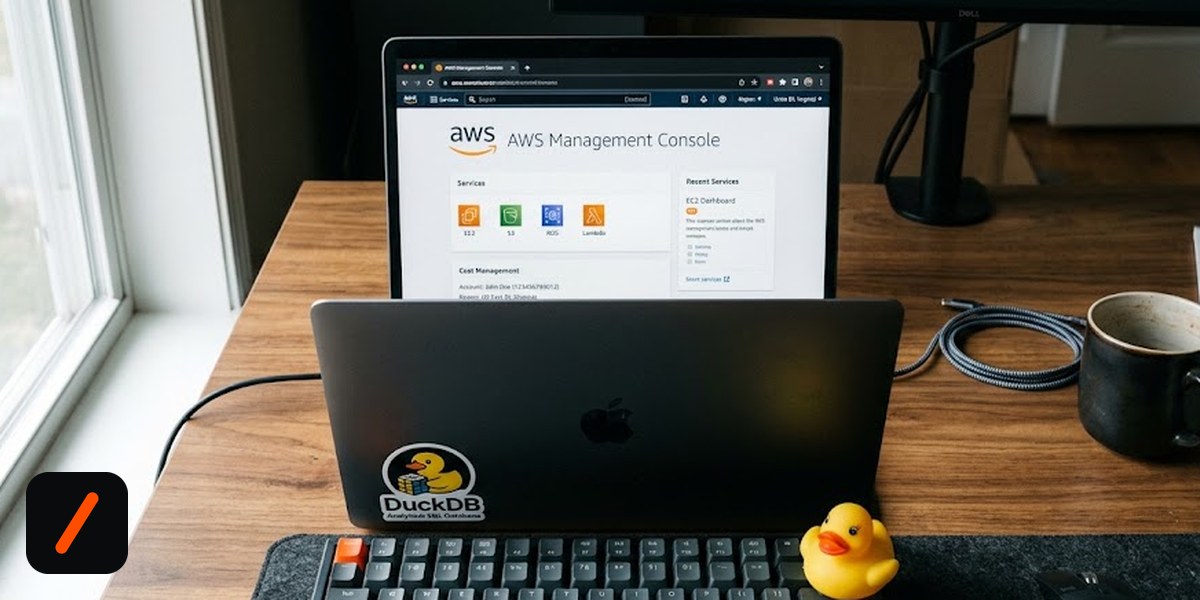
AWS has acquired DuckLabs, the Amsterdam-based company co-founded by DuckDB's creators, in a deal that closed August 31, 2026. DuckDB itself, the open-source analytics database data engineers have built entire pipelines around, is not part of the acquisition: its code, its trademarks, and its technical direction stay with the independent nonprofit DuckDB Foundation, under the same MIT license as before.
- AWS announced the DuckLabs acquisition on August 26, 2026, closed it August 31, and the DuckLabs team officially joined AWS on September 1.
- DuckDB, plus the related DuckLake and Quack projects, stays free and open source under the MIT license. Core IP and trademarks remain with the nonprofit DuckDB Foundation, not AWS.
- DuckDB's creators, Hannes Muhleisen and Mark Raasveldt, join AWS but keep steering the open-source project's technical direction, still based in Amsterdam.
- The DuckDB Foundation is adding a technical advisory board so community members outside AWS get a formal say in where the project goes next.
What is DuckDB, and why do data teams care about it this much?
DuckDB is an in-process, embeddable database built for analytics, the OLAP workloads where you're scanning and aggregating large tables rather than looking up single rows. "In-process" means it runs as a library inside whatever is already calling it, a Python script, a Jupyter notebook, a data pipeline, rather than as a separate server a client has to connect to over a network. People describe it as SQLite for analytics for a reason: no server to stand up, no cluster to provision, just fast SQL queries running locally against files on disk or in memory. For a lot of the work data analysts do day to day, that's a real alternative to loading everything into Pandas or spinning up a Spark cluster for a job that doesn't need one. It first shipped as open source in 2019 out of the Centrum Wiskunde & Informatica research institute in Amsterdam, and it has since become a default dependency inside notebooks, ETL tools, and increasingly other companies' own products, which is exactly the kind of quiet, foundational adoption that makes a cloud vendor pay attention.
RelatedCloudflare Buys VoidZero, the Company Behind Vite
Why didn't AWS just buy DuckDB outright?
Because there was no DuckDB company to buy in the sense people usually mean. DuckLabs was the commercial entity Muhleisen and Raasveldt built around the project, employing most of the core engineers who actually write DuckDB's query engine. The open-source code, though, along with its trademarks, has been held by the independent nonprofit DuckDB Foundation, not by DuckLabs. So AWS bought the company and the talent, not the underlying intellectual property. That structure isn't an accident, and it directly answers a fear the open-source world has learned to take seriously. Elastic relicensed Elasticsearch away from a fully open license in 2021 after AWS built a competing hosted service, which spawned the OpenSearch fork. Redis Labs changed Redis's license in 2024, which spawned Valkey. HashiCorp moved Terraform to a source-available license in 2023, which spawned OpenTofu. Every one of those moves happened because a single company controlled the code and could change the terms unilaterally once it decided the free version was cannibalizing its business. With DuckDB's IP parked at an independent foundation instead of inside the newly AWS-owned DuckLabs, AWS structurally cannot pull that lever even if a future executive wanted to.
- Aug 26, 2026Deal announced AWS and DuckLabs confirm the acquisition publicly
- Aug 31, 2026Deal closes Acquisition finalized five days after the announcement
- Sept 1, 2026DuckLabs team joins AWS Muhleisen and Raasveldt remain based in Amsterdam
What changes for people already running DuckDB in production?
Almost nothing today, on paper. The GitHub repo doesn't move, the license doesn't change, downloads stay free, and governance still runs through the DuckDB Foundation rather than through AWS. What does change is who signs the paychecks for most of the engineers who understand the query engine best, and that's worth watching rather than shrugging off. AWS funding that team probably means faster feature development, more resources for performance work, and tighter integration with services like S3, since AWS has every incentive to make DuckDB a smooth on-ramp into its own data stack. It also means the roadmap now has a large, motivated stakeholder with its own commercial interests sitting at the table, even if it doesn't hold the deed. Anyone who was nervous about a future rug pull now has something more concrete than a promise to point to: the Foundation's separate ownership of the code and trademarks is a structural fact, not a policy AWS could quietly reverse in a blog post.
What does this mean for the open source ecosystem?
It's a governance experiment as much as an acquisition, and it lands at a moment when the industry is genuinely split on how to fund open-source infrastructure without eventually strangling it. Splitting a nonprofit foundation that owns the IP from a commercial company that employs the contributors isn't new by itself, it's roughly how the Rust Foundation and the Python Software Foundation relate to the companies that pay their maintainers' salaries. What's unusual here is doing that split at the exact moment nearly the entire founding team gets absorbed into one of the largest cloud vendors on earth, the same category of company whose past moves triggered the Elasticsearch, Redis, and Terraform forks. The new technical advisory board is the Foundation's answer to the obvious question that raises: if AWS employs most of the people writing the code, how do you keep the project's direction from just becoming AWS's roadmap with extra steps? A board seated with community members outside AWS is a real mechanism, not just a talking point, but it only works if the Foundation is willing to use it against the hand that now feeds most of its contributors.
RelatedTailwind Labs Joins Shopify After AI Cut Its Revenue 80%
Our take
This is a healthier template than the last decade of open-source acquisitions gave us, and it's worth saying plainly rather than hedging. Separating "who employs the engineers" from "who owns the code" is the correct fix for the specific failure mode that broke trust in Elasticsearch, Redis, and Terraform: a single company holding both levers and eventually pulling the license lever when the business math stopped working. AWS structurally can't do that to DuckDB even if it wanted to, and that's a genuine, durable difference, not a PR framing. The part we're less convinced by is how much the technical advisory board actually constrains AWS's influence in practice, given that most of the people capable of writing DuckDB's next major feature now report into Amazon. Ownership and influence aren't the same thing, and a foundation can hold the trademark while still drifting toward whatever its best-funded contributor wants built next. If other vendors start copying this acquihire-plus-independent-foundation structure for their next open-source buyout, that's a genuine improvement over the old playbook. Whether DuckDB itself stays independent in practice, not just on paper, is the thing worth checking back on in a year.
- OfficialAWS and DuckLabs: building the future of analytics together · Amazon official announcement
- ReferenceAWS and DuckLabs: building the future of analytics together · AWS Big Data blog, technical detail
- CoverageAWS buys DuckLabs, the people behind the popular in-process OLAP database · The Register
- CoverageAmazon acquires DuckLabs, adding the team behind DuckDB amid broader shakeup in cloud data · GeekWire
Original analysis by GenZTech Team.