
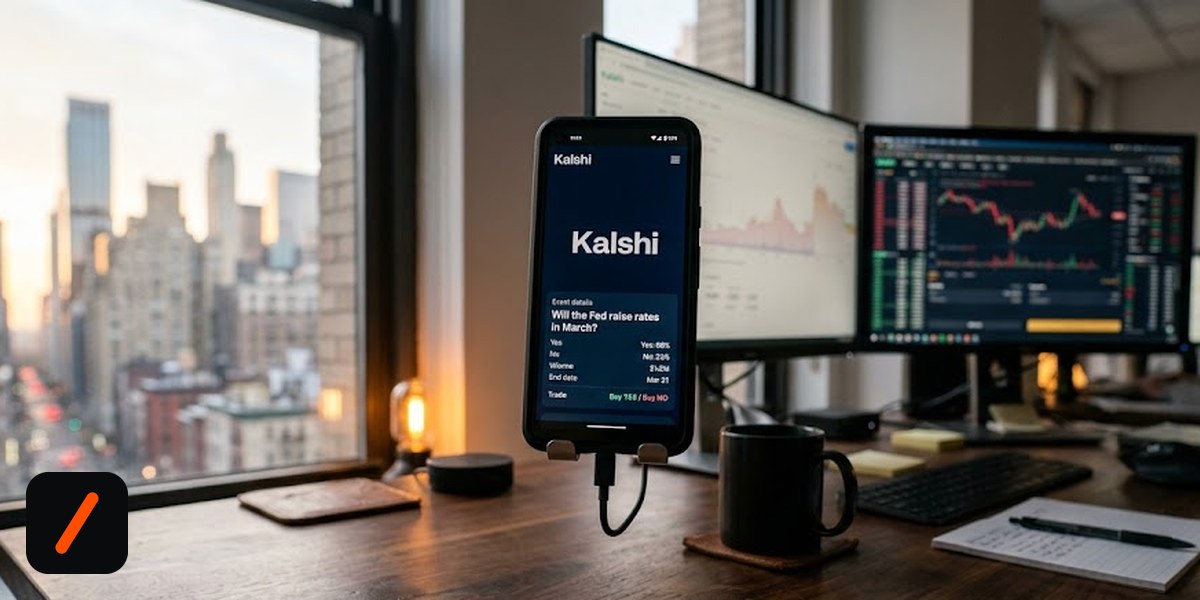
The Commodity Futures Trading Commission declared a market emergency late on 11 August 2026 and ordered KalshiEX, LLC to keep offering event contracts in New York, overriding the state attorney general's effort to shut the exchange down. The order went out hours ago, and it is the sharpest assertion of federal preemption the agency has made since this fight began.
What makes it unusual is not the outcome. It is the instrument. Emergency authority under the Commodity Exchange Act exists for the days when a market genuinely breaks: a corner, a squeeze, a clearing member going down, prices that stop reflecting anything real. The CFTC just pointed that tool at a state law enforcement action.
RelatedBitMEX hit with 623 BTC lawsuit as its shutdown begins
- The CFTC directed KalshiEX to continue operating in accordance with the Commodity Exchange Act's core principles, which in practice means continuing to serve New York users.
- New York Attorney General Letitia James sued on 31 July 2026, calling Kalshi an illegal gambling operation and asking for a nationwide halt on event contracts plus more than $36 billion in damages.
- Kalshi itself notified the Commission of the emergency, which is what opened the door to the order.
- New York is the ninth state the CFTC has taken to court this year over prediction markets.
What did the CFTC actually order?
The agency issued the order under press release 9281-26, titled "CFTC Exercises Emergency Authority to Ensure Market Stability." It directs KalshiEX, LLC to keep operating in line with the CEA's core principles. Read plainly, that instructs a federally registered exchange to keep doing the exact thing a state court has been asked to stop.
Chairman Michael S. Selig framed it as a structural question rather than a favor to one company. "Congress did not intend for derivatives exchanges to be regulated under a patchwork of state gaming laws," he said, adding that "New York has no business regulating these interstate financial markets." He also warned about "the potential for a single state to bring entire federally regulated markets to the brink of destruction," which is the theory of the emergency: not that Kalshi is in trouble, but that a state injunction reaching nationwide would be.
Why call a state lawsuit an emergency?
This is the part most of the coverage moves past quickly, and it is the most consequential detail. Emergency authority is a market-plumbing power. It gets used when trading conditions themselves have gone wrong. Using it against a legal filing redefines "emergency" to include regulatory risk created by another government.
The mechanism matters too. The CFTC did not go looking. Kalshi notified the Commission that an emergency existed, and the Commission agreed. That gives every CFTC registrant a template: when a state moves against you, tell your federal regulator you are facing a market emergency and ask for cover. Whether courts accept that framing is now the central question, because the alternative reading is that a regulated firm can effectively summon federal preemption on demand.
What is New York claiming?
James's complaint treats Kalshi's sports event contracts as unlicensed gambling under state law, not as swaps. The damages figure, north of $36 billion, is what happens when statutory penalties get multiplied across a large volume of individual wagers. The complaint also alleges Kalshi let New York residents aged 18 to 20 trade, below the state's minimum age of 21 for mobile sports betting. That age allegation is the strongest card the state holds, because it is a consumer-protection claim rather than a pure jurisdictional one, and it survives even if a court agrees these contracts are federally regulated swaps.
| New York | Michigan | Arizona | |
|---|---|---|---|
| State's move | Civil suit, nationwide halt sought, $36B+ damages | State court order against Kalshi trades | Criminal charges |
| Legal theory | Illegal gambling plus underage access | Unlicensed sports wagering | Unlicensed gambling, charged criminally |
| CFTC response | Emergency order to keep operating | Stayed the state order, told Kalshi to honor trades | Sued the state in April |
| Status | Active, escalating | Federal instruction stands | First criminal case against a CFTC registrant |
How did nine states end up fighting one exchange?
The escalation has been steady all year, and New York is a continuation rather than a departure.
- Mar 2026Arizona files criminal charges against Kalshi First criminal action against a CFTC registrant
- Apr 2, 2026CFTC sues Arizona, Connecticut and Illinois Seeks injunctions blocking state enforcement
- Apr 7, 2026Third Circuit rules for Kalshi Sports event contracts are swaps under the CEA
- Apr to Jun 2026Wisconsin, Minnesota, Rhode Island, New Mexico, Kentucky added Brings the federal docket to eight states
- Jul 2026CFTC stays a Michigan state court order Directs Kalshi to honor trades regardless
- Jul 31, 2026NY AG Letitia James sues Kalshi Nationwide halt sought, $36B+ in damages
- Aug 11, 2026CFTC declares a market emergency Orders Kalshi to keep operating in New York
- NextAppellate review of federal preemption A circuit split would put this in front of the Supreme Court
What it means for the market
Kalshi is private, and we covered its $1 billion Series F at a $22 billion valuation led by Coatue in July. That valuation is underwritten by an assumption this order defends: that a single CFTC registration buys a fifty-state footprint. If preemption holds, Kalshi keeps a distribution advantage no state-licensed sportsbook can match, since licensed operators pay for market access one state at a time.
The exposed names are the licensed incumbents. DraftKings (DKNG) and Flutter Entertainment (FLUT), which owns FanDuel, built their moats out of state licences, local tax rates and compliance overhead. Federal preemption for event contracts erodes the value of that spending without removing the cost. Robinhood (HOOD) sits on the other side, routing event contracts through Kalshi, so it inherits the upside and the legal risk together. The signal for investors is not the emergency order itself, which is reversible. It is whether an appellate court blesses the reasoning, because that is what converts a regulatory posture into a durable structural advantage.
RelatedThe CLARITY Act Could Finally Split Crypto's Regulators
Who is exposed while this is unresolved?
Kalshi, immediately and awkwardly. It is now holding a federal instruction to keep a market open and a state proceeding demanding it close. Comply with one and you hand the other side evidence of wilful non-compliance. The Michigan episode in July established the pattern, and Kalshi followed the federal instruction there, but Michigan involved unwinding specific trades rather than a nationwide shutdown demand backed by an eleven-figure damages claim.
Traders carry a quieter version of the same risk. Positions opened today in New York rest on an order that a court could vacate. Nothing about the emergency order guarantees those contracts settle the way an ordinary CFTC-regulated position would if a judge later decides the state was right.
- The first judicial test of the order. Whether a federal or state judge treats a self-reported "emergency" as legitimate use of the CEA's emergency power is the whole ballgame.
- The underage allegation. It is the one New York claim that does not depend on winning the jurisdictional argument, and it is the likeliest path to a settlement.
- A circuit split. The Third Circuit sided with Kalshi in April. A contrary appellate ruling elsewhere makes Supreme Court review close to inevitable.
- Copycat filings. If other CFTC registrants start reporting emergencies when states move against them, expect Congress to notice the pattern before the courts finish with it.
Our take
The CFTC is probably right on the law and has picked a strange way to prove it. The Commodity Exchange Act does give federal regulators primacy over registered derivatives exchanges, and the Third Circuit already agreed that sports event contracts are swaps. A patchwork of fifty gaming regimes governing one interstate order book really is unworkable.
But emergency powers are supposed to be for emergencies, and stretching the definition to cover "a state sued our registrant" spends institutional credibility the agency may want later. There was a slower route through the courts, where the CFTC has been winning. Choosing the fast one turns a preemption argument the agency was likely to win into a separate fight about whether it overreached, and that second fight is much less certain. Anyone who trades on Kalshi should treat New York access as contingent rather than settled, whatever the order currently says.
- OfficialCFTC Exercises Emergency Authority to Ensure Market Stability · release 9281-26, 11 August 2026, with Chairman Selig's statement
- RegulatorCFTC Press Room · running record of the agency's suits against nine states this year
- EnforcementNew York Attorney General press releases · the 31 July 2026 complaint against KalshiEX
- FundingGENZ TECH Funding Tracker · Kalshi's $1B Series F at a $22B valuation, July 2026
Original analysis by GenZTech. Primary source: CFTC press release 9281-26.