
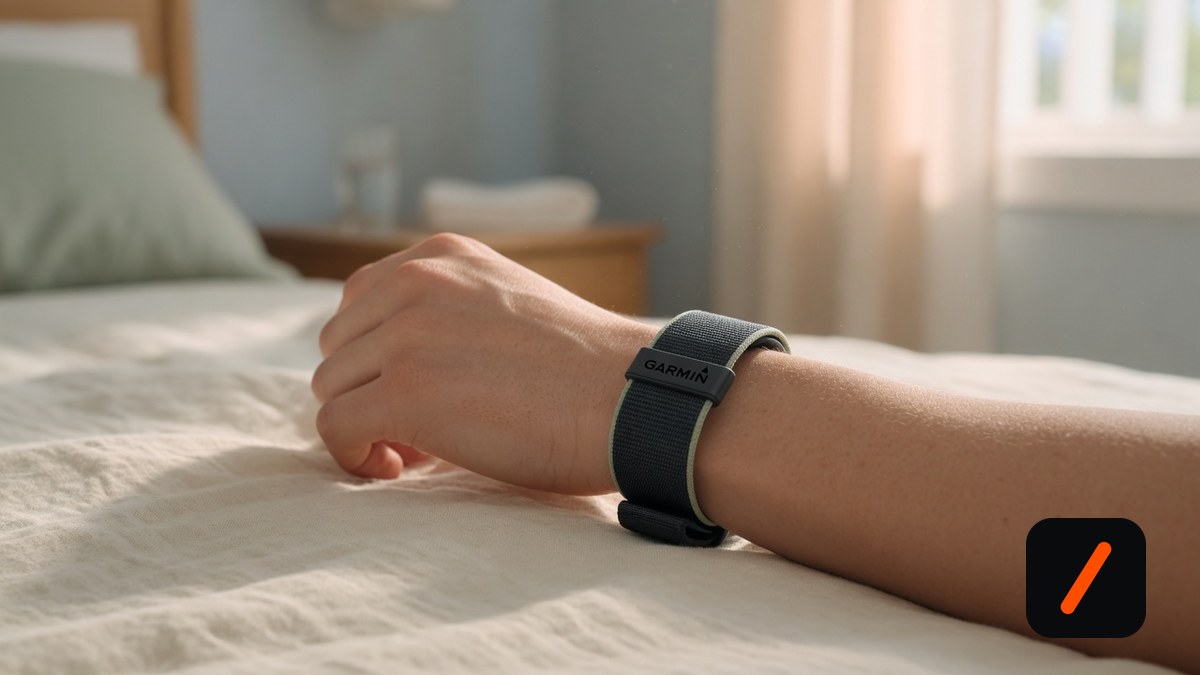
Garmin is about to step onto Whoop's turf. CIRQA, a screen-free recovery band expected to launch in the back half of July 2026, drops the display entirely and focuses on stress, sleep, alertness and readiness rather than workout tracking. That framing, confirmed by the trademark wording, points squarely at the recovery-band niche Whoop created. The whole story hinges on one question the launch will answer: does Garmin bundle it with a subscription, or lean on the no-fee reputation that made its watches beloved?
- Screen-free recovery band: CIRQA targets stress, sleep, alertness and readiness, with the trademark notably omitting workout tracking.
- Launch is pinned to mid-to-late July 2026; an FCC 180-day confidentiality window on the filing expires July 19, matching Garmin's usual pattern.
- Two sizes, S/M (120–200mm) and L/XL (145–240mm), in Black and French Grey, per a January product listing leak.
- Analysts model a price band of roughly $249–$349, undercutting or matching rivals depending on whether Garmin charges a subscription.
What is CIRQA, and what is it not?
It is a wrist-worn recovery tracker with no screen, meant to be worn continuously and read through your phone. The trademark language covers stress, recovery, alertness and performance, and it pointedly does not mention workout tracking, which tells you the positioning: this is a readiness device, not a running watch. That is a deliberate departure for Garmin, a company whose identity is built on feature-dense displays and sport modes. CIRQA is Garmin choosing to compete on the opposite philosophy, less is more.
RelatedFitbit Air Is a Screenless, Subscription-Free Whoop Rival
| Garmin CIRQA | Whoop | Oura Ring | |
|---|---|---|---|
| Form factor | Screen-free wrist band | Screen-free wrist band | Smart ring |
| Primary focus | Recovery, stress, sleep | Recovery, strain | Sleep, readiness |
| Workout tracking | Not the focus | Strain-based | Limited |
| Subscription | TBD at launch | Required | Required |
| Est. price | ~$249–$349 (modeled) | Hardware + fee | Ring + fee |
Why does the subscription question decide everything?
Because it is the single biggest gripe with the category. Whoop and Oura both require ongoing fees, and that recurring cost is the main reason shoppers hesitate. Garmin built its following partly on not nickel-and-diming owners after purchase. If CIRQA ships with a one-time price and no mandatory subscription, it instantly becomes the default recommendation for anyone who wants recovery insights without a monthly bill. If Garmin bolts on a subscription to chase recurring revenue, it surrenders its clearest differentiator and becomes just another band in a crowded field. The hardware may be excellent either way; the business model is the story.
Can Garmin actually win here?
It has real advantages. Garmin's sensor and sleep-tracking pedigree is deep, its battery engineering is a genuine strength, and its brand carries trust that newer entrants have to buy with marketing. A screen-free design also plays to long battery life, a perennial Garmin selling point. The risk is focus: stripping features is not automatically a better product, and Whoop has years of head start on coaching, community and recovery science. CIRQA has to feel purposeful, not merely reduced.
What it means for the market
The signal for shoppers and investors is that the recovery-band category is consolidating from a startup niche into a battleground for the wearables majors. Garmin (GRMN) entering pressures Whoop's pricing power and validates the segment at the same time. For buyers, more competition should mean better hardware and, ideally, downward pressure on subscription fees. This is analysis, not advice: watch the pricing announcement, because it will tell you whether Garmin came to expand the category or to undercut it.
RelatedApple Watch Series 12: Price, Specs, Health Features
Is the screen-free bet actually smart?
There is a real thesis behind dropping the display. A screen is the single biggest drain on a wearable's battery and the main reason people take a watch off to charge it, which creates gaps in the exact overnight and continuous data a recovery tracker depends on. Remove the screen and you can chase multi-day or multi-week battery life, so the device stays on the wrist collecting an unbroken stream of heart-rate variability, sleep and stress signals. That continuity is the whole value proposition of recovery tracking, and it is where Whoop and Oura built their appeal. Garmin arriving with deeper sensor engineering and a battery pedigree could out-execute both on the fundamentals. The counter-risk is that a featureless band lives or dies on the quality of its app and its coaching, an area where Garmin's software has historically been functional rather than delightful. Hardware Garmin can nail; whether it can match Whoop's polish on insight and habit-forming feedback is the open question that reviews will answer.
- Subscription or not. The one detail that defines CIRQA's value. A no-fee model makes it the category's obvious pick.
- Battery life. Screen-free should mean long runtime. Garmin's number here is a key differentiator versus rivals.
- Accuracy vs Whoop. Recovery scores are only useful if trusted. Watch independent reviews comparing HRV and sleep against incumbents.
- OfficialGarmin newsroom official product announcements
- FilingFCC equipment authorization device filing and confidentiality window
- ReferenceRelease Radar launch-date tracking and leaks
Original analysis by GenZTech. Pre-launch details are based on filings and leaks; current as of July 2026.