
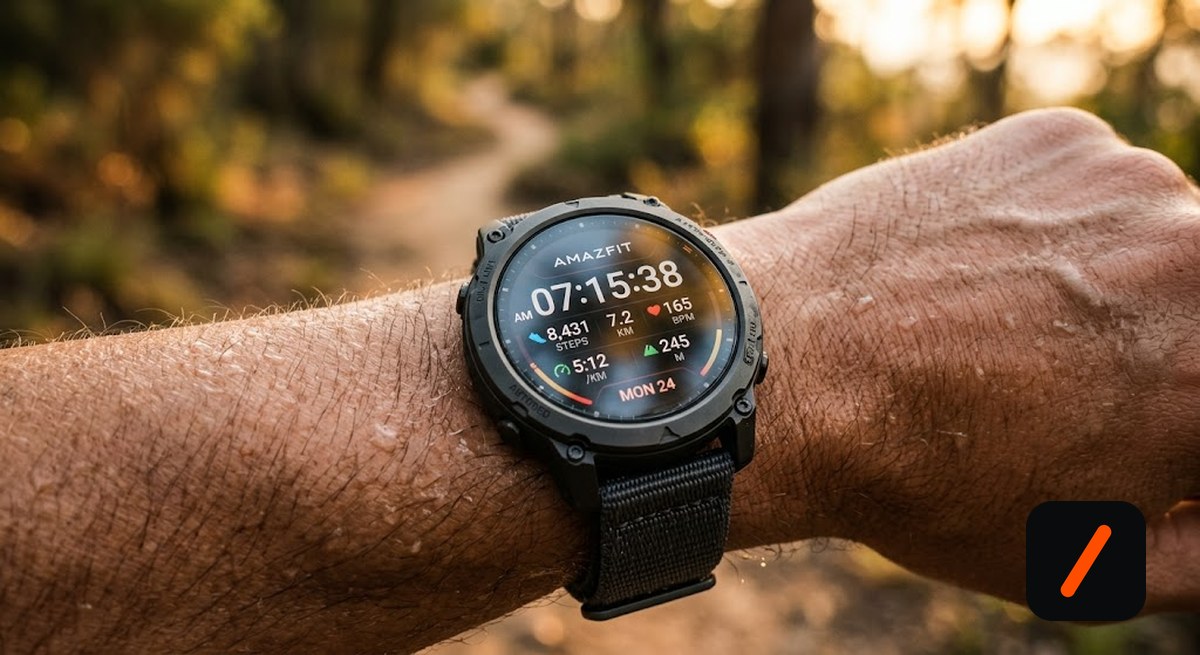
Amazfit's Balance 3 is a pointed pitch at the gap flagship smartwatches keep leaving open: real multi-day endurance. It pairs a 1.5-inch AMOLED under sapphire glass, bright to a claimed 3,000 nits, with offline maps, GPS, and up to 21 days of battery on a standard-use cycle. Where an Apple Watch asks for a nightly charge, Amazfit is selling three weeks between top-ups, and betting that for hybrid athletes and long-trip users, endurance beats another app store.
- 1.5-inch AMOLED with sapphire glass and up to 3,000 nits peak brightness for outdoor legibility.
- Offline maps and GPS for navigation without a phone tether.
- Claimed battery life up to 21 days in standard use, far beyond flagship smartwatch norms.
- Positioned for hybrid fitness athletes who train across disciplines and dislike daily charging.
What is the Balance 3 actually offering?
The spec that anchors everything is battery. A claimed 21 days of standard use turns the watch from a device you manage into one you forget about, which matters most to the exact buyer Amazfit is targeting: hybrid athletes who mix running, lifting, and endurance events and resent a tracker that dies mid-trip. The sapphire-glass 1.5-inch AMOLED at up to 3,000 nits addresses the other outdoor complaint, screens you cannot read in direct sun, while offline maps and GPS mean navigation without dragging a phone along. It is a coherent package aimed at utility over ecosystem.
RelatedCoros Balance 3: a $370 watch with 21-day battery life
Why does 21-day battery matter so much?
Because it is the one axis where premium smartwatches have not closed the gap. Bright always-on displays, cellular radios, and dense app platforms drain batteries, so flagships largely accept the daily-charge tax. For someone doing multi-day hikes, long training blocks, or just tired of another charger, three weeks of runtime is not a spec-sheet flex, it is the deciding feature. Amazfit is competing where Apple and Samsung structurally cannot follow without abandoning the always-connected model, and where Garmin's endurance watches cost considerably more.
Where does it fall short?
The tradeoff is the ecosystem. Amazfit's software, health platform, and third-party app support are not in the same league as watchOS or Wear OS, and buyers deep in Apple or Google services lose tight integration, messaging, and payments polish. Battery claims are also best-case: heavy GPS, always-on display, and continuous sensors will pull the real number well below 21 days. The Balance 3 wins on endurance and value; it does not win on being a wrist computer, and buyers should be clear about which they want.
| Feature | Amazfit Balance 3 | Flagship smartwatch | Endurance sport watch |
|---|---|---|---|
| Battery (standard) | Up to 21 days | ~1 day | ~1-2 weeks |
| Display | AMOLED, 3,000 nits, sapphire | Bright AMOLED | Often transflective |
| Offline maps | Yes | Yes | Yes |
| App ecosystem | Limited | Extensive | Focused on sport |
| Price posture | Value | Premium | Premium |
Who should buy it?
The Balance 3 fits athletes and outdoor users who prioritize runtime, screen visibility, and navigation over a rich app store and deep phone integration, and who want most of that at a fraction of flagship or premium-endurance pricing. Buyers who live in notifications, contactless payments, and tight iPhone or Android integration will feel the ecosystem gap and should look elsewhere. It is a specialist's watch sold at a generalist's price.
RelatedXiaomi Watch S5 pairs a 21-day battery with bright AMOLED
- Real GPS endurance. Independent tests with GPS and always-on display will show how far the 21-day claim holds under athlete use.
- Health accuracy. Heart-rate and sleep accuracy versus chest straps and Garmin decides credibility with serious trainers.
- Software cadence. Whether Amazfit keeps improving its app and platform, the historical weak spot for the brand.
Our take
The smartwatch market spent years chasing Apple on apps and lost the plot on the one thing many buyers actually asked for: not charging the thing constantly. The Balance 3 is refreshingly unbothered by that race. It picks endurance, brightness, and navigation, sells them at a value price, and accepts it will never be a wrist computer. For a large, underserved segment, that is exactly the right set of compromises, as long as the 21-day figure survives contact with real training and the health sensors keep pace with the hardware.
What about the sensors and sport modes?
Endurance and brightness are the marquee features, but for the hybrid athletes Amazfit is targeting, the sensor suite and sport tracking decide whether the watch earns daily wrist time. The Balance 3's pitch rests on covering the essentials well: heart-rate monitoring, GPS accuracy for outdoor training, and a broad set of activity profiles across running, strength, and endurance disciplines. Sapphire glass matters here too, not as a luxury flex but as practical durability for people who bang their wrist against barbells and trail rock. The open question every buyer should press on is data credibility: a watch that lasts three weeks is only useful to a serious trainer if its heart-rate and recovery numbers hold up against a chest strap, and that is exactly what independent testing will decide after launch.
- ReportNew gadget and gear releases, July 2026 Gear Patrol
- RoundupUpcoming wearables 2026 WearableXP
Original analysis by GenZTech. Reporting via Gear Patrol.