
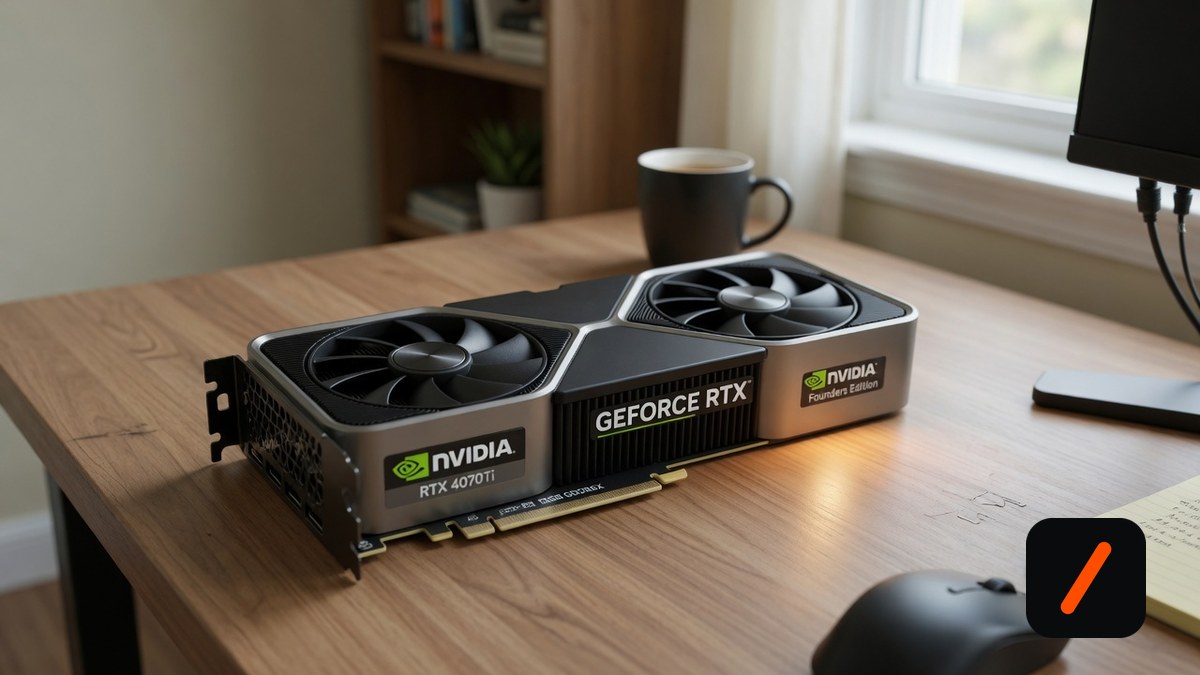
If you were waiting for a real new graphics card in 2026, the wait just got longer. Nvidia's on-again, off-again RTX 50 Super refresh has reportedly been pushed to CES 2027, and AMD's next-generation RDNA 5 architecture is not expected until late 2027 or even 2028. That leaves 2026 as one of the emptiest years for desktop GPUs in recent memory: the only "new" consumer parts so far are a knocked-down AMD RX 9070 GRE and an RTX 5070 laptop chip with more memory. For gamers, this is the drought year.
- Super slips. Nvidia's RTX 50 Super refresh is now expected at CES 2027 at the earliest, not late 2026.
- AMD goes quiet too. RDNA 5 is reportedly pushed to late 2027 or 2028, so there is no new high-end Radeon coming to fill the gap.
- 2026's "launches" are refreshes. The RX 9070 GRE is a trimmed existing GPU and the RTX 5070 12GB is a laptop respin, not a new tier.
- AI is eating the wafers. Data-center demand and memory allocation are the backdrop: gaming silicon is competing with far more profitable AI parts.
What actually shipped in 2026?
Almost nothing new. The AMD Radeon RX 9070 GRE is a revision of an existing card with slightly reduced specs, and the RTX 5070 12GB is an existing GPU given more video memory for laptops. Neither creates a new performance tier or a new price point that changes a buying decision. For a hobby that usually gets a fresh flagship and a mid-range refresh every year, a calendar with two respins on it is close to a standstill.
RelatedAMD's MI455X and Helios Take Direct Aim at Nvidia
Why did the Super refresh slip?
Nvidia's RTX 50 Super series has been rumored for a year, with earlier chatter pointing at a late-2026 launch. The current understanding is that those cards will not appear until CES in January 2027 at the earliest. AMD is quiet for a different but related reason: RDNA 5 is a bigger architectural jump that reportedly is not landing until late 2027 or 2028. With both vendors pushing their next real products out, 2026 has no headline consumer GPU to anchor it.
What it means for the market
The signal for investors is that gaming GPUs are now a low priority in a business defined by AI. For Nvidia (NVDA), the calculus is simple: every wafer and every stack of high-bandwidth memory is worth far more in a data-center accelerator than in a GeForce card, so a thin gaming year barely dents the story that AI demand drives. For AMD (AMD), a delayed RDNA 5 concedes the high-end gaming window but frees engineering and supply for its more strategically important AI and data-center roadmap. The read for buyers is less rosy: weak competition and constrained supply mean current cards hold their prices, and the usual annual discount cycle stalls. Memory pricing is the variable to watch, because when AI soaks up capacity, consumer parts get more expensive, not cheaper.
Should you buy now or wait?
If your card still runs the games you play, waiting costs you nothing and the market is unlikely to reward patience with cheaper prices soon. If you need an upgrade now, buy on the current generation without expecting a 2026 refresh to leapfrog it, because the next real jump is a 2027 story. The one genuine bright spot is software: DLSS 4.5 and its new ray-reconstruction model squeeze more image quality out of existing hardware, which is Nvidia's way of delivering "new" performance in a year with no new silicon.
RelatedAMD Brings FSR 4.1 to RX 7000 Cards, Weeks Ahead of Plan
- CES 2027. The RTX 50 Super refresh is the next real consumer launch window. Slippage past January would extend the drought.
- Memory prices. AI demand for HBM and GDDR sets the floor on what gaming cards can cost.
- RDNA 5 timing. If AMD confirms 2028, Nvidia has the high end largely to itself for two years.
- DLSS-style software. Expect upscaling and frame-gen to carry the "upgrade" narrative while hardware stalls.
Our take
This is the clearest sign yet that the GPU you game on is a byproduct of a business that now runs on AI accelerators. Neither Nvidia nor AMD is punishing gamers on purpose, they are simply allocating scarce wafers and memory to the parts that print money, and consumer graphics lands at the back of the line. Practically, 2026 is a year to hold your card, ignore the fear of missing out on a refresh that keeps sliding, and let software features do the upgrading. The next genuinely exciting desktop GPU is a 2027 conversation, and pretending otherwise just sets you up to overpay in a thin market.
- ReportingPC Gamer on the Super delay and RDNA 5 timing
- ReferenceTechPowerUp upcoming hardware release tracker
- OfficialGeForce news DLSS 4.5 and RTX updates
Original analysis by GenZTech. Reporting via PC Gamer.