
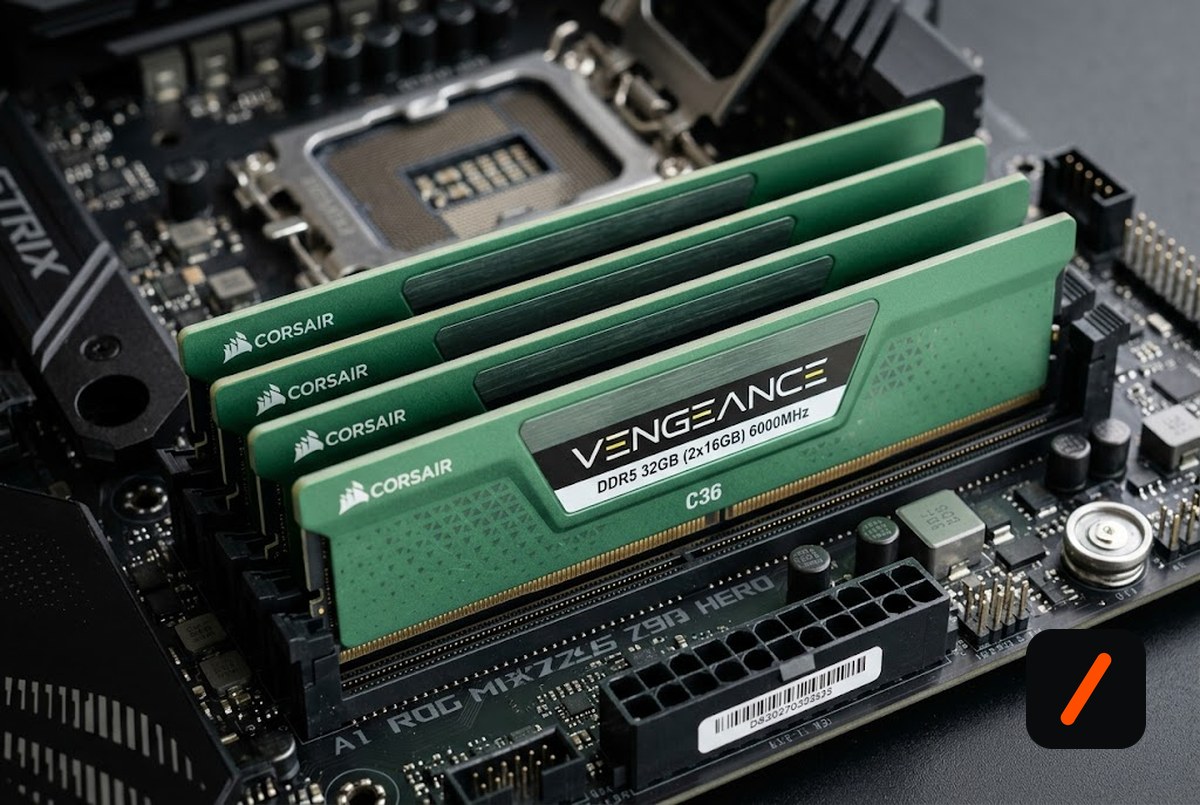
DRAM prices jumped roughly 90% in the first quarter of 2026, the sharpest move the memory industry has seen in years, and the cause is not a factory fire or a demand collapse but a deliberate reallocation of the world's silicon toward AI. Samsung, SK Hynix and Micron have shifted the overwhelming majority of their combined output to high-bandwidth memory (HBM) for AI data centers, starving the ordinary DRAM that goes into phones, laptops and game consoles. The squeeze is now big enough to raise device prices, cut specs, and draw an antitrust lawsuit.
- DRAM contract prices rose about 90% quarter over quarter in Q1 2026, with a class-action complaint citing roughly 700% over four years.
- The three makers control over 90% of the DRAM market and have redirected the bulk of production to HBM, which consumes about 3x the wafer capacity per gigabyte.
- Manufacturers warn the shortage could persist through 2027 and beyond; new fab capacity will not reach volume until 2027 at the earliest.
- On June 25, a US class action (Garciaguirre v. Samsung) accused the three of coordinated supply restriction; the companies call it a rational response to AI demand. The allegations are unproven.
Why are memory prices exploding now?
The mechanism is capacity, not appetite. HBM, the stacked memory that sits beside AI accelerators, uses roughly three times the wafer area per gigabyte of standard DRAM. As hyperscalers like Microsoft, Google, Meta and Amazon buy every AI chip they can, the memory makers have poured wafers into HBM because it carries far higher margins. IDC frames this not as a normal cyclical shortage but as a structural, possibly permanent reallocation of the industry's wafer capacity. For decades, phones and PCs drove memory production. That relationship has inverted, and consumer DRAM now gets whatever is left over.
RelatedNvidia's 16-Hi HBM demand triggers a memory sprint
How bad does it get for devices?
Memory is a large slice of a device's bill of materials, roughly 15 to 20% for a mid-range phone, so a doubling of memory cost forces makers to raise prices, cut specifications, or both. Gartner has forecast DRAM prices up about 47% across 2026. The pain is already visible in strategy: Micron shut down Crucial, its direct-to-consumer memory brand, in December 2025 to focus on enterprise and AI customers, exiting the consumer market outright. Even Samsung, which makes its own memory, warned it cannot insulate its own products from the surge.
Who is winning from the crunch?
The makers, enormously. Samsung's semiconductor division posted about 53.7 trillion won (roughly 36 billion dollars) in operating profit in Q1 2026, the bulk of the company's total. Micron's stock rose sharply over the past year as net income nearly tripled. SK Hynix reported its HBM, DRAM and NAND capacity essentially sold out for 2026. When the scarcest input in the AI boom is memory, the companies that make it capture the windfall.
- 2022-23Memory downturn. Makers cut output sharply and underinvest in new capacity.
- 2025HBM demand explodes. Wafers pivot to AI memory; conventional DRAM tightens.
- Dec 2025Micron shuts Crucial. Exits consumer memory to serve enterprise and AI.
- Q1 2026Prices jump ~90%. Sharpest quarterly move in years.
- Jun 25 2026Price-fixing class action filed. Garciaguirre v. Samsung names all three makers.
- 2027New fab capacity. Earliest relief; shortages may run through 2027 and beyond.
What it means for the market
The signal for investors is that memory is the new bottleneck asset, and its makers are the cleanest way to play the AI buildout. Micron (MU), SK Hynix and Samsung sit on structurally scarce supply with pricing power that new capacity cannot ease until 2027. The counterweight is the antitrust suit: a coordinated-restriction finding, unlikely but not impossible given the trio's mid-2000s guilty pleas, would be a real overhang. Downstream, device makers with thin margins, budget phone and PC brands, absorb the cost, so watch their gross margins. The one certainty is that cheap RAM is over for a while.
RelatedThe Memory Supercycle Is Here, and AI Priced Everyone Out of RAM
- Consumer price pass-through. Whether phone and PC prices rise or specs quietly shrink to hide the memory cost.
- The lawsuit. Discovery in Garciaguirre could reveal whether the HBM pivot was independent or coordinated.
- Capacity timing. Any slip in 2027 fab ramps extends the squeeze and the makers' windfall.
Our take
Call it the RAMpocalypse and it still undersells the structural shift. This is not a passing spike; it is the memory industry deciding that AI data centers, not consumers, are the customer that matters. That is rational for the makers and painful for everyone downstream, and it will not reverse until new fabs come online in 2027 at the earliest. The price-fixing suit is worth watching, but the honest read is that you do not need a conspiracy to explain this: when one buyer will pay triple for the same wafers, supply follows the money. Budget builders and phone buyers are the ones paying the bill.
- ReferenceIDC memory shortage market analysis
- FilingGarciaguirre v. Samsung N.D. Cal. class action, filed June 25, 2026
- DataTrendForce DRAM contract price tracking
Original analysis by GenZTech. Reporting informed by IDC and TrendForce coverage. IDC.