
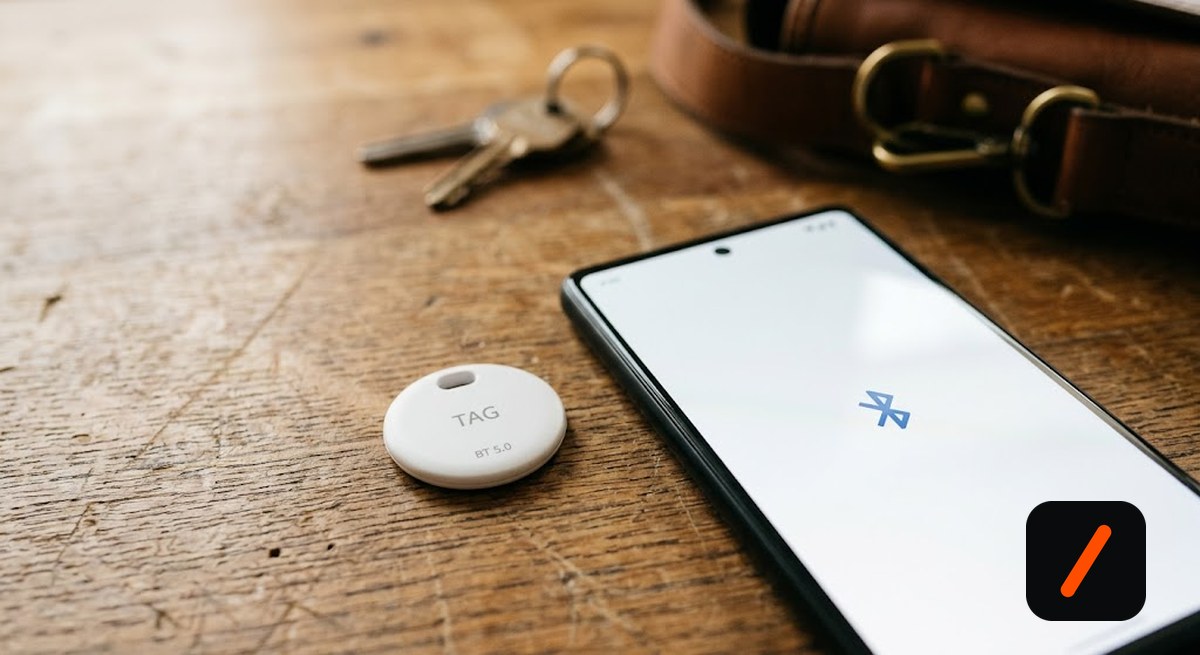
Most DePIN networks ask you to buy a box. Nodle does not. Its network is software running on phones, routers, drones and vehicles that already exist, turning each into a lightweight Bluetooth Low Energy node earning NODL through a Proof of Connectivity algorithm. The pitch is a rounding error away from obvious once you say it out loud: there are more than 7 billion smartphones on Earth, every one has a BLE radio doing nothing most of the day, and a network that needs no new hardware has no hardware cost curve to climb.
- No dedicated hardware. Nodle deploys as software on smartphones, routers, drones and vehicles, using each device's existing Bluetooth Low Energy radio.
- Nodes are rewarded via a Proof of Connectivity algorithm on the Nodle Chain, paid in the NODL token.
- Traction is enterprise-flavored: nearly a million active devices, a 40% recovery rate, and 9 million euros of demonstrated value recovery in France.
- A partnership with Paragon-ID on battery-free BLE tags removes the need for RFID readers, which expands the addressable market beyond what tracking previously reached.
What is Nodle actually building?
A decentralized wireless network for IoT devices, composed of Edge Nodes running on the Nodle Chain and rewarded in NODL via Proof of Connectivity. The critical architectural choice is that Edge Nodes are software, deployed onto smartphones, routers, drones and vehicles rather than shipped as dedicated hardware. The app turns a phone into a lightweight Bluetooth node.
RelatedSilencio Turns Idle Phones Into a Global Noise Sensor Net
The mechanism is simple. BLE tags broadcast. Phones running Nodle hear those broadcasts, note them, and report the sighting. A tag with no connectivity of its own becomes locatable because someone with a phone walked past it. This is the same architecture that makes Apple's Find My network work, with the difference that Nodle pays the participants and does not require you to be inside one vendor's ecosystem.
Why does skipping the hardware matter?
Because hardware is where DePIN economics usually break. The standard model asks a user to spend real money on a device with an uncertain payback period, in the hope that coverage eventually attracts demand. That is a coordination problem with a capex gate in front of it, and the sector's history is littered with networks that sold a lot of boxes and never found buyers for the data.
Nodle inverts it. If the node is software on a phone somebody already owns, marginal cost of coverage is approximately zero and the break-even calculation disappears. Compare the numbers from elsewhere in the sector: XNET's DePIN Scan listing shows 111 active devices at an average cost of $249.48 with roughly an 84-day break-even. Hivemapper moved from $589 dashcams to a $19 monthly subscription precisely to get the capex out of the way. Nodle never had the problem.
The cost is coverage shape. A hardware network can be planned: you put nodes where you want service. A phone-based network cannot. Coverage tracks where people walk, which means excellent density in cities and nothing in the places where asset tracking is often most valuable, like rail sidings, ports and rural depots. That is a real limit, not a temporary one.
What is the Paragon-ID partnership?
This is the part that makes the network commercial rather than theoretical. Nodle partnered with Paragon-ID on battery-free BLE tags, and the significant claim is that it removes the need for RFID readers.
Understand what that replaces. RFID asset tracking requires readers: fixed infrastructure installed at every point where you want to know something passed. That is a capital project, and it is why RFID tracking historically only made sense for high-value goods moving through controlled facilities you own. If the tag is battery-free BLE and the readers are every phone in the country running Nodle, the reader infrastructure cost goes to zero and the addressable market expands to anything worth tracking anywhere people go.
The traction numbers Nodle cites are enterprise rather than crypto: nearly a million active devices, a 40% recovery rate, and 9 million euros in demonstrated value recovery in France as evidence that crowdsourced BLE tracking is production-ready. A 40% recovery rate on lost or stolen assets is the kind of number a logistics buyer can build a business case around, which is more than most DePIN networks can say. These are company-reported figures.
RelatedRender Network Rides the AI GPU Compute Crunch
| Nodle | Helium | Hivemapper | XNET | |
|---|---|---|---|---|
| Node hardware | None, software on phones | Hotspot | Dashcam | CBRS radio |
| Node cost to user | $0 | Hundreds | $19/mo subscription | ~$249 |
| Radio | Bluetooth LE | LoRaWAN / 5G | Camera + GPS | LTE/5G, Wi-Fi |
| Consensus / reward | Proof of Connectivity | Proof of Coverage | Map contribution | Verified data offload |
| Coverage shape | Follows people | Planned placement | Follows roads | Planned placement |
| Revenue source | Enterprise tracking | Carrier offload, LoRaWAN | Volkswagen, Lyft | Carrier offload |
| Named enterprise proof | Paragon-ID, 9M EUR in France | AT&T, Telefonica | Volkswagen, Lyft | Carrier roaming |
Where does this fit in the DePIN picture?
In the half that is working. The sector's divide by 2026 is clean: networks with external customers paying for a service are surviving, and networks that exist as token emission schemes with no end-user demand are not. Total DePIN market cap passed $15 billion in March 2026 with over 2 million active nodes, and January 2026 monthly revenue across leading projects reached roughly $150 million, driven by enterprise demand for compute, mapping and bandwidth.
Nodle's enterprise contracts and a named partner with a euro-denominated recovery figure put it on the right side of that line. The persistent sector problem is the divergence between usage and token price, with HNT, HONEY and GEOD down 68% on average from a year prior even as their networks grew. Nodle is not exempt from that dynamic, and NODL's value depends on demand for the token rather than demand for the tracking service, which are related but not the same thing.
- Whether Paragon-ID tags actually ship at volume. The partnership is the commercial thesis. Deployed tag count is the number that validates it.
- Independent verification of the 9M euro figure. Value recovery in France is company-reported. An enterprise customer saying it publicly would change the weight of that claim.
- Coverage in non-urban corridors. The phone-based model's blind spot is exactly where logistics assets sit. Watch whether Nodle pushes into vehicle and router deployments to fill it.
- NODL value accrual. Enterprise revenue existing is not the same as it reaching tokenholders. That gap is the sector's defining unsolved problem.
Our take
Nodle is the most quietly sensible DePIN architecture out there, and it gets the least attention precisely because there is no box to photograph. Every hardware-first network in this sector has spent years discovering that selling miners is easy and selling the network's output is hard, which leaves you with a large deployed base of devices whose owners are angry about the payback. Nodle never entered that trap, because it never asked anyone to spend anything.
The Paragon-ID deal is the part that makes it more than clever. Battery-free BLE tags that need no reader infrastructure, read by a million phones, is a genuine cost collapse against RFID rather than a marginal improvement, and 9 million euros of recovered value in one country is a business case rather than a whitepaper. The blind spot is real and structural: coverage follows people, and the assets most worth tracking are frequently where people are not. That is not fixable with more app installs. Whether Nodle's enterprise revenue ever reaches NODL holders is the same open question every DePIN faces, and nobody in this sector has answered it yet.
- OfficialNodle Network architecture, Proof of Connectivity and enterprise figures
- ReferenceDePIN Hub: Nodle independent project profile and node metrics
Original analysis by GenZTech. Device counts, the 40% recovery rate and the 9 million euro France figure are company-reported and not independently verified. Not investment advice.